It is hardly breaking news that the corporate media in America has a left-wing bias. That has been the case for decades. We have now reached a point of critical mass, however, where the constant drumbeat of partisan media has indoctrinated those on the extreme left to act on that messaging with deadly results.
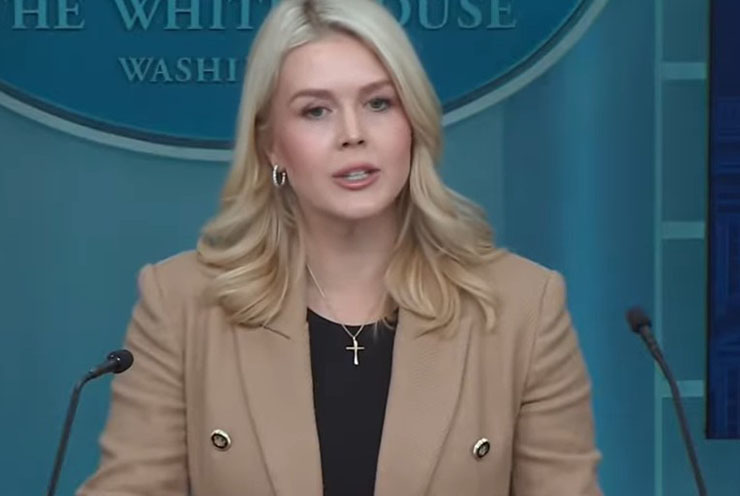
The depth of media extremism was on display in a fiery exchange at the White House press briefing last week, as Press Secretary Karoline Leavitt confronted Niall Stanage of The Hill in response to his questioning. Stanage pressed her on U.S. Immigration and Customs Enforcement (ICE) operations, claiming 32 deaths in ICE custody, 170 wrongful detentions of U.S. citizens, and the fatal shooting of Renee Nicole Good by an ICE agent in Minneapolis. Leavitt shot back, labeling him a “left-wing hack” and accusing him of posing as a journalist.
Far from an overreaction, Leavitt’s aggressive response was a necessary pushback against the pervasive bias that plagues establishment media coverage of immigration, a bias that favors unchecked mass migration over facts and American security.
Stanage’s question was a prime example of this selective framing. He highlighted ICE’s alleged missteps without context, implying systemic recklessness. Yet, Good’s shooting occurred during an ICE operation targeting immigration violations and fraud in Minnesota’s Somali community. According to federal accounts and cell phone videos, Good, who was present as a self-described “legal observer” with ties to activist groups, appeared to obstruct ICE operations and then weaponize her vehicle against agents, prompting one to fire in self-defense.
Stanage omitted this, painting ICE as the villain while ignoring Good’s role in escalating the encounter. This isn’t journalism; it’s shameless advocacy for lawless migration, where migrants and their radical defenders are perpetual victims, and enforcers are oppressors. By cherry-picking facts, Stanage exposed a deep-seated bias that prioritizes surrendered borders over border integrity.
Such coverage also flagrantly violates once established but now abandoned journalistic norms. Once, reporters aimed to present unvarnished facts, allowing audiences to form their own opinions. Today, many in the media inject slanted views, framing stories to advance a far-left, anti-American agenda. Stanage’s query wasn’t a neutral inquiry. It was a loaded narrative designed to undermine Trump’s enforcement efforts. This erosion of objectivity has turned Trump-era press briefings into battlegrounds, where people like Leavitt have no choice but to push back aggressively to defend truth against an onslaught of propaganda.
The radicalism embodied by figures like Good is partly fueled by this media framing. For years, outlets have demonized ICE agents as modern-day Gestapo, amplifying isolated incidents while downplaying the chaos of unchecked migration.
The effects of this indoctrination can be seen in endless TikTok videos of activists who dutifully repeat the messaging that ICE is evil and the targets of their enforcement are victims, with some going as far as to argue that ICE agents should be murdered.
This extremism thrives when the media ignores realities like the widespread fraud committed by Somali migrants in Minnesota and elsewhere. Federal probes revealed billions in misappropriated funds from child care and feeding programs, with 92 defendants—mostly of Somali descent—charged in schemes defrauding Medicaid and pandemic relief.
Prosecutors estimate $9 billion in fraud, yet the media often frames these as isolated or racially targeted, not systemic abuse, enabling radical resistance like Good’s. This isn’t an isolated example. Unfortunately, incidents of hard-left media bias against Trump’s immigration policies abound. During the 2024 campaign, media outlets used inflammatory language, calling migrants “illegals” sparingly but depicting enforcement as almost always “racist” or “xenophobic.”
CNN and others aired B-roll of border chaos while discussing family reunification programs, misleading viewers on the policy’s impacts. Post-election, coverage of ICE surges in Minnesota focused on “community fears” rather than on the fraud that plagues the community and justifies the amplified enforcement. Even Voice of America faced bias probes for anti-Trump social media by reporters. These tactics echo 2017, when 96 percent of coverage on Trump’s early immigration moves was negative.
Ironically, while this sort of anti-borders pablum has inspired radicals, the establishment media’s biased reporting has had an opposite effect on its credibility with the rest of the country. Americans are simply tuning out.
Public trust in journalism is at historic lows, with many outlets seen as echo chambers for detached elites. It’s no coincidence that viewer ratings for CNN, MS Now (formerly MSNBC), and network news have plummeted. In 2025, CNN’s primetime total viewers dropped 16 percent to just 573,000, with a 31 percent decline in the key demo (viewers ages 18-54). MS Now fell 26 percent in total viewers to 937,000. Network news like ABC, CBS, and NBC saw similar slides, down double digits amid post-election fatigue.
Audiences are fleeing to alternatives as they tire of propaganda masquerading as news. Clearly the media aren’t good-faith observers. On questions like immigration, they’re partisan hacks—to borrow a phrase from Leavitt—pursuing an outcome harmful to America. By championing mass migration, they overlook economic strains, security risks, and fraud that burden citizens. Until media reforms, expect more clashes such as the Leavitt-Stanage exchange, and rightly so. America cannot get out of this mess while taking seriously what the media tell us.
Leave a Reply