The U.S. Supreme Court has put an end to five weeks of uncertainty. In the early days of December, in the twilight between the certification of George W. Bush as the winner of Florida’s electoral votes and the decision of the U.S. Supreme Court that the Florida Supreme Court was wrong to intervene, only one...
Author: Stephen B. Presser (Stephen B. Presser)
Post
Law, Morality, and Religion
A paleoconservative thinks about the law the way Edmund Burke did. The basis of all law is the will of God or, to use the term employed by Blackstone (another hero of paleoconservatives), “natural law.” According to natural law as understood by Blackstone, Burke, and our late 18th-century American Founding Fathers (as paleoconservatives can still...
Post
Can American Legal Education Be Fixed?
Something has gone radically awry with legal education and maybe even legal practice. For about a decade now, the loudest wailing over the state of affairs has come from Chief Judge Harry Edwards of the United States Court of Appeals for the District of Columbia, who wrote a landmark article in the Michigan Law Review...
Post
Raoul Berger, R.I.P.
On September 23, we lost one of the great jurisprudential fighters for Truth, Justice, and the American Way. Berger, late Charles Warren Senior Fellow at Harvard University, former professor of law at the University of California’s Boalt Hall, one-time second concertmaster for the Cincinnati Symphony Orchestra, died at the age of 99. Berger’s career as...
Post
Unexpected Effect
Joseph Lieberman’s selection as the first Orthodox Jew to run for vice president may have the unexpected effect of making it respectable again to maintain that the United States is a Christian country. Picking Lieberman as his running mate was the single most interesting thing Al Gore has done in his campaign for the White...
Post
Commercial Speech and the First Amendment
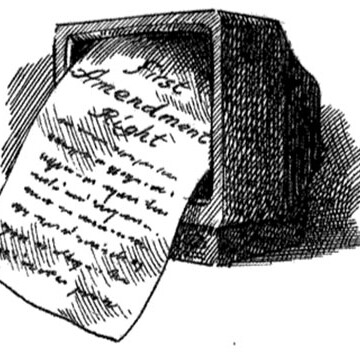
For sheer incoherence, incomprehensibility, and outrageousness, nothing beats the United States Supreme Court’s First Amendment jurisprudence. The First Amendment is a fairly simple piece of constitutional law: It forbids the federal legislature from restricting freedom of speech, freedom of the press, freedom of religion, or from establishing a national religious sect. Unfortunately, in the 20th...
Post
A Closely Watched Term
The Supreme Court’s closely watched October 1999 term came to an end on June 28, and its themes finally became clear: inconsistency, incoherence, and arbitrariness. On that last day, the Court released important decisions on abortion, aid to religious schools, and homosexual rights, and refused to intervene in the Elian Gonzalez case. The Supreme Court’s...
Post
The Clinton Scandals
The Clinton scandals continue to gurgle below the surface of American politics and law, occasionally throwing up a polluted geyser. Kenneth Starr’s successor as independent counsel, Robert Ray, is still considering indicting the President when he leaves office; disbarment proceedings are under way against Mr. Clinton in his home state of Arkansas; and Linda Tripp,...
Post
Clarifying Constitutional Law
The U.S. Supreme Court, many had hoped, would use this term to clarify constitutional law and move jurisprudence somewhat closer to the original understanding of the Constitution. The Court has yet to issue important opinions regarding school vouchers, partial-birth abortion, the Violence Against Women Act, and prayer at high school football games, but the latest...
Post
Sensationalizing if Youth Violence
“Children killing children.” The very phrase is chilling. But what can the law do about a six-year-old who shoots and kills his first-grade classmate? According to our Anglo-American legal heritage of common law, not much. Children under the age of seven are presumed not to be able to know the difference between right and wrong,...
Post
Dodging A Bullet
The U.S. Supreme Court, late in January, dodged a bullet by refusing to decide whether Maryland’s decision to close its public schools on Good Friday violated the First Amendment’s Establishment Clause. State and local Good Friday closing laws have been with us for many generations, but recently they have been challenged in the federal courts....
Post
Voucher Plan
School vouchers violate the First Amendment of the Constitution—or so ruled federal District Judge Solomon Oliver, Jr., in early December. Cleveland’s voucher plan, authorized under state legislation, was nondenominational and permitted students, selected by lot, to choose a school participating in the program and to receive a grant from the state to subsidize the cost...
Post
Arbitrary Nature of the Supreme Court
Pro-abortion and pro-centralization forces have won another victory in the battle over partial-birth abortion. As I detailed in this space last month, a three judge panel of the Seventh Circuit Court of Appeals, breaking with other federal courts, upheld Wisconsin’s and Illinois’ laws against the procedure in October 1999. Planned Parenthood, the misnamed Hope Clinic...
Post
Our Constitution and Theirs
We here at Chronicles are Constitutional Fundamentalists. We swear allegiance to the Constitution of Hamilton, Madison, and Jay, and not the Constitution of Warren, Brennan, and Souter. We do not believe that the Constitution is a “living document” that must be altered by successive Supreme Court justices to keep pace with the times. The Constitution...
Post
Back in the News
Partial-birth abortion is back in the news, and for the first time, there appears to be some hope for the pro-life side. Of all the extraordinary things that the United States Supreme Court has done in the past few decades, none matches its 1973 decision in Roe v. Wade. Justice Blackmun’s majority opinion articulated a...
Post
The Teaching Evolution
The teaching evolution is back in the news, in a case that the media—with their usual sensationalism—are comparing to the Scopes trial of 75 years ago. On August 10, Steven Green, legal director of the Washington-based Americans United for Separation of Church and State, sent a letter to the Kansas State Board of Education, threatening...
Post
Every Neighbor a Litigant
Goethe taught us that true happiness comes from being engaged with others in productive projects, and we have known since Plato and Aristotle that man is a social animal, but we would be hard put to reach these conclusions if our only guide were the current state of American law. Far too often the American...
Post
L’Affaire Lewinsky
L’Affaire Lewinsky, most of us thought, ended with the escape of our President in the United States Senate. As a particularly sweltering July turned to August, though, “all Monica all the time” junkies got their best fix in months. First, Linda Tripp, who is either one of the most evil betrayers of all time or...
Post
The Court’s Current “Conservative” Bloc
The U.S. Supreme Court ended its October 1998 term on June 23, the earliest closing date in 30 years. Anthony Lewis, writing in the New York Times, declared that the term “showed us a phenomenon that this country has not seen for more than 60 years: a band of radical judicial activists determined to impose...
Post
Storytelling
Constitutional lawyers like to tell the story (probably apocryphal, since it’s too good to be true) that, sometime in the 1960’s, when the Warren Court was engaged in its effort to rewrite the Constitution, one crusty old Harvard Law professor, upon reading the latest product from the Supremes, stormed into his constitutional law class, roared...
Post
The Living Constitution and the Death of Sovereignty
As this is written, the United States and its NATO allies are bombing the Serbian forces of Slobodan Milosevic. This is the first offensive action for NATO, and the first time that jellied armed forces have been unleashed against a sovereign nation with which the United States is not formally at war without an express...
Post
“Visual Politics”
“Visual politics” seems an apt description of our current regime. Since most Americans acquire their news by television, those making news or seeking to communicate it must do so visually. Since television has not really formulated its own vocabulary, however, its visuals owe a debt to the movies. It is a commonplace to speak of...
Post
Politics Make Strange Bedfellows
Politics, they say, makes strange bedfellows, but that’s nothing compared to constitutional amendment. A few weeks ago, I found myself testifying before the Constitution Subcommittee of the House Judiciary Committee, and on the panel with me, testifying in favor of the Flag Protection Amendment, were a former Miss America, a holocaust survivor, an African-American bishop,...
Post
The Tribute Which Vice Pays to Virtue
Hypocrisy, the Duc de La Rochefoucauld told us, is the tribute which vice pays to virtue. Tributes of this kind have been flowing lately from the members of the United States Senate and the mainstream press who clamored for some sort of censure of President William Jefferson Clinton, or who scrambled, for a while, to...
Post
Sisyphus and States’ Rights
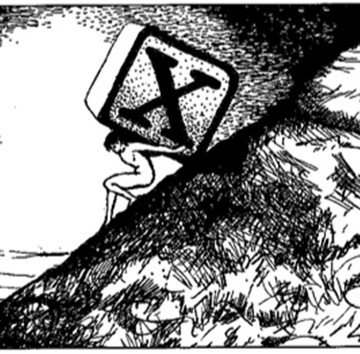
Can a ten-year-old girl successfully sue a local school board for failing to prevent the sexual harassment of the young lady by an elementary-school classmate? Should an Alabama state court judge be able to display his hand-carved copy of the Ten Commandments in his courtroom? Can the people of a state decide that no state...
Post
An Extraordinary Suggestion
The impeachment proceedings were the subject of an extraordinary suggestion made by Pat Caddell, a former pollster for the Democratic Party, at the “Dark Ages” retreat for members of the “conservative movement” over New Years’ weekend. Caddell told the gathering that the problem with the Republican Party was that they couldn’t seem to pick the...
Post
Is There Hope for the Federal Courts?
In a radio address last year, President Clinton railed against congressional Republicans who were stalling on his nominees to the federal bench and had even threatened some sitting judges with impeachment. Their actions, he claimed, had endangered our tradition of judicial independence, and were an attack on the rule of law itself. The truth, of...
Post
Recapturing the Constitution
In a landmark five-to-four decision last spring, in United States v. Lopez, the Supreme Court announced—for the first time in almost 50 years—that Congress had exceeded its interstate commerce powers. At issue was a federal statute—the Gun Free School Zones Act of 1990—which forbade the carrying of firearms within one thousand feet of a school....