Category: Reviews

Home Reviews
Post

Straw Men and Ideologues

“It came burning hot into my mind, whatever he said and however he Battered, when he got me to his house, he would sell me for a slave.” —John Bunyan Kenneth Minogue explains at the outset that he prefers a narrow definition of “ideology”: the word refers not to all action-oriented systems of belief but...

Post

Best-Sellers & Brown-Baggers

It is tempting to say that Mary Bringle’s Hacks at Lunch was written by a hack—at lunch or otherwise engaged. But so laconic a pronouncement would leave the reviewer open to charges of disingenuousness and flippancy; and, since some such judgment cannot be substantively avoided, it must be elucidated and qualified. The premise of this...

Post

Inside Jokes

From August 1941 until November 1943, George Orwell served as the producer and writer of a radio talk show beamed by the BBC out to India. Physically unfit for army duty, he considered the job to be his way of “doing his bit” in the war against Hitler. The image of Orwell as a chief...

Post

Between Sao Paulo and Tel Aviv

Sol M. Linowitz’s autobiography tells once again the classic story of the successful American. Son of a middle-class Jewish wholesale fruit dealer from New Jersey who was impoverished by the Great Depression, Linowitz attended Hamilton College on a partial scholarship, financing the rest of his education by waiting on tables, working in the college library,...

Post

The Sheriff and the Goatman

“May not a man have several voices . . . as well as two complexions?” —Nathaniel Hawthorne In George Garrett’s stories the conflict often arises between a wild lone Outsider and a generally conscientious but insecure Establishment figure; in Peter Taylor’s stories the conflict is likely to take place between generations, the revolt of the...

Post

The Criminal Type

Iconoclasm is the poor man’s intellectualism. Challenge a traditional way of thinking and you can vault yourself instantly into the celebrity spotlight, with lucrative publishing deals, testimonies before congressional committees, and interviews on Good Morning America. Since the 1960’s the iconoclasts have held sway in the study of criminal behavior, ignoring important studies done in...

Post

Saints or Stockbrokers?

“As long as virtue was dominant in the republic so long was the happiness of the people secure.” —Robert E. Lee John P. Diggins raises various, often profound, questions about the moral foundations of America as a political society. Diggins is fond of calling attention to what he considers the underlying cultural tensions in American...

Post

Star of David

As Israel becomes increasingly important in world affairs, Jews and non-Jews alike increasingly want to understand the origins of the Israeli state and of the Zionist movement. This is volume one of the first scholarly biography of Chaim Weizmann. It provides a thoroughly researched account of how a Russian Jew from the Pale of Settlement...

Post

The Herd of Independent Minds

“The bookful blockhead . . . [w]ith his own tongue still edifies his ears, / And always listening to himself appears.” —Alexander Pope Behind Stephen Berg’s Singular Voices, a new anthology of contemporary native poets writing about their own work, is the voice-theory of poetry, which holds that a poet is valuable not for his...

Post

Forget This Alamo

This is the kind of novel that inspires slick reviewers and writers of publisher’s blurbs to new outrages in inflated but tacky description: “lusty,” “brawling,” “pulsing with ambition,” “passion and greed,” “an epic saga.” The story begins in Mexico in 1927, with flashbacks going back to the turn of the century, and ends in 1982....

Post

In Turbulent Seas

Robert Ruark has nothing on Otto Scott for ability to provide simultaneous political commentary and African travelogue. A careful historian and shrewd observer with the ability to set forth his observations with apt parsimony, Scott has written a book eclectic in sweep, including incisive commentary on the state of Western morality, media and culture, and...

Post

Uncivil Rights

“It is better that some should be unhappy, than that none should be happy, which would be the case in a general state of equality.” —Samuel Johnson The best way to corrupt a value is to maximize it. That is one of the fundamental lessons of liberalism in the postwar period. Take rights. Push one...

Post

Utopian on the Dole

An afternoon’s reading of Bolo’Bolo by “P.M.” leaves the reader wondering what the New York State Council on the Arts is doing giving public money to Columbia University to publish such books. A futuristic Utopian tract, Bolo’Bolo is as inane as it is self-indulgent. Its author, P.M., a slave to every cliche of the untutored...

Before the Big Bang
Post

Before the Big Bang

“Oh hide the God still more!” —Alexander Pope These days orthodox Christians and skeptical physicists disagree over nothing—yet their disagreement is literally of the first importance. For the “nothing” that is at issue is the void that immediately preceded the Big Bang, the cosmic explosion 15 billion years ago in which the universe began. When...

Post

The Poet as Revolutionary

“Every artist,” wrote V.I. Lenin, “everyone who considers himself as such, has the right to create freely according to his ideals, independently of everything.” Who would have guessed that the author of this noble thought is none other than the originator of one of the world’s most repressive social systems! Even the most remote similarity...

Post

Jolly Good Fellow

“The more I began to think about and read Coward, the more convinced I became that the history of British entertainment in the first half of this century was essentially the history of his own career.” With that observation, Sheridan Morley, drama critic and arts editor of Punch, begins his biography of Noel Coward. The...

Post

The Thousand and One Knights

Originally published in Catalan in 1490 and now newly translated by David H, Rosenthal, Tirant Lo Blanc is a prose masterpiece written by the Valencian nobleman Joanot Martorell and completed by Marti Joan de Galba after Martorell’s death. Written when the Catalan influence in Sicily, Rhodes, and other parts of the Mediterranean was still significant,...

Tocqueville Redivivus
Post

Tocqueville Redivivus

“America does not repel the past or what it has produced.” —Walt Whitman Were some power, either republican or princely, to entrust me with a classroom of promising youth who were to be educated to become the best possible historians of the future—well, I would find the works of John Lukacs indispensable. Why? Simply because...

Post

Missionary to the Amazons

Controversy and intense media scrutiny marked Dee Jepsen’s 14 months as President Reagan’s Special Assistant for Public Liaison to women’s organizations, until she resigned in October 1983 to work for the unsuccessful reelection campaign of her husband. Senator Roger Jepsen of Iowa. President Reagan’s extemporaneous remark that “if it weren’t for women, men would still...

Post

Annus Mirabilis

In his State of the Union address of January 6, 1945, Franklin Roosevelt looked to the future with confidence: “The new year of 1945 can be the greatest year of achievement in human history,” he declared. “Nineteen forty-five can and must see the substantial beginning of the Organization of World Peace. This Organization must be...

Post

Bloody Ivan

When historians draw up their lists of ruthless autocrats, Ivan the Terrible is usually near the top. When political scientists assert that totalitarianism is not a new phenomenon, they back up their claim with a reference to Ivan the Terrible, the 16th-century leader of Russia who dominated both church and state. This first Czar of...

Tales of Apocalypse
Post

Tales of Apocalypse

“Therefore nowe is it tyme to me  To make endyng of mannes folie.” —The Last Judgement, York Cycle Plays  Nothing seems very certain nowadays for writers of fiction. Traditional religious and moral values have been under attack for so long that many writers uncritically assume they are thoroughly discredited. Even much of the certainty of science...

Post

King, Queen, Knave—Mind, Brain, and Body

“Where so’er I turn my view All is strange, yet nothing new; Endless labour all along, Endless labour to be wrong.” —Samuel Johnson Epicurus had an answer for everything. The universe consisted of nothing except atoms and void; the qualities of matter and of our sensory experience—hardness, color, heaviness, etc.—were determined completely by the size,...

Post

Natural Philosophy

At last there is a scientific work that justifies the term natural philosophy. In every discipline there should eventually come a time when it is possible to repeat the words of a great historic occasion in America: the man and the hour are met. Such events are increasingly rare in the sciences, where specialization and...

Embarrassment of Riches
Post

Embarrassment of Riches

“Semper inops quicumque cupit” (Whoever yearns is always poor) —Claudian During the 1950’s, an increasing number of middle Americans no longer took seriously the principle that honest work carefully performed is its own true reward. As the exhortative Vance Packard and a host of other social critics noted, these Americans defined themselves not by the...

Post

A Stranger to His Kind

“Poetry,” declared T.S. Eliot, “is not a turning loose of emotion, but an escape from emotion; it is not an expression of personality, but an escape from personality.” More than one set of eyebrows has arched at that pronouncement. For surely we read in part to know the man behind the work. A blind bard,...

Post

The Libertarian Temptation

Is it possible for the traditional conservative concern with virtue and the good society to be reconciled with the libertarian emphasis on individual freedom? Should libertarianism be considered part of conservatism, or is it an alien presence? These are some of the crucial questions editor George W. Carey and a variety of conservative and libertarian...

Post

Proust Among the Buckeyes

Originally published in 1963 by the Ohio State University Press, Ohio Town quickly drew a near-cult following that Harper & Row would now evidently like to amplify in the wake of Santmyer’s best selling ” . . . And Ladies of the Club.” This personal diary of a small, Midwestern town’s evolution can be best...

Post

Priam’s Daughter

Christa Wolf is an East German novelist who delivered several lectures at the West German University of Frankfurt on a work-in-progress focusing on the Trojan seeress, Cassandra. Cassandra survived the sack of Troy to be taken back to Greece by Agamemnon, only to be slain with him by his wife, Clytemnestra. Her novella on this...

Post

The Faith of a Critic

The 25 short essays on a variety of “Christian classics” collected in this book originally appeared in the Neiv Oxford Review between November 1979 and October 1982. Collected here, in their total economy, James J. Thompson’s essays remind us of the maturing legitimacy of the interdisciplinarv relations between literature and religion. Christian Classics Revisited shows...

Post

The Luddite as Messiah

Jeremy Rifkin declares himself a heretic in this book, but he is more accurately described as a Cassandra and not a Huss or a Bruno. This “new age” doomsayer feels romantic impulses and expresses them with poetic skill, but his limited grasp of history, his absurd economic proposals, and his skewed philosophical perspective still show...

Naming the Bard
Post

Naming the Bard

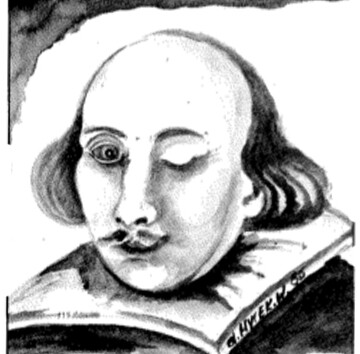
“Vera nihil verius” —Legend on the coat-of-arms of Edward de Vere It’s not the same as saying that God is dead, or the world is flat, or the check is in the mail. Yet one would think that Charlton Ogburn had committed that kind of atrocity, judging by the reaction of most orthodox Shakespearian scholars...

Guns, Butter, and Guilt
Post

Guns, Butter, and Guilt

“Guns will make us powerful; butter will only make us fat.” —Hermann Goering It is 40 years now since the Allies claimed victory over Germany and survivors on both sides made the first groping attempts to uncover the meaning of Nazism. Yet despite the availability of almost inexhaustible sources and the persistence of armies-of scholars,...

Post

William Morris in Tokyo

Mingei: Japanese Folk Art, an exhibition consisting of 115 paintings, sculptures, ceramics, furniture, lacquers, toys, and other artifacts, opened at the Brooklyn Museum on July 12 and remained on display through September 30, 1985. Most of the art of Japan is imbued with simplicity, directness, and a tremendous sense of design. Japanese work in the...

Post

Revolution and Its Discontents

Winner of France’s Renaudot Prize, this autobiographical Bildungsroman is a first-person narrative of a young man from a Belgian village who begins as a seminarian and ends as a disillusioned anarchist. Under the direction of his widowed mother and the village priest, he enters the seminary in Louvain, where his study of the changing values...

Post

Aloha, Captain Cook

The relationship between culture and history, structure and event is one of those questions to which every school of social science has an answer. Marshall Sahlins belongs to that vanishing species: the historically minded anthropologist. Like his mentor, Leslie White, and his colleague, Elman Service, Sahlins has dedicated much of his career to discovering the...

The Bear and His Claws
Post

The Bear and His Claws

“The wisdom of all these latter times, in princes’ affairs, is rather fine deliveries, and shiftings of dangers and mischiefs when they are near, than solid and grounded courses to keep them aloof.” —Sir Francis Bacon No matter where the finger roams on the map, the question inevitably arises: What are the Russians trying to...

Post

A Hero for Our Times?

Lord Louis Mountbatten died in 1979, a victim of IRA assassins. Since then, no fewer than three biographies on the man have appeared (if one includes The Life and Times of Lord Mountbatten, the book on Mountbatten’s self-orchestrated television documentary, shown in this country as Mountbatten: A Man for the Century). The latest, by Philip...

Post

Crumpets and Crotchets

The reader knows from the outset of Miss Read’s 30th anachronistic novel of village gossip that the “affairs” at Thrush Green are not of the illicit variety. This latest amble into the not-so-lively lives of the middle-aged people last encountered in Read’s Gossip Prom Thrush Green (1981) presents a world dominated by old-fashioned simplicity and...

Post

A Saint Seduced

Rarely has any important figure in the history of Christianity been as ignorant of theology as Martin Niemöller. Even his friend and political ally Karl Earth commented on the fact. It was Niemöller’s single-minded courage and patriotism that made him important. In the Great War he was a U-boat commander. Disgusted with what he viewed...

Post

Defending the High Frontier

For some time now, many have accepted the logic of nuclear defense. The strategic and moral superiority of a system that relies on killing weapons instead of people seems—on the face of it—undeniable. By suggesting we build such a defense. President Reagan altered the nuclear calculus in which our civilian population is currently held hostage...

Post

Reconstructing the Bostonians

Reconstructing the Bostonians A popular film that is more than chewing gum for the mind is a rare treat, and a novel of power and poignancy, translated into a well-created film, is sheer bliss. The Bostonians is a love story about an archaic Southern man who falls in love with a beautiful feminist preacher who...

Post

Money and Mammon

Christian moral thinking has always had to harmonize with New Testament texts such as “the love of money is the root of all evils,” and “blessed are the poor.” At the same time. Christian morality is incompatible with the kind of spirituality that decries the material world and all that pertains to it as either...

Post

Faith and Freud in the Bayou

A comic religious novel, North Gladiola treats the same region of southeast Louisiana and some of the same characters that James Wilcox introduced to his readers in his first novel, Modern Baptists (Doubleday, 1983). The protagonist of the first novel, bumbling Mr. Pickens, plays a minor role in the second, as do meddling Donna Lee...

The Flawed Tragedian
Post

The Flawed Tragedian

“He has learned speech and windy thought and the political temperament.” —Sophocles’ Antigone Among literary intellectuals, George Steiner holds a place of unmistakable influence. His essays on philosophy and literature can be found in the New York Review of Books, London Times Literary Supplement, and in other publications associated with making it in the world...

Post

The Truest Polyartist

It need hardly be said again that Laszlo Moholy-Nagy was one of Modernism’s primary figures, whose art, writing, and life remain for many a continuing inspiration. He was a polyartist, a true polyartist, who made consequential contributions to the traditions of several nonadjacent arts—painting, book design, artistic machinery, and photography—amidst lesser achievements in film, theater...

Post

Worldly Wise & Heavenly Foolish

The most widely known of these three novelists is Romain Gary, who committed suicide in 1980 at the age of 66, perhaps as a result of his disastrous marriage to the American actress and radical, Jean Seaberg, who had taken her own life a year earlier. A Lithuanian emigrant to France, where he played a...

A Voice From Down South
Post

A Voice From Down South

“Had he been even a Yankee, this genius would have been rendered immediately manifest to his countrymen.” —Edgar Allan Poe “All a rhetorician’s rules,” we learn from Hudibras, “teach him but to name his tools.” Professor Bradford, who knows much about the art of rhetoric, is a massive exception to this observation. This is a...

Post

Red-White-and-Blue Yiddishkeit

“It is much the point of Judaism that efforts to waken the consciences of others should not prevent Jews from reexamining their own.” So writes Stephen Whitfield, a professor of American studies at Brandeis, in this new study of 20th-century American Jewry. The means Jews have frequently used to arouse and examine the conscience have...

Babbitt and More in the Eighties
Post

Babbitt and More in the Eighties

“Every artist is a moralist, though he need not preach.” —George Santayana Accepting the Nobel Prize for Literature on December 12, 1930, Sinclair Lewis used the occasion to attack academic traditionalists, who, he said, “like their literature clear and cold and pure and very dead.” And among that group he singled out the New Humanists,...