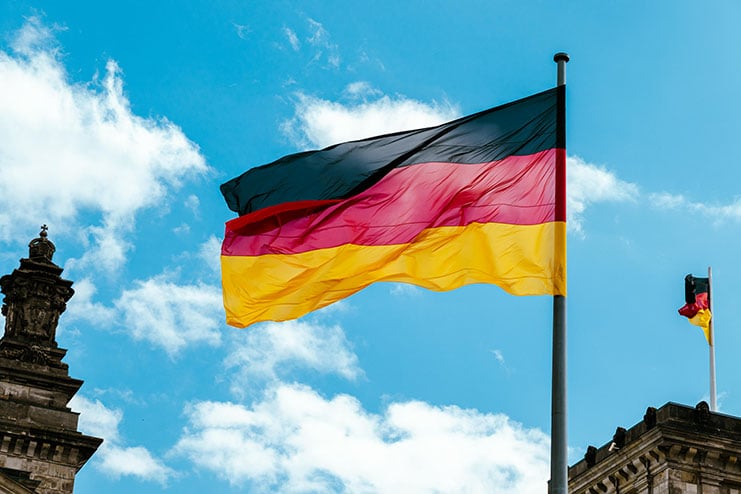
“European countries are already uneasy about Germany’s military buildup and defense spending,” Liana Fix writes in her latest Foreign Affairs essay about a potential German hegemony in Europe, and the repercussions that might come with it. Berlin, she writes, plans to allocate the majority of its defense spending to German defense firms, utilizing an exception in EU competition law that allows member states to forgo notification and clearance requirements for public support of their domestic defense industries when essential security interests are at stake.
This will undermine collaboration and make it difficult for true European defense industrial champions to emerge. It does not help that Germany wants procurement to remain firmly in the hands of national governments and rejects a greater coordinating role for the European Commission. What the continent’s defense industry needs is Europeanization and a single market for weaponry, but Berlin’s policies are not pushing the sector in this direction.
The worry about Germany returning to great power form isn’t new, and it is especially pertinent given the discussions about the future of NATO and European burden-sharing in the ongoing Munich Security Conference. Recent essays in The Atlantic, the International Politik, the Wall Street Journal, and from Fix herself previously in Foreign Affairs, indicate a realization among the German higher echelons that rearmament is not just necessary, but inevitable. As Fix writes in her latest:
There is a way for Berlin to expand its military power without sending Europe back to an era of competition and rivalry—perhaps even if Germany is eventually governed by the AfD. The solution is for the country to accept what the historian Timothy Garton Ash, writing in these pages three decades ago, called “golden handcuffs”: restrictions on its sovereignty through greater integration with its European neighbors.
The reason is simple. Fix acknowledges that Realists had it right: Europe’s old national rivalries did not vanish with the advent of the EU, they were just put on ice, thanks mostly to NATO and American muscle. The Union is an economic club first and foremost; real security came from American troops and leadership keeping things in line. Washington’s heavy hand was what kept the “German problem” from sparking the usual security fears stemming from its size and central location. With America pulling back from Europe, those old tensions could thaw fast, as evident from the increasing tensions between Berlin and Paris, with Berlin consistently siding with the United States on questions of strategic autonomy, to shared European debt, to joint procurement of weapons.
Unfortunately, Fix is right about the theory but draws a faulty conclusion from it. Any theoretical fear of hegemony requires a rival or static power in the equation that is fearful of hegemony. The static power in this equation, with an overwhelming material and martial superiority, is the United States, but the U.S. is not and has no reason to be afraid of German rearmament. Indeed, the U.S. would benefit from a rearmed Germany acting as a buffer within Europe and a junior partner of the U.S., on whom Washington can depend in extremis to advance their shared interests. To put it in simple terms, a German-American duopoly in Europe is the only stable balance in a scenario of partial American retrenchment or any great power rivalry in Asia. The EU as an entity is too chaotic and incoherent and it exists as a potential rival to the U.S. Further, no other individual European power can seize the burden alone, should Washington choose to shift it.
Realists argue that Europe cannot be nor can it stay united without a single, dominant military power uniting it—either by overwhelming force or conquest. Kissinger’s Question concerning Europe remains valid. To be a supranational (imperial?) great power, alone providing security to all of Europe, the EU would need four variables: a combined army under one European command; a domestic European Guard gendarmerie to crush any rebellion against centralized EU authority; a neutral pan-European officer class and intelligence agencies; and total narrative control and freedom from American tech, free speech, and media within Europe as well as a shared European tech-industrial-banking policy with shared debt. Suffice it to say, none of that is achievable in the near term. Consequently, the EU cannot be the protector of Europe at least in its current form. Germany however, can.
Others argue that German hegemony will unleash the traditional balancing instinct of other powers, thus requiring Germany to have “golden handcuffs.” In the first place, the idea that Poland and France will balance Germany on their own, is ridiculous. But the “golden handcuff” theory has one major flaw. The wolf would have to agree to be chained, voluntarily. That kind of arrangement is unsustainable and rarely the long-term solution. Americans would not like or agree to such an arrangement if it would them and Germans won’t like or agree to it, either, over the long term. Those who pay get to play. If Berlin wants to spend more and direct that spending to Berlin-based tech and arms industries, then there’s frankly nothing the EU can do to stop it. A hegemon cannot be expected to be benevolent, keep its hegemony sustainable and profitable, and inspire everyone’s admiration all at the same time.
The notion that Trump is the common enemy uniting Europeans remains flawed, while the Rumsfeld question of old Europe and new Europe remains valid. The reality is that other than defending core Europe (Britain, Germany, and France)and maintaining the overall balance of power there, no other country means much to the United States. This was also the case during the Cold War. As Richard Nixon’s memo dictated:
Policy toward Western Europe, but only where NATO is affected and where major countries (Britain, Germany and France) are affected…The only minor countries in Europe which I want to pay attention to in the foreseeable future will be Spain, Italy, and Greece. I do not want to see any papers on any of the other countries, unless their problems are directly related to NATO.
The structural forces are increasingly compelling the U.S. to recalibrate its role in European security by transferring primary responsibility for “conventional defense” to capable allies while retaining exclusive control over nuclear deterrence. This concept of “burden shifting,” currently enshrined in the new National Security Strategy, envisions European states assuming more responsibility for logistics, ground forces, armor, and intelligence through accelerated rearmament and industrial expansion, with Germany being the central pillar of this effort. Such a shift is designed to prevent American strategic overreach at a time of relative American power diffusion and intensifying competition with peer rivals, most notably China.
This posture is also predicated on a simple element of realist logic. From a historical perspective, this reorientation represents a partial return to an earlier American tradition of offshore balancing. Prior to World War II, U.S. engagement in Europe was motivated largely by the desire to prevent the emergence of a continental hegemon capable of challenging American economic, military, and geopolitical primacy. The postwar settlement replaced this logic with institutionalized leadership through NATO and European integration, a framework that successfully stabilized the continent but also encouraged long-term European military dependency. Over time, this arrangement produced structural imbalances in which Western European states enjoyed extensive U.S. protection without commensurate contributions.
Today, mounting public skepticism in America, especially, toward prolonged foreign interventions, combined with China’s rapid advances in naval and nuclear capabilities, has generated strong incentives for Washington to reverse that course. By maintaining American nuclear assets in Germany and Turkey for extended deterrence, the policy mitigates proliferation risks and leverages European divisions to prevent hegemony. A rearmed, independent Germany at the helm of conventional security not only alleviates American burdens but also enhances transatlantic stability, aligning with long-term American interests in a multipolar world. Ultimately, for the U.S., the real special relationship is with Berlin, not Brussels, London, Paris, or Warsaw.
To rephrase Hans Morgenthau, Berlin remains the natural partner of the United States in any future European balance. A U.S.-German duopoly would share the burden in a stable and balanced way, owing mainly to the sheer size of the two powers. No other arrangement has this potential. The U.S. needs to shift the burden. Someone has to catch it. The European Union cannot, Germany can.
Leave a Reply