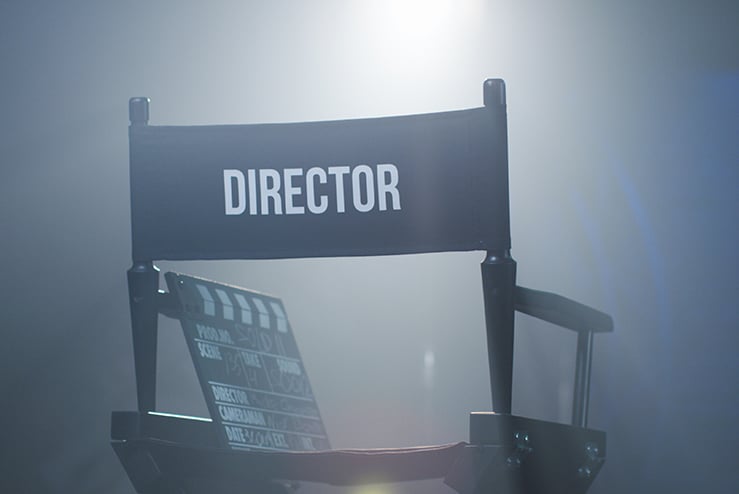
Last weekend saw record-breaking box office history. Backrooms, directed by Kane Parsons, made a staggering $81 million in its first weekend in North American theaters. Meanwhile, ticket sales for Curry Barker’s breakout film Obsession jumped again in its third week, sailing past $100 million domestically. Both directors started on YouTube, and their features cost almost nothing to produce. This success embarrassed Disney, whose nostalgia-farming, generic slop content, The Mandalorian and Grogu, was knocked off the top spot by these two independents.
We are witnessing a paradigm shift in filmmaking. These two directors built their careers outside of the Hollywood ecosystem, exposing it as bland, commodified, and privileged. The industry’s inner circles are now dominated by graduates of elite private film schools and those selected through diversity-focused initiatives. The drive to elevate women and minority filmmakers has established a new cultural elite of gatekeepers, resulting in the exclusion of a generation of new male talent. At this year’s prestigious Sundance Film Festival, only one of the top 10 U.S. dramatic feature slots showcasing new independent directors went to a white American male—a sharp drop from previous years.
This influence is especially evident at Sundance, which regularly draws filmmakers from elite academic institutions. In the same lineup, half of the directors were NYU Tisch alumni, even though its graduates represented only a small fraction of total submissions.
In 2023, Barker, a self-described “straight C and D student,” directed the horror short film The Chair and uploaded it to YouTube, where it has been watched over 10 million times. Parsons has amassed millions of views on YouTube by making short films since he was 14. Neither came through the Ivy League pipeline; both built their foundations in public schools. Barker credits his YouTube channel as his real education, calling it a “film school outside of film school,” while Parsons taught himself to use filmmaking software in middle school. At just 20 years old, Parsons is now the youngest director ever to top the box office charts.
Both directors learned what appeals to audiences, mastering the technique of building attention, while retaining creative control. By using YouTube to hone their craft, they demonstrated that an innate sense of internet-era storytelling can open doors that once required an expensive degree from USC or NYU. It’s a model diametrically opposed to Hollywood, whose raison d’être has shifted to weaponizing the memories of middle-aged audiences by pumping $200 million into decades-old franchises.
That both breakouts are psychological horror movies further underscores their achievement. As a lifelong horror fan, I can say with certainty that it is notoriously difficult to stand out in a genre that so often lapses into formulaic, one-dimensional tropes. It raises a question: How have two unknown directors managed to have such an explosive impact?
The answer is that they’ve managed to tap into the collective cultural consciousness of a new generation. From the birth of rock ’n roll to Jaws and then Nirvana, history demonstrates that whenever something real and original bursts onto the cinematic scene, it can define an era. A new generation, often alienated by corporate slop, longs to feel like something more than just passive consumers of a packaged culture—they want to be active participants in a shared, real-time event.
This energy is generated by works that emerge organically outside the boundaries of multinational corporations. All entertainment media carry this potential; when something authentic emerges, it channels the intense energy waiting to erupt. Sure, it will eventually be co-opted by the market and repackaged for mass consumption, but for a while the product is genuinely new. Horror—with its devoted fanbase, independent spirit, and drive for originality—is the perfect vessel for this transient cultural revolution.
Having watched both movies, I can see how they resonate with Gen Z. Obsession serves as a dark morality tale about romantic entitlement. It transforms the classic Monkey’s Paw story, injecting it with the neurosis and paranoia of modern-day relationships. It’s a genuinely creative, at times gory, horror movie. Think Psycho meets Fatal Attraction.
Meanwhile, Backrooms uses inventive psychological horror as an analogy for limbo—a visual representation of how youth can feel like a prolonged, suspended state of transition. The liminal dystopia of infinite, empty corporate offices captures the socioeconomic impasse facing a generation locked out of adulthood. Young people are trapped in an economic waiting room, with traditional markers of maturity now out of reach. Unable to progress, they delay marriage and put family plans on pause, a direct catalyst for cratering birth rates. Metaphorically, they’re left wandering Parsons’ yellow corridors: overeducated, underemployed, and unable to secure the stability their parent’s generation achieved with ease.
These are the bold, daring, and ambitious projects audiences are demanding, made by passionate creators who understand culture and prefer to rely on powerful ideas rather than eye-watering budgets. They favor the slow-burn buzz of building attention to the gaudy hype train of Hollywood promotion. Young independent directors are leading the way forward in filmmaking.
Leave a Reply