For decades, the Voting Rights Act has occupied a near-sacred place in American political life. Enacted in 1965, it was a forceful federal response to the attempts of Southern states to suppress black voters. In the following years, states abused the original intentions of the act, using it to redraw voting districts to give racial minorities advantages in elections.
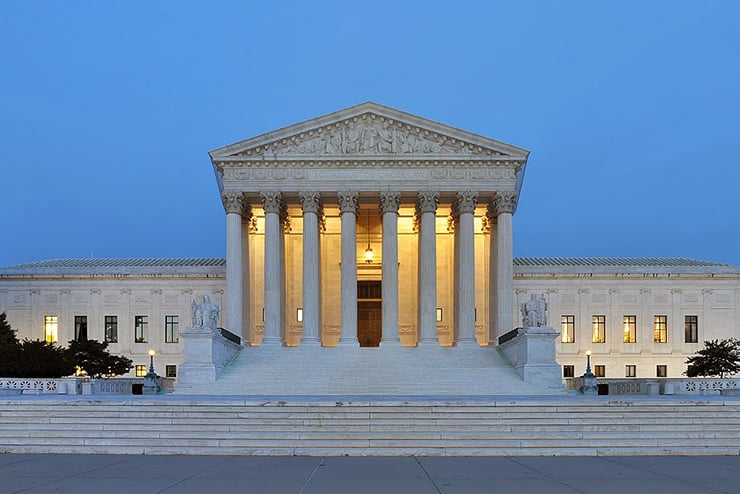
On Wednesday of last week, the Supreme Court ruled 6-3 in Louisiana v. Callais to end this overreach, sharply restricting the ability of states to use the Voting Rights Act as a tool of racial politics.
For the last 40 years, U.S. courts had aggressively expanded their interpretation of the Voting Rights Act in ways that reshaped political maps, often requiring states to create “majority-minority” districts to ensure minority voters could elect candidates of their choice, creating race-based voting blocs across the country. This shift transformed the nature of the law. It moved from protecting people’s right to vote to shaping political outcomes.
As the Supreme Court’s majority emphasized in their ruling, the law is not meant to “punish for the past,” but to ensure fairness going forward. Under the Court’s updated framework, states seeking to use the Voting Rights Act to redraw voting districts must meet a more demanding standard. It is no longer enough to show that voting patterns break along racial lines or that a different map could produce more minority representation. Instead, plaintiffs must prove that race itself—rather than politics or other legitimate factors—was the deciding factor in the creation of voting districts.
In modern American politics, race and party affiliation are often closely correlated. Black voters overwhelmingly support Democratic candidates, while white voters tend to support Republicans. Before Wednesday’s ruling, those patterns could be used as evidence of racial discrimination. Under the new approach, they raise a more complicated question: Are we seeing racial discrimination, or ordinary political behavior?
The Court has now ruled that you cannot simply assume discrimination from the outcome of the vote. You must prove it. Plaintiffs must “disentangle race from politics.” If a state can explain its voting district boundaries in terms of political goals protecting incumbents, maintaining party advantage, or adhering to traditional districting principles, then that explanation now carries real legal weight. In other words, a political decision that produces a racially uneven result is not necessarily a constitutional violation.
The Court also tightened another key part of the Voting Rights Act: the use of alternative maps. In the past, plaintiffs could point to an illustrative map showing how a state could have drawn districts differently to create more minority opportunity districts. Now, those maps must do more than increase minority representation—they must also respect the state’s legitimate political objectives.
That is a significant change. It means plaintiffs must show not only that a better map exists, but also that one that matches the state’s own terms. If an alternative map disrupts incumbents, alters partisan balance, or undermines political goals the state is entitled to pursue, courts may reject it.
Taken together, these changes reflect a broader shift in the Court’s understanding of the act. What was once a results-oriented doctrine focused heavily on racial outcomes is now moving closer to an intent-based framework that requires clearer evidence of actual discrimination.
Critics will most assuredly argue that this decision makes it harder to win voting rights claims. That is true. But that is also the point. The earlier approach carried its own risks. By treating racial disparities as presumptive evidence of discrimination, it encouraged courts and legislatures to organize political life around racial categories. Districts were drawn with race as a central factor. Voters were sorted accordingly. Over time, the system began to define politics by race.
Justice Clarence Thomas, in his concurring opinion, put the issue in even starker and more honest terms. He argued that the act never should have been interpreted to regulate redistricting at all. In his view, the statute is about access to voting and targets rules that deny or abridge the right to cast a ballot, not the inherently political task of drawing district lines.
That position may strike some as radical. But it is rooted in a deeper constitutional principle: the idea that the law guarantees equal rights, not equal outcomes. The Constitution does not promise that every racial group will achieve proportional political representation. It promises that every citizen will be treated equally before the law.
These concerns were anticipated, in a different context, by Hannah Arendt in her Reflections on Little Rock. Writing at a moment of intense national conflict, Arendt warned of the dangers that arise when political and social questions are collapsed into one another. When the state assumes responsibility for ordering every aspect of communal life in pursuit of abstract principles, those principles can collapse into themselves. Her caution was not against justice, but against the destruction of any limiting principle. She was opposed to what she called “the Federal decision” to get involved in the first place.
The question of where to draw the line between necessary intervention and federal overreach remains with us.
America’s historical struggles with race and equal justice before the law cannot serve as a perpetual justification for expanding federal authority beyond its constitutional bounds. Laws enacted in moments of crisis often carry the seeds of later excess, particularly when their application is untethered from the conditions that gave rise to them.
The Court’s decision reflects this awareness.
It does not rest on declarations about national virtue or sweeping claims about moral advancement. It rests instead on a quieter, more restrained principle: that law must be tied to present facts, that constitutional limits must be observed, and that not every disparity is evidence of injustice requiring federal correction. Section 2 claims will now be more difficult to sustain. States will retain greater discretion in structuring their political systems. And federal courts will play a more limited role in supervising those choices.
As the United States approaches 250th anniversary of its birth, the question is not whether the nation has been shaped by conflict—it has—but whether its institutions will continue to be governed by inherited political assumptions or by the disciplined application of constitutional principles. The Court’s answer, in this instance, is that the law must return to its proper bounds.
The bell has tolled—not for voting rights, but for the idea that they justify an ever-expanding, race-conscious, and federally managed political order.
Leave a Reply