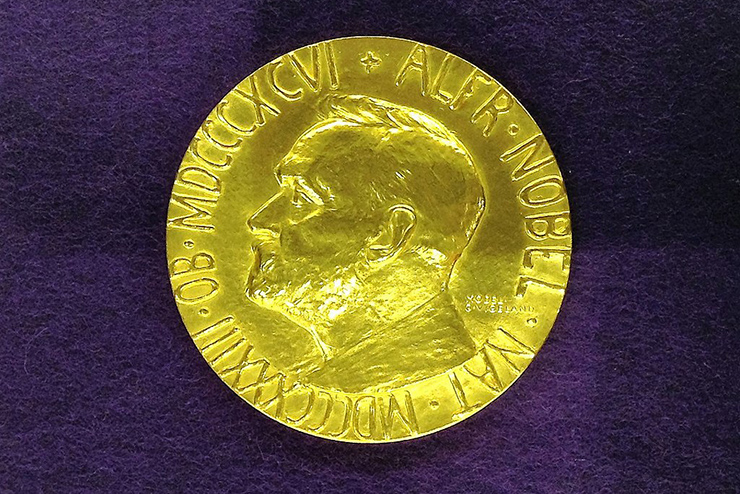
By sheer chance, Donald Trump’s announcement of the Gaza deal came a few days ahead of the Nobel Committee’s selection of this year’s Peace Prize laureate. The coincidence inspired much chatter about Trump deserving a Nobel. Social media was abuzz with the idea, but it’s too early for that.
First, the deadline for nominations was Jan. 31, just 11 days after Trump’s inauguration and before any kind of international arrangement was shaped. More importantly, it’s not a given that the ceasefire will lead to lasting peace. Hamas already issued statements demanding release of additional terrorists from Israeli jails, returned only four bodies of slain hostages, and declined to lay down arms. The bigger issues is that even if Hamas is removed from power, there is simply no appetite for peaceful coexistence between Jews and Gazans. The public mood in Gaza is simply too wild.
In the first months of his second presidency, Trump’s supporters teased the idea of a Nobel for Trump regarding a potential settlement of the Russo-Ukrainian war—but that hope went up in smoke. By Trump’s own admission, the conflict that he hoped would be easiest to settle turned out to be quite complicated. Eastern Europe is a novel field for U.S. meddling, to be sure.
Traditionally, American presidents spend their second terms aggressively pursuing “legacy.” Most often this means the Nobel Peace Prize—which presidents often believed they could earn by solving the Arab-Israeli conflict. This doesn’t always yield expected results, however. Consider Bill Clinton’s attempt at negotiations at Camp David in 2000. When those broke down, violence erupted in the region.
Trump —and his son-in-law Jared Kushner —tried an entirely different approach from that of earlier administrations. Whereas the conventional wisdom held that peace between Arabs and Jews will come after a successful implementation of a two-state solution west of the river Jordan, Kushner negotiated the Abraham Accords between Israel and the Gulf States. Reconciliation between Israel and Palestinian Arabs may or may not come later and what shape it will take is a matter of conjecture. But the peace treaty signed on the South Lawn in fall 2020 was historic in that it showed that Arabs and Jews have mutual interests that can form a basis for cooperation.
That was, notably, in Trump’s first term and he had hopes then for higher reward than a Nobel. The ceremony took place on Sept. 15, in an election year and three days before the eve of the Jewish new year. American Jews were about to go to synagogues and talk about peace they prayed for all their lives. Surely, it ought to have had an effect on their votes. Except that it didn’t. Perhaps Supreme Court Justice Ruth Bader Ginsburg’s passing on Sept. 18 stole the show, but the expected boost in Jewish votes for Trump did not materialize.
The Abraham Accords are now five years old; they survived the Gaza War, the Lebanon campaign and the Twelve Day War. Although it’s now on ice, the Saudi-Arab normalization can restart if Gaza quiets down.
Although Trump may richly deserve a Nobel for the Abraham Accords, they don’t give those to men named Donald Trump. In a response to a question about awarding the prize to Trump, the chair of the Norwegian Nobel Committee Jørgen Watne Frydnes explained:
This committee sits in a room full of portraits of all laureates, filled with courage and integrity. We make decisions based on work and the will of Alfred Nobel.
That phrasing suggests that, in the Nobel Committee’s view, the American president lacks courage and integrity. It was always doubtful that the organization that consistently promotes left-wing causes would show gratitude to a conservative icon.
This year’s honoree is the Venezuelan opposition leader and pro-democracy activist Maria Corina Macao. Finding out about the award, she thanked the Nobel Prize Committee and then dedicated her prize to “the suffering people of Venezuela and to President Trump for his decisive support of our cause.” Sick burn!
The Nobel Peace Prize is fool’s gold. Macao’s award is hard earned, but the Nobel Committee has beclowned itself on too many occasions to be taken seriously. It gave the award to Arafat on the premise that he was becoming a reformed terrorist. And to Barack Obama for getting elected—after which he proceeded to bomb weddings in Afghanistan, destabilize the Middle East and, most importantly, incite race war in his own country. Why would anyone want to find himself in that company?
Conventional thinking holds Nobel Prizes as the most prestigious among awards today, but they are prestigious only because Western civilization, for now, is ascendant. They enabled us to project our values into the world, but our values are not universal, and, in any event, Western civilization today doesn’t look inwardly sound.
Nobel Prizes come out of the endowment left by its namesake, Alfred Nobel, in the early 20th century. The endowment is overseen by the Nobel Committee located in Sweden. Sweden today is just 80 percent indigenous, with the number much lower among the youth. It’s an open question how the country can continue functioning and sustain the institution that doles out awards.
If Trump really wants a legacy abroad, I have a better idea. When he first floated the plan for rebuilding Gaza as a resort and an economic zone, Jews worldwide compared him to Cyrus the Great, the sixth century BC Persian King who spearheaded the return of Jews from Babylonian exile. We are eternal people with a long memory and if he ensures peace and security for the Holy Land, Trump has a real shot of being viewed there as the next Cyrus.
That said, Trump’s most important legacy will be here at home. Trump was elected to secure our border and restore American greatness, not just to make diplomatic breakthroughs. What he does domestically is always going to be the most important thing. He can save the West only by saving America—and who cares what Jørgen Frydnes thinks?
Leave a Reply