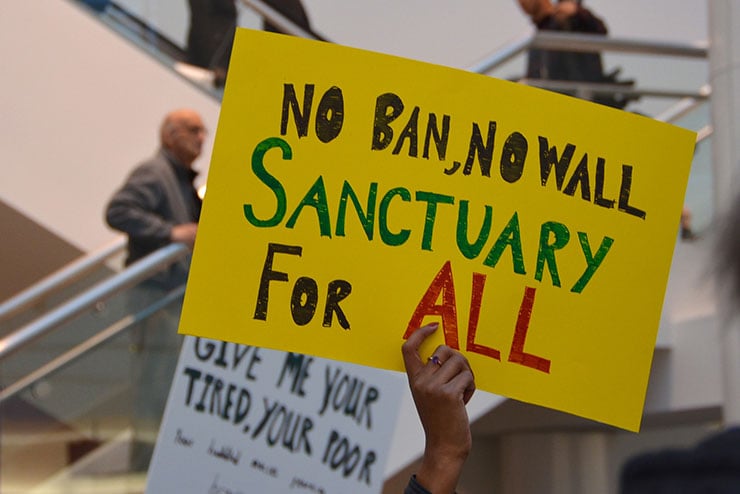
In the era of Trump 2.0 where support for immigration enforcement is ascendant, sanctuary policies increasingly look like a worn relic from a best forgotten time. If the remainder of Trump’s second term is as successful on immigration as his first six months have been, the concept of sanctuary cities may finally be tossed in the ashbin of history. It is an outdated, costly, and dangerous mess.
The follies of sanctuary cities are legion. Massachusetts’ HomeBASE program is a recent example. The state has spent nearly $1 billion to house illegal aliens, diverting resources from critical services like education, healthcare, and infrastructure. This massive expenditure, intended to provide shelter and support, instead overwhelmed local communities, stretched budgets thin, and sparked resentment among taxpayers who questioned why their hard-earned dollars were funding programs that prioritize non-citizens over residents. Massachusetts Governor Maura Healy has since scrapped the program.
Chicago is an even more egregious case study. The city, a long-standing sanctuary jurisdiction, spent over $400 million from 2023 to 2024 alone on housing, feeding, and clothing aliens. The city’s response to the influx was chaotic. By November 2023, nearly 12,100 migrants were in Chicago shelters, with an additional 3,100 sleeping in police station lobbies, O’Hare International Airport, and even parked buses due to a lack of shelter space.
These makeshift arrangements not only strained public facilities but also showed the city’s inability to manage the consequences of its sanctuary policies. Chicago’s Welcoming City Ordinance, which bars cooperation with Immigration and Customs Enforcement (ICE), further diverts resources from addressing violent crime in a city already plagued by high homicide rates.
Lately, however, residents of sanctuary cities have been paying attention to the damage these policies have caused in their communities. Chicagoans thought the worst was over when the disastrous mayoralty of Mayor Lori Lightfoot ended. Yet her successor, Brandon Johnson, makes Lightfoot look like a border hawk by comparison. Johnson, the worst sanctuary mayor in America, proceeded to welcome even more illegal aliens into the city and prioritize them over legal residents. As a result, video of Chicago residents roasting Johnson to his face at city council meetings has become must-see TV.
Attorney General Pam Bondi recently announced that the Justice Department would target sanctuary jurisdictions for litigation, identifying nearly three dozen cities and states for impeding federal immigration enforcement. Bondi’s lawsuits, such as those filed against New York City and Chicago, argue that these jurisdictions violate federal law by refusing to honor ICE detainer requests, which ask local authorities to hold illegal aliens for federal custody.
President Trump’s aggressive immigration enforcement has already yielded results and reduced the sanctuary chaos. U.S. Border Patrol reported just 7,200 migrant arrests at the southern border in March, down from a peak of 250,000 in December 2023. The steep decline demonstrates that robust enforcement deters illegal crossings, alleviating the pressure on cities overwhelmed by migrant influxes.
Sanctuary policies, by contrast, act as a magnet, encouraging illegal immigration by signaling that certain jurisdictions will shield migrants from federal authorities. Without these policies, the lure to enter the country illegally would be significantly diminished, as potential migrants would face a higher likelihood of apprehension and deportation.
The sanctuary concept, born in the 1980s, is outdated in today’s context—even from the point of view of those who are soft on illegal immigration. It was designed for a different era, when illegal immigration was less widespread and public resources were less strained. Today, with cities like New York spending over $7 billion on migrant services since 2022, and Chicago struggling to house thousands in makeshift shelters, the financial and logistical toll is undeniable. These policies have created a costly, dangerous mess, diverting funds from critical public services and emboldening illegal immigrants.
It’s time to abandon the sanctuary experiment. By aligning local policies with federal immigration laws, cities and states can restore public trust, prioritize citizen safety, and allocate resources where they are needed most. This much has become undeniable: sanctuary policies have failed, and their continuation only perpetuates a cycle of chaos and inefficiency. President Trump’s enforcement measures offer a path forward, proving that a secure border and consistent legal framework can reduce the burdens on our cities and counties. The era of sanctuary jurisdictions needs to end, and it should be replaced by a commitment to the rule of law and the well-being of all Americans.
Leave a Reply