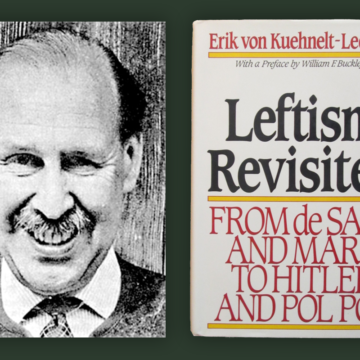
When Erik von Kuehnelt-Leddihn wrote his 1974 book Leftism: From de Sade and Marx to Hitler and Marcuse, he dedicated it to “the Noble Memory of Armand Tuffin, Marquis de la Rouërie.” Tuffin was a French aristocrat born in 1751, and one of the first Europeans to come to the aid of the American colonies—even...
Category: Remembering the Right
Remembering John C. Calhoun
Though John C. Calhoun was a distinguished American statesman and thinker, he is little appreciated in his own country. Calhoun rose to prominence on the eve of the War of 1812 as a “war hawk” in the House of Representatives and was the Hercules who labored untiringly in the war effort. While still a congressman,...
Remembering Donald Davidson
Lewis P. Simpson, in his memorable preface to The Literary Correspondence of Donald Davidson and Allen Tate, evoked Thomas Carlyle’s description of Robert Burns to hail Davidson’s own achievement. Burns, wrote Carlyle, was a “piece of right Saxon stuff: strong as the Harz-rock, rooted in the depths of the world;—rock, yet with wells of living...
Remembering Eric Voegelin: Anti-Gnostic Warrior
That political ideology and activism have become a new religion is something the average individual sees signs of nearly every day. A black man is killed in an altercation with police and his face instantly becomes an icon to be carried in protests, his name a phrase to be repeated with adoration. A slogan such...
Remembering Andrew Nelson Lytle: Agrarian Prophet
In the early 1990s it was my good fortune to make a pilgrimage to meet Andrew Lytle on the occasion of the publication of his last book, Kristin (1992). A book-signing had been arranged by the University of the South in Sewanee, Tennessee, where Lytle taught for many years and edited the illustrious Sewanee Review....
Remembering Allen Tate: Radical Conservative
A French woman who met the American poet Allen Tate (1899-1979) in the 1930s remarked, “Monsieur Tate is so conservative that he’s almost radical.” Etymologically, “radical” fits Tate well; his conservatism entailed returning, in the face of destructive social practices, to fundamental truths and the established customs embodying them, many immemorial. He espoused the primacy...
Remembering Leo Strauss
The political theorist Leo Strauss (1899-1973) is perhaps an unlikely subject for Chronicles’ “Remembering the Right” series. Although no one can deny the extensive influence of his ideas on the conservative (and later, neoconservative) movement in America during the Cold War and beyond, Strauss usually gave the impression that he was not a conservative in...
Remembering G. K. Chesterton
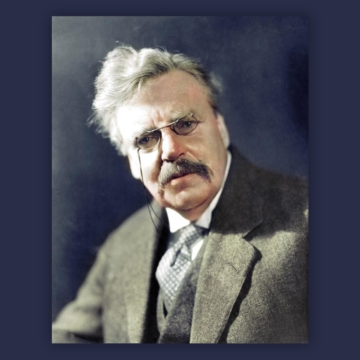
Fashions do not feed us, they only ensnare us. They do not satisfy us, they only contribute to our ongoing dissatisfaction with the fleetingness of everything. But they always seem more appealing and urgent than what really matters and what will remain after the fashions have fled. English writer Gilbert Keith Chesterton (1874-1936) was once...
Remembering Booker T. Washington
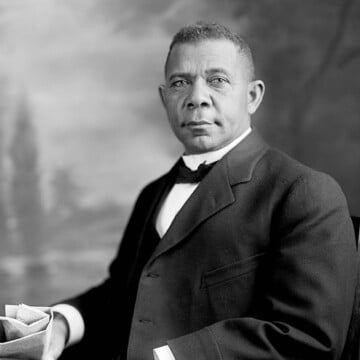
When Booker T. Washington delivered his “Atlanta Compromise” speech in 1895 at the Cotton States and International Exposition, nearly 15 years after the founding of the Tuskegee Institute in Alabama, the effect was galvanizing. Frederick Douglass, until then the most prominent black American leader, had been in his grave only six months. Washington, now ascendant,...
Remembering George Carey
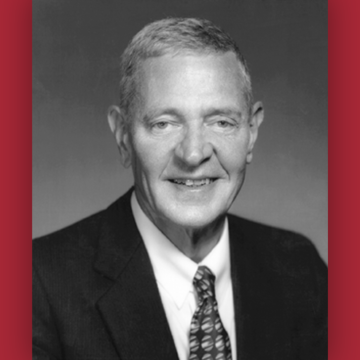
George Carey arrived at Georgetown University in 1961, the same year that I did. He was a young professor teaching courses on American government when I was a freshman in the College of Arts and Sciences, where he taught. My first experience with him as a student was notably unpleasant. Taking his first exam, I went...
Remembering Aleksandr Solzhenitsyn
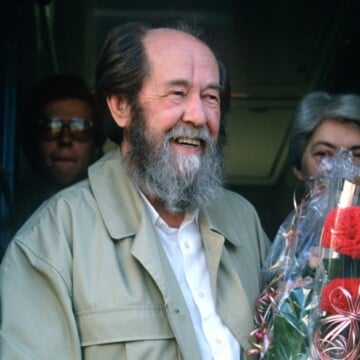
Ours is an age of politicization. No matter the problem, real or imagined, proposed solutions are always couched in the language of politics. No subject can be discussed without constant reference to its political ramifications. Whatever position a political leader may adopt with respect to a current “issue,” it must be judged not by its relevance...
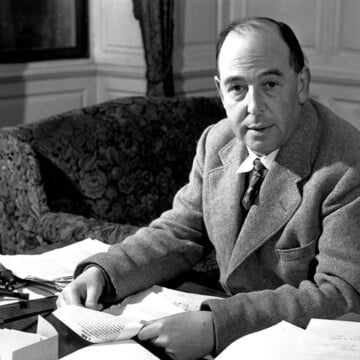
Remembering C. S. Lewis
C. S. Lewis (1898-1963) is arguably the most influential Christian writer of the 20th century. To tell the story of his life is to speak of a remarkable journey out of youthful skepticism into the joyful discovery of faith; of an embattled defense of traditional moral sanity; and of a profound artistry in the creation of...
Remembering Russell Kirk
Historians of the American right agree that Russell Kirk (1918-1994) was one of the key figures in the birth of the postwar conservative movement. Indeed, Kirk more than anyone was responsible for reintroducing the term “conservative” into American political conversation after its long domination by various strands of liberalism. The centenary of his birth in 2018...
Remembering Learned Hand
The name Learned Hand may not leap readily off the tongue if one were asked to list the conservative luminaries of the 20th century. Few people today outside the legal profession have any idea just how profound his influence as a jurist was and continues to be more than half a century after his death. His...
Remembering George Grant
The Unconventional Tory In an age beset by anxiety over the survival of the nation-state and social traditionalism, the Canadian thinker George Parkin Grant (1918-1988) is an indispensable guide to making sense of the modern predicament. Although he contributed to the field of political philosophy, his major works feel more like the stuff of prophecy. In...
Remembering James Burnham
The ideological trajectory followed by the first generation of neoconservatives, from their early fascination with Marxism during the Great Depression to their embrace of Cold War anti-communism and subsequent takeover of the Conservative movement, is by now a well-known chapter in American political history. The life and career of James Burnham followed a similar trajectory,...
Remembering Whittaker Chambers
At first glance, the personal history of Whittaker Chambers does not suggest a conservative frame of mind. His favorite poet was Walt Whitman, the bard of unshackled emotion and free-verse effusions. The most influential novel in his life was Victor Hugo’s Les Misérables, with its profound pity for the downtrodden. His chosen religion was the...
Remembering the Southern Agrarians
In 1920 a group of writers gathered at the home of playwright Sidney Hirsch in Nashville for bi-weekly sessions of reading and dissecting each other’s prose and poetry. It was the beginning of an outpouring of creativity from a group that would try to defend and restore the traditional Southern way of life against the...
Remembering William F. Buckley, Jr.
Two years after the death of the man whom one of his biographers, John Judis, dubbed the patron saint of modern conservatism, Encounter Books brought out a splendidly packaged omnibus volume of his columns and essays, entitled Athwart History: Half a Century of Polemics, Animadversions, and Illuminations (2010). On the cover, William Francis Buckley stands...
Remembering Willmoore Kendall
Among the 20th-century conservative movement’s legendary leaders, Willmoore Kendall (1909-1967) stands out as the one who most effectively offered a grounding in a specifically American philosophy. There is also a timeliness in this remarkable political scientist’s thought. Our society has become divided to an extent that Kendall might well have found horrifying—although not surprising. His...
Remembering H. L. Mencken
H.L. Mencken (1880-1956) may no longer seem relevant, but that is not his fault. Mencken was a well-read bon vivant with a taste for Teutonic philosophy and a fidelity to what he understood as truth. He was also a brilliant satirist, a longtime writer for the Baltimore Sun, and editor of The American Mercury. His...
Remembering Albert Jay Nock
As a conservative “anarchist” and non-interventionist with anti-vocational views on education, Albert Jay Nock (1870-1945) can seem paradoxical. His influence was lasting and he took unconventional stances on many topics. He viewed conservatism as primarily cultural, anarchism as radical decentralization, education as a non-economic activity, and foreign policy as a noninterventionist endeavor. Raised in Brooklyn...
Remembering Richard Weaver
Native Southerner and traditionalist conservative, Richard Weaver (1910-1963) was a unique figure in the rise of the modern American right. Weaver, a longtime professor at the University of Chicago, was an historian, literary critic, and rhetorician who despised the modern trend towards intellectual specialization. As an undergraduate, he embraced socialism after being convinced that the...
Remembering Robert Nisbet
It is hard to imagine anyone today having a career like Robert Nisbet’s: professor at Berkeley, Arizona, and Columbia; dean and vice-chancellor at the University of California, Riverside; author of widely used sociology textbooks; and co-founder, along with his friend Russell Kirk and a few others, of postwar intellectual American conservatism. Nisbet greatly admired Edmund...
Remembering Eugene Genovese
Eugene Genovese was one of the most influential and controversial historians of his generation. Whether Genovese ever self-identified as a conservative remains an intriguing question, without a simple answer. Few people knew him better than I did. In his teens, Genovese, the son of a Brooklyn dockworker, had joined the Communist Party USA. It eventually...
Remembering Murray Rothbard
Murray Rothbard, the principal founder of post-World War II American libertarianism, died 24 years ago. Lew Rockwell, one of Rothbard’s closest friends and the founder of the Mises Institute and LewRockwell.com, offers this description of his core ideas: If you want to understand Murray Rothbard, you need to keep one principle in mind…Murray believed in a...
Remembering M. E. Bradford
Anyone who met M. E. Bradford was unlikely to forget him. There was his imposing bulk and his Stetson cowboy hat, but that was just the trimming. This Oklahoman, long a fixture at the University of Dallas, radiated vast erudition, lightly worn and easily shared, often in colloquial language. He emitted goodwill and sparkling humor,...
Remembering R. L. Dabney
Robert Lewis Dabney was an American theologian and seminary professor. He was also a philosopher who wrote extensively on cultural and political issues of the second half of the 19th century. In our own day, when there is much confusion over what defines conservative political theory, we would do well to look to the writings...