UNESCO launched World Book Day on April 23, 1995, “in recognition of the power of books as a bridge between generations and across cultures.” Books also play an important role in enabling the mind to acquire knowledge, according to recent data—but the UN naturally values the multicultural aspect more.
Having vented my contempt for all things UN in my November “Straggler” column here at Chronicles, I can be excused for not knowing of World Book Day until it came to my attention a few days ago.
Even Americans well-disposed to the UN are likely unaware of World Book Day. The only public celebration of the event in the USA that I could find on a trawl through the internet is a street festival usually held in Kensington, Maryland, on the Sunday nearest to April 23. Enthusiasm is higher in other nations. In Britain, World Book Day Limited has been a full-scale charity since 1998, handing out books or book tokens to millions of schoolchildren nationwide.
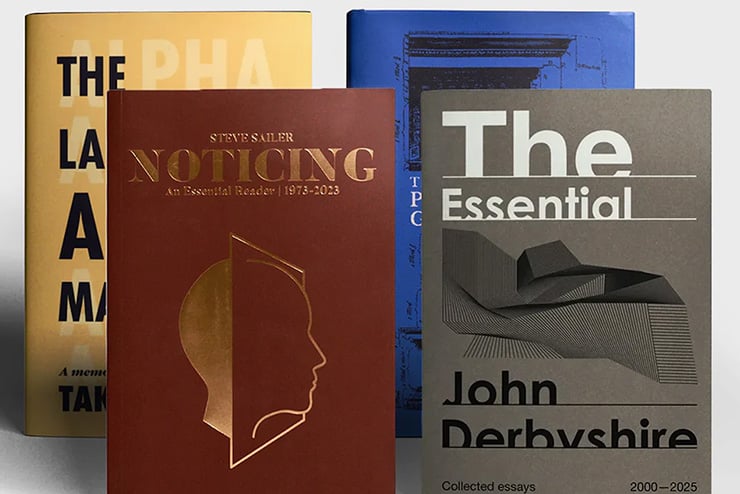
World Book Day caught my attention because I myself published a book a few weeks ago—my fifth by a regular commercial publisher, my first by Passage Publishing of Los Angeles. Passage, led by Jonathan Keeperman (“Lomez” on social media), was founded in 2021. Keeperman and others saw that U.S. culture and politics were going through a transition, opening up a market for writers of all kinds, fiction and nonfiction, who had long been unjustly neglected. In particular, post-Cold War U.S. conservatism—what Peter Brimelow and Paul Gottfried have called “Conservatism Inc.”—was no longer tenable. There needed to be some promotion of conservative commentators who, to quote from the Passage website:
…without fanfare and at great reputational risk, insisted on telling the truth. They saw mass immigration for what it was, understood the costs of American military adventurism, saw before everyone else the progressive excesses that would tear apart our social fabric, and refused to bow down to the moral pieties that ruled the age.
I am flattered to be included in that bold company along with our Editor in Chief, Paul Gottfried, my now-retired Chronicles colleague Taki Theodoracopulos, and my old pal Steve Sailer, all of whom have now been published by Passage.
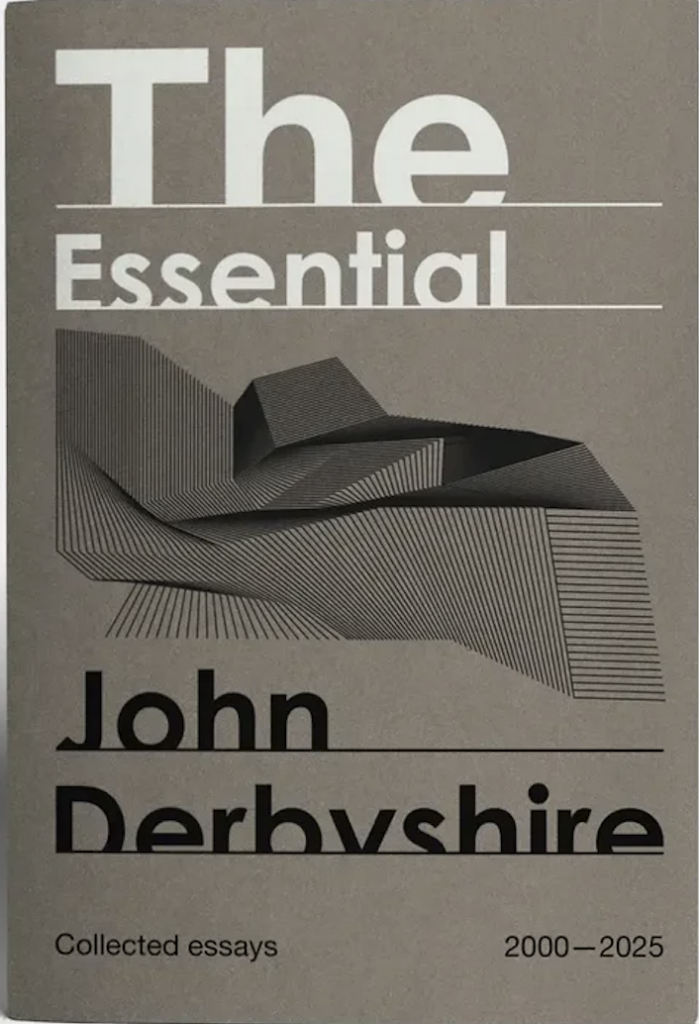
I am also enjoying the sweet savor of having brought out a book for which I didn’t have to write anything, other than a one-page preface. The Essential John Derbyshire is just a selection, made by Passage editors, of my published or posted commentary across the first quarter of the 21st century.
This latest little canoe of mine launches into a drying-up river. The printed book has been losing market share for at least 15 years. Scanning my archives, I see that I commented on the decline myself in July 2011. Per formal studies, printed books nosedived when the smartphone went mainstream in the middle of that decade. The percentage of teenagers who read in their leisure time “almost every day” halved from 27 in 2010 to 14 in 2025.
The news from the Academy is particularly grim. As the young British writer James Marriott wrote in his Substack,
A study of English literature students at American universities found that they were unable to understand the first paragraph of Charles Dickens’s novel Bleak House—a book that was once regularly read by children. “Most of our students,” according to another despairing assessment, “are functionally illiterate.” This chimes with everything I’ve heard in my own conversations with teachers and academics. One Oxbridge lecturer I spoke to described a “collapse in literacy” among his students.
That post is a preview of a book Marriott has written titled The New Dark Ages: The Death of Reading and the Dawn of a Post-Literate Society, which will be published on June 11.
Apparently, our rising generations have come to agree with the poet Philip Larkin, who told us 60 years ago that “books are a load of crap.” But wait: We have our smartphones, tablets, and talking books, don’t we? Is the end of printed books really a catastrophe? Marriott thinks so. He notes the recent decline of performance in reasoning and problem-solving tests of all kinds.
“The transmission of knowledge—the most ancient function of the university—is breaking down before our eyes,” Marriott wrote. “Writers like Shakespeare, Milton, and Jane Austen, whose works have been handed on for centuries, can no longer reach the next generation of readers. They are losing the ability to understand them.”
If Marriott is right, natural stupidity rises alongside artificial intelligence. The world of our grandchildren will resemble the movie Idiocracy—assuming the AI-bot overlords permit them to exist. ◆
Leave a Reply