What is a Robertsism? It’s a term I like to use to describe memorable quotes from Chief Justice John Roberts that infuriate the right and leave one wondering whether Roberts really believes what he is saying. For example, during Trump’s first term, Roberts famously rebuked the president for calling out “Obama judges” as political actors. Roberts insisted that federal judges were nonpolitical: “We do not have Obama judges or Trump judges, Bush judges or Clinton judges.” Similarly, during the oral arguments in the vital case of Trump v. Barbara in April, he uttered another one: “It’s a new world, but it’s the same Constitution.”
What Roberts meant is that the Constitution is the same one that existed in 1868, the year the 14th Amendment was adopted, and that while the world and circumstances may change, the words of the Constitution do not. If you were looking for a signal as to how Roberts is going to rule, there it is. Even when circumstances have changed from the time of this amendment—when it is applied to people not then envisioned, or it is inconvenient or impolitic to gift the rights of citizenship to the children of resident aliens, illegal aliens, tourists, students, or all of the above—that is not the Court’s business, according to Roberts. The Constitution speaks plainly on this matter, and we justices are constrained by it.
But they are not restrained by it. And it is not the same Constitution. It has changed radically and fundamentally since 1868, and I do not mean by amendment. It has been changed, unconstitutionally, I would argue, by the courts themselves. The Supreme Court, early in the 20th century, began “incorporating” the first 10 amendments of the Constitution, the Bill of Rights, by applying them against the states even though their original purpose—followed for more than 100 years—was to limit the power and jurisdiction of the federal government only. Incorporation was followed by “the procedural due-process revolution” in the middle of the 20th century, and the practice of “sociological jurisprudence.” By means of these judicial innovations, the courts expanded their jurisdiction and became more powerful.
But the letter of the Constitution somehow remains the same. Hearing Roberts make that claim brought to my mind the American writer William T. Vollmann, who observed of our fundamental and highest law, “A Constitution is one of those magic exemplars of crockeryware whose beauty remains untouched for those who break them.” Indeed.
We must keep in mind that Roberts is here upholding a myth —the myth of an unchanging but somehow living Constitution—at once adaptable and flexible, yet also the same as that ratified in 1788. The myth is false and self-contradictory, but it is nevertheless essential to preserving the standing and legitimacy of the federal courts. For if the Constitution were to be seen as an empty form, the Court as a political institution, and federal judges as political actors in judicial garb, then what would become of their power or authority? How long would presidents bow to the arbitrary injunctions of a federal district court judge when that is what they are widely understood to be? And what is there left to hold this fractured polity together, other than political inertia and the fear of a general civil war?
That is why, when Roberts and a majority of the justices give their decision, they will claim that it is not they who are speaking, but the Constitution speaking through them. But make no mistake—it is they who are speaking. The Constitution does not interpret itself. Today, there are six methods of constitutional interpretation, and depending on which one a justice chooses, the conclusion about what is or is not constitutional can differ. Yet when the federal republic was founded, there was only one accepted mode of constitutional interpretation, namely what is known today as originalism, or intentionalism. It can be summed up in one sentence: the lawgiver’s intention is the law.
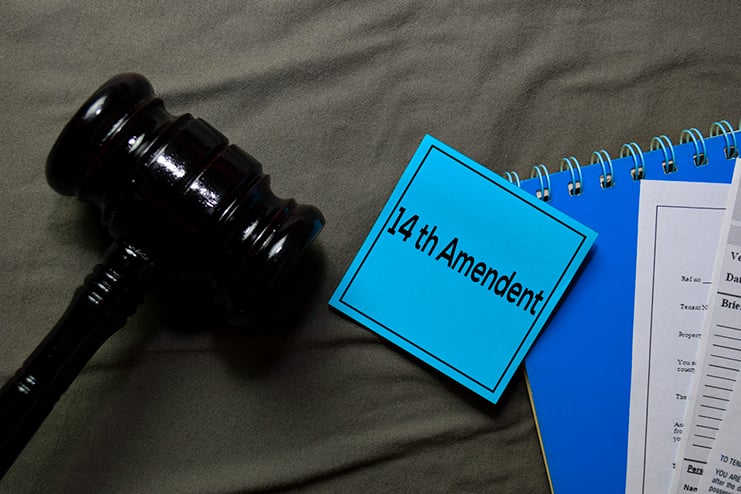
The constitutional question at issue in Trump v. Barbara is the meaning of the first sentence of Section 1 of the 14th Amendment, which reads, “All persons born or naturalized in the United States, and subject to the jurisdiction thereof, are citizens of the United States and of the State wherein they reside.” The intention of the framers was to give constitutional standing to the citizenship clause of the Civil Rights Act of 1866, which reads “That all persons born in the United States and not subject to any foreign power, excluding Indians not taxed, are hereby declared to be citizens of the United States.” That they did not intend to create an open-ended grant of citizenship to every child born within the territory of the United States is clear from the qualifying phrases that I have italicized. Senator Lyman Trumbull of Illinois said of those phrases that they meant the same thing as “not owing allegiance to anybody else.”
Pregnant foreign citizens who travel here for the purpose of giving birth on American soil and thereby, supposedly giving birth to an American citizen, are clearly subject to the allegiance and jurisdiction of another government. Likewise, foreigners who overstay their visas or sneak in without legal authorization do not owe any allegiance to the United States, nor are they properly subject to its jurisdiction, except insofar as they are breaking its laws. We may add that the decisive point is that the framers had no intention of crafting a provision that could later be instrumentalized by the entire world to secure U.S. citizenship rights and benefits for their children.
The late Gore Vidal once complained that the Constitution, once intended to guard American liberties, had become “a straitjacket” for the people, depriving them of the exercise of self-government and of having any control over their own affairs. If the Supreme Court rules that the children of illegals and foreign tourists are citizens, it will confirm his diagnosis.
Leave a Reply