On Jan. 7, Renée Good was shot by a federal ICE Agent. There is no dispute about that or the fact that Good was acting to block ICE agents with her car prior to being shot. Most are asking whether it was justified. Tragically, Good would not be the only Minnesotan killed while interfering with federal law enforcement. On Jan. 24, just when the outcry over Good’s death had begun to tamp down after video from the scene clearly showed her accelerating her car into the officer, Alex Pretti—another ICU nurse, like Good—met a similar fate. It appears he was shot in a scuffle with Border Patrol agents after interfering with their activities, and a gun he was carrying accidentally discharged.
Preventing deaths like Good’s and Pretti’s, even if they contributed to the circumstances of their own demise, means more than assigning culpability; it means determining liability. The lawyers are coming—and that may be a good thing.
The national debate stirred by the shootings, predictably, is falling along right- and left-wing ideological lines. While most politicians are attorneys, they won’t be the ones attempting to determine the truth. For them, political narratives obscure the accountability for activists’ deaths. It remains to be seen whether the agents involved in these shootings will be held criminally responsible; that would be the worst outcome, for them and for a country that needs immigration enforcement to continue.
On the other hand, if Mayor Jacob Frey’s city of Minneapolis is found civilly liable for inciting the situations that led to the activists’ deaths, and ordered to pay a large award, that would lead to policy revisions that would safeguard both civilians and law enforcement personnel. That outcome would do the most to prevent in the future deaths of those like Good and Pretti.
Regardless of whether the law favors the feds or the state, the estates of Renée Good and Alex Pretti undoubtedly will benefit financially from America’s adversarial litigation system. Good and Pretti may have sympathized with Marxism, but their heirs are unlikely to redistribute to the proletariat what promises to be large awards or settlements.
After the 2020 “Summer of Love,” money flowed freely; Minneapolis paid millions not only to the family of George Floyd, but to protesters who were injured by police. The federal government declined to bail out Minneapolis for those damages. It may be harder for the feds to avoid payouts in these cases, however, since federal agents were involved in both deaths.
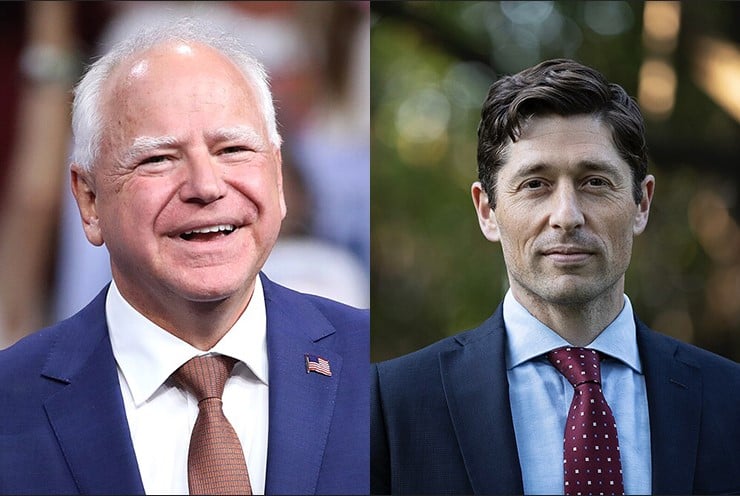
Kristi Noem, the Department of Homeland Security, and the ICE agents also face lawsuits. Though this may delight the left, immigration enforcement is a federal power, and the agents involved, therefore, have some immunity. The U.S. government’s goal in these suits will be to lay the blame for Good’s and Pretti’s death at the door of Mayor Frey and Governor Tim Walz.
I don’t know how much appetite Minnesotans have for another round of multi-million-dollar awards and settlements. Big legal bills like 2020’s can be so onerous that they change city and state policy, and even decide elections. Personal injury attorneys look for the deepest pockets and the most culpable parties. A savvy lawyer will see that the state of Minnesota and the city of Minneapolis may be potentially complicit in Good’s and Pretti’s demise, and decide to roll the dice on a lawsuit.
State and local governments are obligated, within reason, to do their best to protect residents from harm. While neither Good’s nor Pretti’s deaths were of the slip-and-fall on a snowy street variety, both of these people were deceived by their local government into believing that they could act with impunity. Good was a member of a loosely organized ICE Watch group that conducted high-speed tactical maneuvers on public streets with its vehicles. The goal of these maneuvers was to impede federal agents. It’s not rocket science to see that permitting this activity was inherently dangerous to everyone, not just to Good and the officers involved in this incident. And Pretti had already had a violent encounter with federal agents 11 days before his fatal encounter, apparently without consequences from local law enforcement.
Municipalities have a duty to their citizens and a legal obligation to maintain public safety. They enforce codes for potholes and fire codes. You would think that Good and her merry band of activists would be barred from treating the streets of Minneapolis as their personal stunt driving course. One would venture that Jacob Frey’s Minneapolis probably has ordinances against blocking public streets. Most cities have policies, from permits to grade barriers, to keep the peace. Further, is it too much to expect that Pretti, caught on video kicking out a federal car’s taillight on Minneapolis streets, would be charged with a crime?
Frey, perhaps even more than Walz, was responsible for the circumstances that led to these two deaths. It could be argued that the ICE Watch Signal group was acting as a private militia, with a wink-and-nod from the governor and mayor. Both Alex Pretti and Renée Good believed they had the moral authority and implicit civil authority to act as they did. They were doing her “job” as they saw fit. No one in a position of authority from that state told them otherwise. When federal authorities showed up, conflict was inevitable.
The federal agent involved in Good’s shooting had a gun; she had a 4000-pound battering ram in the form of a Honda Pilot. Alex Pretti also brought a weapon to his fight. Unfortunately, that choice—in addition to his many other poor choices countenanced by local officials—may have ended up being the source of the confusion that led to his death.
The dystopian nightmare created by irresponsible public officials in Minnesota is certainly not responsible governance. It is intolerable in an American city. Lawyers for the estates of these two deceased activists might see it that way, too.
If the lawyers can find who’s behind the local ICE Watch, which encouraged these actions, that may be yet another windfall for their estates. It is likely, at least in Good’s case, that they had her sign a waiver acknowledging that she understood the risks of illegal behavior and that their group was not responsible for any legal or other consequences, such as injury or death. But that won’t be enough to absolve them; they are complicit and liable for what happened.
It will be interesting to see how all this plays out once the lawyers descend. Frey and Walz, once they’re served with lawsuits, will likely change their tune about Good and Pretti, and end up parroting the federal authorities in saying that their activists were responsible for their own actions and that they should have complied with lawful orders. The governor and mayor will probably attempt to pin their egregious failures to maintain order on ICE and, ironically, on Good and Pretti themselves. I hope their estates win big in the face-off with Minnesota officials. A court of law is the one of the few places where politicians face the consequences of their actions.
Leave a Reply