A crude early version of chess was invented in India 2,500 years ago, but the game was not perfected into its current form until the sixth century, when the Sassanid Persians honed its intellectual potential and strategic depth, spreading it through the western Islamic world to Europe.
Old skills die hard, even if the state ideology celebrates divinely inspired intransigence and martyrdom. The Iranians are aware that if the U.S.-Israeli air war were to be renewed when the current two-week ceasefire expires, their risks are higher than those President Trump may be willing to take. Acting as rational chess players rather than suicide bombers, they have sent signals to the effect that they are ready to resume the talks that broke down in Islamabad last Sunday.
According to news reports, a new round of in-person talks between the U.S. and Iran could be held as early as this week. Both Trump and Vice President JD Vance offered hope for fresh talks on April 13, just a day after the initial round failed, even as U.S. forces launched a blockade barring ships from entering or exiting Iranian ports.
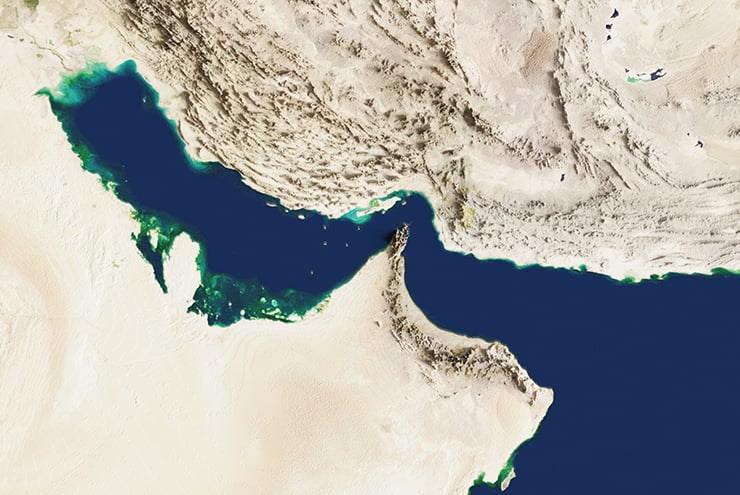
Opening the Strait of Hormuz is a major sticking point, but probably easier to resolve than the U.S. demand that Iran give up its stock of enriched uranium and refrain from enriching it to any level in the future, civilian use included. One possible way out of the impasse is for Iran to agree to no enrichment for a fixed period, probably at least a decade. This alleviates some of the humiliation for Iran. For the U.S., that would provide the ramp to de-escalation, which would clearly be in both sides’ interests. The fact that the ceasefire is holding despite the standoff in Hormuz and the breakdown of talks in Pakistan is an encouraging sign.
A diplomatic ramp is needed in the first instance because it now seems that there will be no regime change in Iran. The Iranian state—let us not pretend it is a mere “regime,” a la Caracas or Mogadishu—is resilient. It has managed the decapitation strikes (which began on the first day of the war) with surprising dexterity, reorganizing its chain of command and control on the fly, probably thanks in part to studying the challenges its regional proxies have faced over the past few years.
Hezbollah in Lebanon was badly mauled in 2024 by Israeli bunker-busting bombs and thousands of exploding pagers. When the ceasefire was announced in November of that year, Israeli Prime Minister Benjamin Netanyahu said Hezbollah had been set back for decades, with most of its arms destroyed and its top leaders dead.
The movement swiftly retrenched, however, following the model of dispersed, semi-autonomous units that operate without direct orders from above. Even the collapse of Bashar al-Assad’s regime in Damascus—otherwise a major political setback—created an opportunity for Hezbollah to empty many Syrian Army arsenals and supply depots before the new authorities consolidated control. It is now a formidable force, yet again.
The leadership of Hamas in Gaza was decimated in the aftermath of the Israeli invasion, but it can rely on an endless pool of eager successors to the “martyred” leaders. It has recruited between10,000 to 15,000 fresh fighters over the past two years, according to U.S. intelligence sources. Like Hezbollah, it has also started operating as a decentralized group relying on guerrilla warfare, hit-and-run tactics, and ad-hoc ambushes. In areas the IDF has claimed to have cleared, small Hamas groups still make regular reappearances. It may be down, but it is most certainly not out.
Hezbollah and Hamas’s chief mentor, Iran, remains firmly under the control of the Revolutionary Guard Corps—or, to be precise, of the IRGC’s most radical components. The U.S.-Israeli attacks have effected regime change of sorts, but only within the regime. They killed the old leadership, which was wary of confronting America, paving the way for the true radicals to emerge, who are convinced this is an existential fight.
There has been no regime change in Tehran, and it is not likely any time soon. In any event, one player in the putative regime-change scenario is now out: Crown Prince Reza Pahlevi. Putative signs of support for him during last year’s demonstrations have evaporated thanks to the joint U.S.-Israeli operation, which Reza has not condemned. Quite the contrary, he has praised the bombing campaign against the country of his birth, called for “total victory” of the U.S. and Israel, and urged Trump to stay the course, while also condemning Iranian missile attacks on the Gulf states and Israel. That alone effectively disqualifies him from further consideration, given the dynamics of Iranian politics.
This is the background against which we need to examine Trump’s decision not to abandon diplomacy. It is not surprising. In my April magazine column (written on March 13) I opined that President Trump should bring the war with Iran to an end within weeks, even if there is no regime change and no internal uprising: “Come Easter, there may not be enough targets of value left to strike; the reserves of precision munitions will need restocking; and global markets will need assurance that oil and gas supply chains will return to normal soon.”
In addition, I predicted that “if the threat to regime survival is removed, Iranian leaders will see the wisdom of returning to transactional diplomacy.” It is in the American interest for President Trump to proclaim victory and end this war in the near future, I concluded, “because continuing it may start yielding diminishing strategic returns.”
This is, more or less, the score right now. The government of Israel is not happy, and Netanyahu may try to sabotage any deal just as the Europeans (the UK, Germany, and France above all) have sabotaged Trump’s efforts to bring about a negotiated settlement in Ukraine.
As for America’s restive Arab allies in the Gulf, they are in an ambiguous position: longing for peace that would bring back much-needed oil and gas revenue, while fearing an outcome that would leave an angry, vengeful Iran poised to become a potential regional hegemon. Trump tried to reassure them last week by pledging that U.S. forces would remain in the vicinity of Iran until an enduring deal is secured:
All U.S. Ships, Aircraft, and Military Personnel, with additional Ammunition, Weaponry, and anything else that is appropriate and necessary for the lethal prosecution and destruction of an already substantially degraded Enemy, will remain in place in, and around, Iran, until such time as the REAL AGREEMENT reached is fully complied with… If for any reason it is not, which is highly unlikely, then the ‘Shootin’ Starts,’ bigger, and better, and stronger than anyone has ever seen before.
These are fighting words, but the big question remains whether a resumption of hostilities is either logistically or politically feasible. The U.S. and Israel could soon find themselves without precision ballistic missiles or systems capable of intercepting Iranian projectiles. In the first month of fighting, the U.S. Navy reportedly launched more than 850 Tomahawk missiles, nearly a quarter of its available stockpile. The Patriot, with its expensive and not immediately replaceable missiles, has been used to intercept cheap Iranian drones, which are easily replicable on a large scale.
Quite apart from the problem of depleted munitions stocks, it would be politically thorny—to put it mildly—for Trump to resume the bombing campaign if the resumed negotiations fail to produce a workable compromise. A fresh round of hostilities in late April-early May would lead to an open-ended closure of Hormuz, sending oil prices way above $100—this time, probably for good—and possibly triggering a global recession. This level of energy cost would act as a “regressive tax,” cutting disposable income, disrupting supply chains, and fueling inflation everywhere—the U.S. included—just six months before midterm elections. This would be a boon for Democrats, which they must be denied.
Furthermore, the Gulf monarchies are crucial hubs for the global production of nitrogen fertilizers, on which industrial agriculture is vitally dependent. When the nitrogen chain is interrupted, the effects accumulate in the soil and influence planting decisions for months. Yield estimates for corn are already being revised downward, as many farmers will opt for soybeans, which require less nitrogen. This may trigger political instability in populous grain-importing countries like Egypt, which maintains domestic peace by heavily subsidizing bread.
Even if the current ceasefire turns into a lasting truce (Trump’s “real agreement”), the return to crude oil futures in the lower $60 range is not going to happen. It will be made impossible by three factors: degraded oil extraction and refining infrastructure in Iran and other Gulf countries, a chronic deficit in global supply, and the continuing risk of surcharges affecting the movement of oil and liquefied natural gas—not just through Hormuz, but throughout the region.
Tens, perhaps hundreds of billions of dollars will be needed to repair damaged oil and gas facilities in the region and to develop new ones. No institutional investor will provide the cash, however, if there is no permanent diplomatic resolution in sight. Even under optimal political conditions, which seem out of reach, recovery would be both long and very costly. The cost will be passed to families and businesses in Europe, America, or the Far East, come what may.
Squaring the Persian circle will require patience and a cool-headed balancing of costs and benefits, but it is necessary to take on this challenge because no twilight of the Islamic Republic founded by Ruhollah Khomeini is in sight. Unfortunately, its apocalyptic ideology has been fortified by war and is deeply and permanently integrated into the Iranian state and society, its politics and strategic decision-making. It makes permanent peace in the region most unlikely, no matter how effectively Iran’s military potential has been degraded over the past six weeks.
Clausewitz was right: War is the continuation of politics by other means. It is not an isolated act. It must be a rational, political instrument designed to compel an opponent—in this case, the leaders in Tehran, whoever they may be right now—to fulfill U.S. will. No Iranian enrichment at any level for at least a decade, coupled with its already degraded military capability, should do it.
Leave a Reply