Object permanence is a basic aspect of infant cognition—the understanding that objects continue to exist even when out of sight. For instance, a baby who has developed object permanence will look for a rattle hidden under a blanket. Most children grasp this concept by their first birthday.
Progressive activists of the type I will call the “anti-war left” seem to struggle with object permanence. Just as infants without object permanence believe hidden objects cease to exist, this cohort, stuck in a kind of arrested development, appears to think issues stop existing if they’re not featured prominently in the news they consume.
The anti-war left is selective in its outrage, frequently ignoring conflicts and oppression around the world. They are often silent about atrocities committed by terror proxies, corrupt regimes, and Islamic tyrannies—such as the killing of Christians in Nigeria, child labor in Congo’s cobalt mines, women being stoned in Afghanistan, the 500,000 who died in the Tigray war, and the Saudi-led bombing of Yemen. While they criticize U.S. support for Israel, they remain conspicuously silent about what has been called one of the worst humanitarian crises of the 21st century.
Since 2023, Sudan has been torn apart by a bloody civil war between the national army and the Rapid Support Forces (RSF) triggered by disputes over civilian rule and the RSF transition. More than 150,000 people have been killed, and over 15 million people displaced, which equals a third of the population. Eight million face starvation, and famine is widespread. Over a million have crossed into neighboring Chad. The RSF employs rape as a weapon of war; the UN estimates half the women and girls fleeing Sudan are sexual violence victims, with one report attributing 87 percent of rapes to RSF fighters. Their ethnic cleansing campaign—described by the U.S State Department as a genocide—aims to create an Arab-dominated region: cities razed, families massacred, and bodies left decomposing by roadsides. Christina Lamb, in The Sunday Times, documents attacks on the Massalit tribe in West Darfur, including the harrowing story of a girl raped by an Arab militia member at 12, now raising the child in a refugee camp at 13.
Yet there are no mass protests, no calls for a boycott, divestment, and sanctions against the Sudanese government, no campus occupations, and no celebrities making grand speeches in solidarity—perhaps because the Kadamul doesn’t look as rebellious as the Keffiyeh. The professional activist class, slavishly devoted to the omnicause, drifts from one issue to the next, but only if the problem is fashionable enough or likely to go viral. Causes that can’t be blamed on the West, or fit neatly into the anti-colonial, racial narrative adopted by the anti-war left, are simply ignored. Which makes one wonder if the actual omnicause is just opposition to the West however it is likely best to wound it.
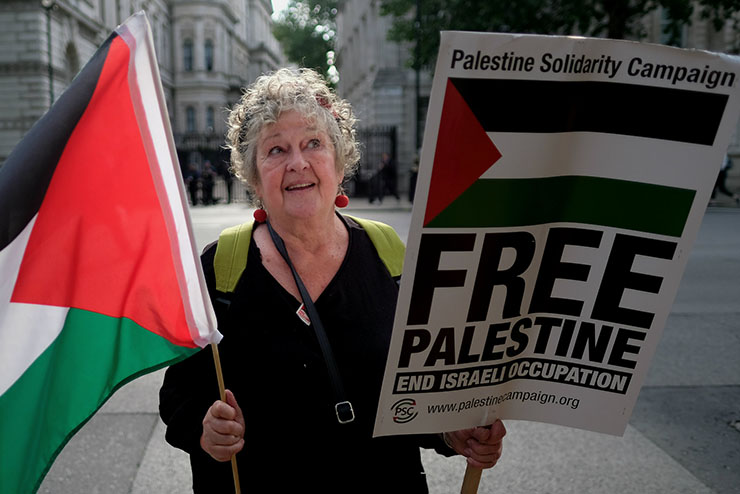
Across the Anglosphere, millions have protested in support of Palestinians. Many of their criticisms of the Gaza war are justified: it has brought near-erasure of the Gaza Strip, the deaths of tens of thousands, and the carpet bombing of women and children—all aided and abetted by the U.S. taxpayer. But when asked to show solidarity with victims elsewhere—like Yazidi women fighting ISIL or Mahsa Amini, whose death in Iranian custody sparked the Women, Life, Freedom movement—most simply shrug. Inter-ethnic violence and tribal conflicts are downgraded, minimized, and tolerated.
Progressives often argue that the West has more influence over Israel than Sudan, justifying their focus on Gaza. Smartphones have turned Gaza into the first 21st-century war broadcast in panoramic 4K, exposing its blood-soaked reality worldwide. With international journalists banned from Gaza—and a record number killed when they enter—the world is witnessing the realities of war in real time for the first time.
Paradoxically, this tendency to focus only on what’s in the headlines isn’t accidental—it’s a cognitive bias shaped by the media’s constant repetition of certain events. When rare but dramatic events are broadcast constantly, the opposite occurs—a phenomenon known as availability bias. For instance, during the Black Lives Matter movement, 54 percent of “very liberal” Americans believed police killed over 1,000 unarmed black people each year, when the real number in 2019 was only 27. Under the reductionist and narcotizing spell of liberalism, everything is forced into a binary of white versus black.
It may go against the grain of modern discourse, but we should care about all who suffer violence and oppression—regardless of where it happens or the color of the perpetrators—whether in Sudan, Xinjiang, the West Bank, or the Gaza Strip.
Progressives and neoconservatives share a common habit of ignoring what is convenient for them to ignore. Neocons, much like those on the left with a blind spot on war crimes in Sudan, often overlook or minimize the escalation of settler violence and collective punishment carried out by vindictive elements within the Israeli government.
This isn’t anti-war activism; it’s a t-shirt slogan for a generation unable to focus on anything for more than eight seconds. True solidarity requires sustained attention beyond media trends and fashionable causes. We must resist selective outrage and recognize suffering wherever it occurs—not just where it’s trending.
The Wrong Kind of War
Leave a Reply