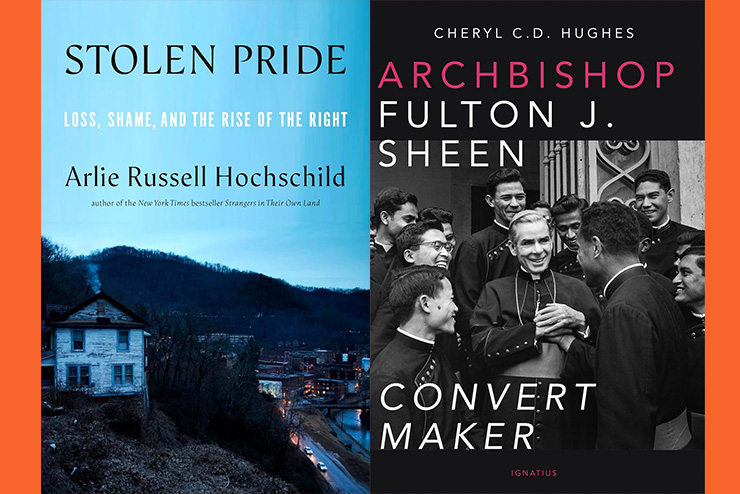
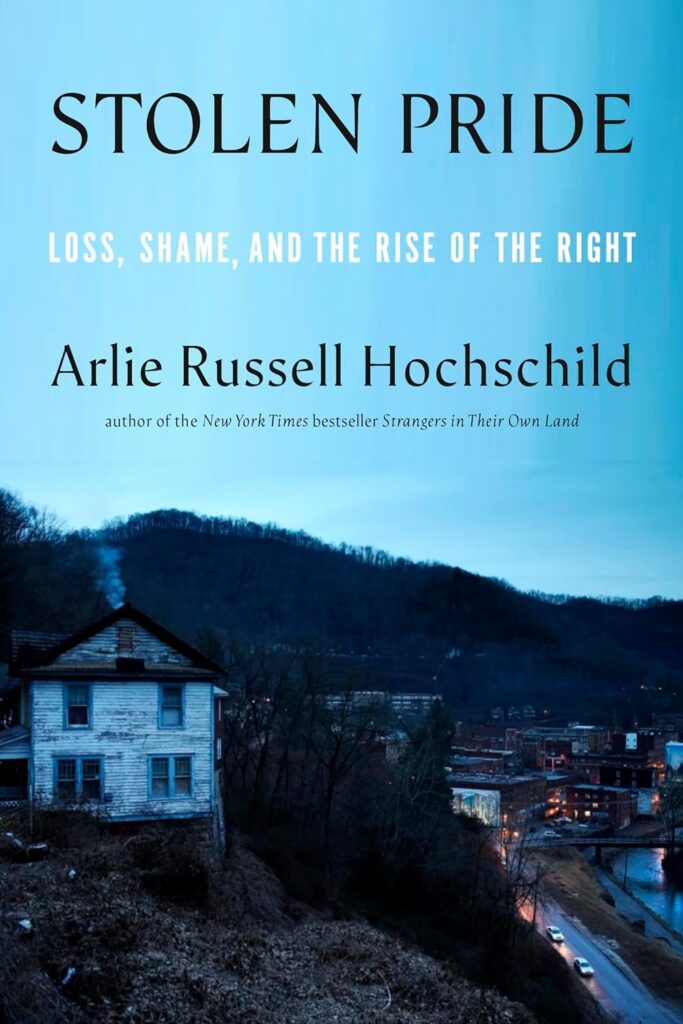
Stolen Pride: Loss, Shame, and the Rise of the Right, by Arlie Russell Hochschild (The New Press; 400 pp., $30.99). The author of Stolen Pride is an American sociologist who got her Ph.D. at Berkeley in the 1960s, so you can guess what she thinks about rural, white, poor, populist conservatives. Her book focuses on a 2017 rally in Pikeville, Ky., by a group of no national consequence called the Traditionalist Worker Party. At its height, the group boasted 500 members, but even the Southern Poverty Law Center, which specializes in magically turning infinitesimally small groups into existential threats to democracy, considered that figure significantly overblown.
Hochschild breathes heavily about this rally as evidence of the advance of white nationalism under Trump. Yet only 100 marchers and perhaps twice as many Antifa counter-protesters showed up. Almost all were from out of town. One Pikeville resident called it “a giant nothingburger.”
But Hochschild insists it illustrates something about the “pride economy” of Pikeville. Rural working-class whites in such areas feel something has happened to illegitimately corrode their cherished identities as self-reliant, industrious people.
Hochschild dwells on racial and religious minorities in Pikeville who are purportedly under serious threat from their white neighbors. Her evidence is an interview with one white ex-con, who got a swastika tattoo in prison. And a local tells Hochschild his family rejects the term “white privilege,” which she reads as evidence that Pikeville whites fear black elevation means their decline. A more obvious interpretation is that they fail to see any empirical support for the term when the whites are poor, rural folk like themselves.
Even though the Traditionalist Worker Party was unable to make a fascist revolution in Pikeville, Hochschild warns that Trump may. Yes, she concludes by bluntly labeling Trump with the “F” word. Her evidence? His friendliness with Russian President Vladimir Putin, and several long-falsified deliberate misinterpretations of bits of Trump’s speeches.
The whole thing is so utterly predictable. One hopes Professor Hochschild, now in her mid-80s, might take up landscape painting or some other more rewarding way to spend her remaining years, and spare us books of this low caliber. If she does write another, I could review it in advance. One already knows the story.
(Alexander Riley)
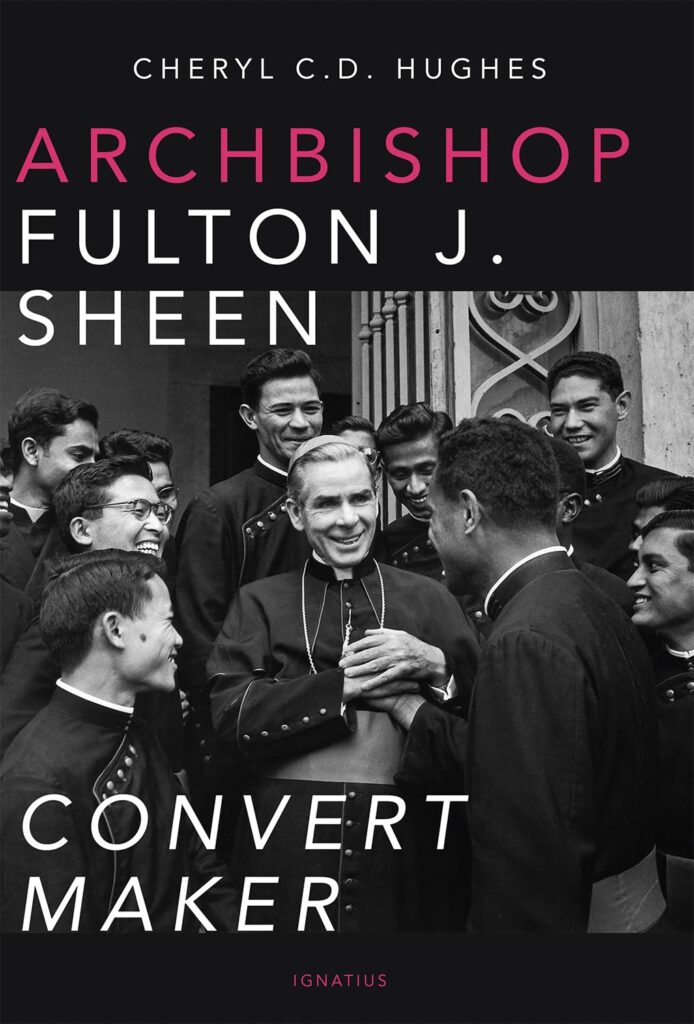
Archbishop Fulton J. Sheen: Convert Maker, by Cheryl C. D. Hughes (Ignatius Press; 310 pp., $19.95). Academic historians tend to eschew biographies. They might have a point. Biography’s tunnel vision glosses over historical complexity and context. Readers can learn more about World War II from one general history than from all the Hitler biographies, even if the latter far outsell the former.
However, Cheryl C. D. Hughes’ new biography of the American Catholic Archbishop Fulton J. Sheen is a rare exception, one that illuminates the history of the 20th century and of the Catholic Church in America along with the life of its subject.
Sheen became a priest on Sept. 20, 1919. Although Catholics made up 35 percent of the United States’ World War I troops while comprising just 6 percent of the American populace, it was an era when Protestant Americans questioned the loyalty of Catholics. The “Tribal Twenties” got no easier, as the KKK directed its venom against immigrants and papists, who were often one and the same. In search of social acceptance, the Catholic hierarchy identified Sheen as an instrument for Americanizing the Catholic Church. As Hughes explains, the Church did not aim to “democratize” its doctrine. Rather, it sought “to make Catholics and Catholic culture more familiar and friendly, less foreign, and more accessible.”
Sheen did something right in his rise from parish priest to archbishop. Unlike stereotypical hard-sell evangelists, Sheen considered himself a “porter” who invited “would-be converts to enter the always-open door to the house of the Lord.” His subtlety worked. Sheen received “at least six thousand letters a day” from Americans, whose interest in the Church exploded as he helped Henry Ford explore Catholicism.
Sheen’s television show, Life Is Worth Living, ran opposite Uncle Miltie and Old Blue Eyes, back when viewers only had three channels to choose from. Sheen won that ratings war. And Hughes tells us how he also helped the United States win the Cold War with his anti-communist diatribes aired on television, written in books, and preached at Mass.
Sheen’s list of converts reads like a “Who’s Who” of postwar America: Clare Boothe Luce, Fritz Kreisler, Louis Budenz, Heywood Broun, and—almost—Henry Ford. Recall Harvard professor Arthur Schlesinger’s assessment of anti-Catholicism as “the deepest bias in the history of the American People.” As I read this book, I had to decide which channel to watch Pope Francis’ funeral on. Every station broadcast it. Catholics owe thanks to Fulton J. Sheen for securing their status as respected Americans, and to Cheryl Hughes for reminding us.
(Mark G. Brennan)
Leave a Reply