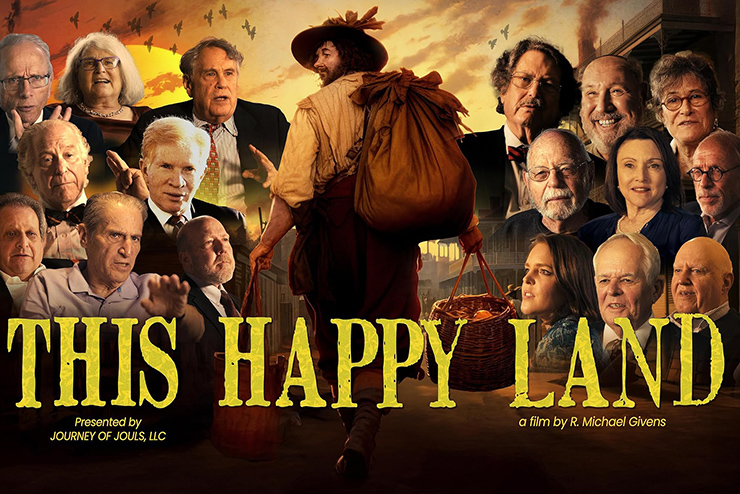
On Sept. 20, Charleston’s Queen Street Playhouse hosted the premiere of This Happy Land, an eye-opening documentary about the early migration of Jews to America, and particularly to the Southern states—a story largely unknown to most Americans today, including many Jews.
It is a story of epic sweep that ought to be more widely told, for it drastically revises our understanding of Jewish history in the New World, exposing, for example, the false narrative that the Jewish story in North America began at Ellis Island in the late 19th century. Moreover, it forcefully rebukes our cliched assumptions about religious liberty and cultural tolerance, demonstrating that the South, by sharp contrast to the North—and New England, especially—was by far the more welcoming and tolerant region for a people that for hundreds of years had been driven from country to country in what seemed an endless diaspora.
This Happy Land, produced and directed by R. Michael Givens, is a documentary in three episodes that features interviews with historians, archivists, rabbis, and museum curators, and showcases an impressive visual symphony of archival and AI-generated images. (Among the interviewees is Chronicles Editor-in-Chief, Paul Gottfried.) For over three hours, I sat in the darkness of one of Charleston’s oldest theaters, situated just a block away from the Old Slave Mart—mesmerized by a tale that began in the Iberian Peninsula in the late 15th century, when, after the Reconquista, the Jews were driven out of Spain and Portugal.
These were Sephardic Jews who had lived more or less unmolested by the Moorish conquerors for centuries—indeed, in many respects they had thrived under that dispensation. Some of the exiles fled to England, some to Amsterdam, many more to Brazil (a Portuguese colony) or Suriname, and others to the Caribbean islands. Generally, they were merchants, but many also became planters in Brazil and in the West Indies, including Barbados and Curacao. This agrarian aspect of their history is important because it helps to explain in part why the Sephardim were able to find welcome in the Southern colonies and, after the Revolution, in Southern states as far west as Louisiana.
As several of the participants in This Happy Land point out, the Jews had, in general, made prosperous lives for themselves in South America and the Caribbean, but colonial rivalries made the entire region politically unstable. Some regimes were more tolerant of Jews than others, and in the West Indies the ever-present threat of slave revolts added economic uncertainty to the mix. When the British colonies in North America became established, many Sephardic families began to emigrate, some to New Amsterdam under Dutch rule, but many more to Carolina. By 1695, 25 years after Charleston was established, a sizeable Jewish community had taken root. In fact, it grew so rapidly that by the eve of the Civil War, Jews in Charleston numbered 50,000, which was the largest Jewish population in North America at that time.
There had been close ties between Charleston and the Caribbean planter cultures from the beginning. Among the earliest settlers was a stalwart group of planters from Barbados who brought African slaves with them and established thriving rice plantations along the banks of Goose Creek, a tributary of the Cooper River.
But what was perhaps most attractive for Jewish immigrants was the fact that Carolina had been the brainchild of Lord Anthony Ashley Cooper, who employed philosopher John Locke to write up the The Fundamental Constitutions of Carolina (1669) for the new colony. Ironically, though Locke’s provisions (no doubt under the guidance of Lord Cooper) were explicitly anti-democratic, religious liberty was guaranteed for “Jews, heathens, and other dissenters from the purity of Christian religion….” (Article 97).
While the Fundamental Constitutions were never fully ratified, the colony’s reputation for religious liberty (for all but Catholics) made it a safe haven not only for Jews but also for “dissenters” like the Baptists, who settled in the Carolina Upcountry. Yet Charleston was founded not so much on Lockean principles as on practical business sense. Most of its early settlers came to acquire plantations or to engage in some form of mercantile activity. The Jews, who had long experience in trade and, more recently, in agrarian pursuits, fit right in. Charlestonians did not see the Jews as a threat but as an asset, since they possessed skills and knowledge that made them valuable residents.
Yet to say simply that Jews were tolerated in Carolina is to understate the case. Their successes and the respect accorded to them went well beyond their economic contributions. Jewish people also “tended to be literate,” Dale Rosengarten, founding director of the Jewish Heritage Collection at the College of Charleston, says during her interview in the film. “It’s one of the reasons we think that Jews were so often elected as mayors of little towns across the state. Georgetown, South Carolina, had three Jewish mayors before 1820. They were leaders politically and in business.”
Moreover, Rosengarten said, Jews were
educators, journalists, painters, filled roles in the intelligentsia, and they were loyal. This was a country that had accepted them with open arms, that didn’t discriminate, that didn’t tell them where they had to live and who they had to marry and what they could do for a living, and this was a country where they could pretty much call their shots and also practice their religion, which wasn’t a given in many parts of the world.
Anna E. Tucker, curator at the Museum of Southern Jewish Experience in New Orleans, expands on this theme, noting that as the Carolina Jews migrated further to the west—as far as Mississippi and Louisiana—their assimilation was rapid and impressive:
We see a lot of the towns and the interior of the American South often having merchant stores or farms or ranches that were established by Jewish residents. And so when we have this sort of close interaction where there’s a one-on-one interaction between Jewish residents and non-Jewish residents, [it] often increased levels of trust and understanding between the two. So we have interesting newspaper articles where non-Jewish newspapers are talking about Jewish holidays, where they’re interpreting what’s going on.
Indeed, the vast majority of those non-Jewish residents on the Southern frontier were also “people of the Book”—a Protestant population deeply versed in the Bible and fascinated by the Old Testament experience of the Jews, almost as if it were their own.
But rapid assimilation raised concerns among the Jews about preserving their ancient cultural identity. In Charleston, for example, assimilating Jews modernized the worship service at the venerable Kahal Kadosh Beth Elohim synagogue—the center of the city’s Jewish population since the early 19th century. It was there that Reform Judaism was born.
As historian Gary P. Zola tells the story, educator and newspaperman Isaac Harby, scion of one of the first Sephardic families in the city, initiated a movement to modernize the liturgy, which at that time was a very traditional Hebrew service:
This group of [reformers], about 47 of them, … appealed to the congregation they would like to have a more Americanized service. And they write a petition to the board, and they ask for these changes. The Board says, ‘No go.’ And as a result, [Harby] and two other comrades organize a group, and they call that group the reformed Society of Israelites.
Little more than a decade later, in 1840, the Beth Elohim congregation adopted much of what the Society had promoted, including an abridged form of the liturgy, English prayers, and an organ.
Another of the interviewees who offers reflections on the threat assimilation posed for Jewish identity, Jeffrey S. Gurock, a professor of Jewish History at Yeshiva University, remarks, “So I sometimes quip to my students that ‘Jews do the Charleston’…” This is a tongue-in-cheek reference to the importance of the Holy City in the dance of “religious transformation” in the 19th century as Judaism became Americanized. “How do you remain a Jew in a [place] which is largely accepting of you?” he asks. “And that’s the challenge. That’s a challenge in both North and South, and Jews deal with it in a variety of different ways.”
Historian and archivist Harlan Greene noted that the good business sense of the Charleston elite furthered Jewish integration there. “Businessmen realize that you have to be open to everything. You need people with all sorts of skills. You need a diverse clientele. And so then Jews [are] not excluded.” In effect, Greene said, the Charlestonians told the Jews, “Well, just come on. Be just like everybody else.”
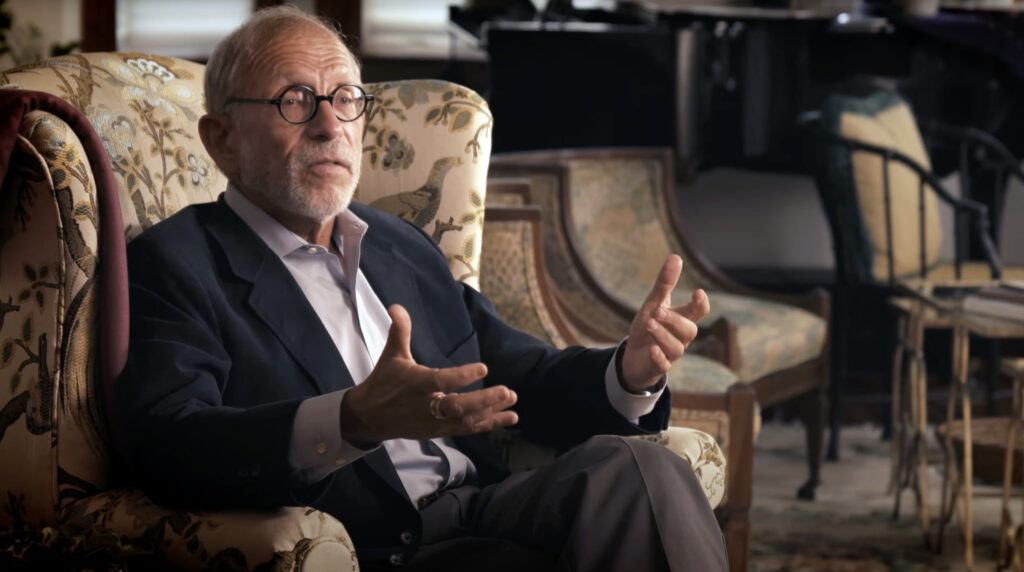
To a significant extent, this is what happened. While intermarriage with Gentiles was infrequent (which would change in the 20th century), the Sephardim in the South, while continuing to practice their own religious rites, otherwise embraced the cultural attributes and loyalties of their neighbors. Gottfried argues that when Eastern European Jews (the Ashkenazi) arrived in substantial numbers in the late 19th century, they disembarked in New York City and tended to settle in “enclaves.” In short, “when they came to America … they self-segregated. They lived very much the way they had lived in their shtetls or small towns in Eastern Europe.”
By contrast, the Southern Jews, not numerous enough to effectively self-segregate, practiced a different survival strategy. As they moved out of Charleston and into the interior, they often found themselves settling in small towns or rural areas and were quick to immerse themselves in the life of their adopted communities, becoming involved in politics and civic organizations and speaking in the accents of their Southern associates. While one might suspect that, initially, this was a kind of camouflage, over time it became quite genuine.
Indeed, Jews in the South supported the American Revolution and, when the conflict between North and South began to heat up, they increasingly supported the Confederate cause. Covered largely in Episode 3, this affiliation between Southern Jews and the Confederacy will undoubtedly be controversial among viewers and reviewers, especially Northerners and liberal Jews who would very much prefer to keep the facts under wraps.
In reality, roughly 2,000 Jews donned Confederate gray. They served loyally, not so much in defense of slavery (though many were, in fact, slaveholders) as in defense of the homeland that had become for them a kind of New World “Promised Land.” Robert Rosen, who is best known for his work The Jewish Confederates (2001), says, “The Jews who lived in Richmond by this point in time are successful merchants. They’re prominent people. And then you’ve got peddlers and shopkeepers who are not prominent people, but they all sign up.”
What Rosen affirms about the Jews in Virginia was true throughout the South. Virtually all the interviewees in This Happy Land, to my surprise, endorse this view of Jewish support for the Confederacy. Like the average Confederate soldier, the Jews—to judge by their letters, diaries, and public statements—saw themselves as men and women defending their homeland from an overweening invader intent upon the total destruction of the South.
The most prominent Jew in the Confederacy, of course, was Judah P. Benjamin, who became Jefferson Davis’s Secretary of State and the director of the Confederate spy network. Several interviewees stress the exemplary rise to prominence of Benjamin, whose family emigrated to Charleston in his early years. He resettled in New Orleans and married into a prominent Creole family. There he practiced law, served twice in the Louisiana state legislature, and was later elected the first Jewish U.S. Senator.
In the latter days of the war, when Richmond was under siege and Confederate troop numbers had been drastically reduced by fatalities, Benjamin and Robert E. Lee convinced Davis that to survive, the Confederacy would have to recruit Negro troops. But the decision to do so came too late. As Richmond fell, Benjamin assisted in Davis’s escape from his Union pursuers, though of course Davis was eventually caught and imprisoned in harsh conditions.
Davis and Benjamin “may have been the only two people who really believed in the Confederacy,” according to Michael Kogan, a professor of Philosophy and Religion at Montclair University, who was interviewed before he passed away last year. Kogan offers the observation that the ordinary Confederate soldier was fighting for his state, not the central government in Richmond, which was “not particularly popular.”
No doubt there is more than a grain of truth in that claim, but Gottfried disputes it, at least in part, when he states that the Jews “were flaming supporters of the Confederacy,” though he seems to endorse the notion that the “mystique” of Confederate nationalism arose primarily in the aftermath of the war. That Jewish loyalty to the memory of the Confederacy persisted for many years is evidenced by Ezekiel Moses’s Confederate Memorial statue at Arlington, erected in 1914.
I have only just touched on the rich insights of This Happy Land; it is a splendid achievement. One technical aspect of the production that deserves mention is the absence of any voiceover narration. This struck me as a brilliant move when I viewed the film, for the judicious edits and splicing of the interviews creates the effect of an ongoing dialogue between the participants, even though they were all interviewed separately. Michael Givens confirmed in a telephone interview after the premier that a conversation was exactly what he was striving to produce.
Most viewers of the film will agree that Givens, who got his start as a cinematographer under Ridley Scott, is a highly skilled filmmaker. One hopes that when the present regime of iconoclasts and historical fantasists departs from our colleges and universities, This Happy Land will be shown to students for years to come. They deserve historical truth—the whole truth.
Leave a Reply