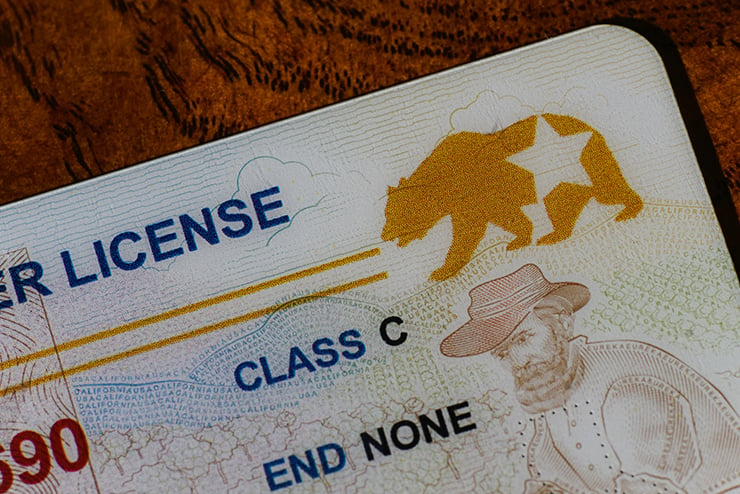
Last month, the California Voter Identification, Citizenship Verification, and Registered Voter List Administration Initiative—more commonly known as the 2026 California Voter ID initiative—qualified for the November ballot. The measure, if passed, would require voters to present a valid California ID before voting. As legitimate citizens and legal immigrants should know, identification will not be required to cast a vote on the measure this fall, however. On full display at the polls will be “No ID required” signs that form only a small part of California’s institutionalized voter fraud, a process of many steps forward and no steps back.
In 2013, California passed a law allowing foreign nationals illegally present in the United States to get driver’s licenses. In 2015, California passed the Motor Voter Act, under which the DMV automatically registered illegals to vote when they got those licenses, which California allowed them to get even though they are in the U.S. illegally. This move was even recognized at the time by California Secretary of State Alex Padilla as “potentially adding millions of new registered voters to California’s voter rolls.” Padilla wouldn’t say how many illegals voted in 2016, and he refused to participate in a federal probe of voter fraud.
Padilla also stonewalled in 2018 and 2020, and in January 2021, Governor Gavin Newsom appointed Padilla to replace then-Senator Kamala Harris, when she was elected as vice president. Newsom billed Padilla as “California’s first Latino U.S. Senator,” but he was really the senator for whom nobody voted. Still in effect was Newsom’s COVID regime, with its rigid rules for family gatherings.
“Don’t forget to keep your mask on in between bites,” the coiffed governor told Californians in October 2020. A month later, Newsom partied sans mask with lobbyists at the upscale restaurant, French Laundry. In 2021, Californians mounted an effort to recall Gov. Newsom, which was not a new development in the Golden State.
In 2003, Californians booted out of the governor’s office the inept Democrat Gray Davis, known for electricity blackouts, by a margin of 55.4 percent to 44.6 percent and installed Republican Arnold Schwarzenegger. On Sept. 14, 2021, COVID King Newsom prevailed against this effort with 61.9 percent of the vote, identical to his 61.9 percent margin of victory for governor in 2018. Coincidence theorists were not calculating the odds, but Newsom had it all figured out.
“I want to focus on what we said yes to as a state,” the governor told supporters in Sacramento.
We said yes to science. We said yes to vaccines. We said yes to ending this pandemic. We said yes to all those things that we hold dear as Californians, and I would argue as Americans. Economic justice, social justice, racial justice, environmental justice are the values where California has made so much progress—all of those things were on the ballot this evening.
So, according to Newsom, somehow the very things that launched the recall in the first place were also the issues that served him up a win.
Under his COVID regime, Newsom ordered mail ballots sent to every registered voter in the state. Those included the illegals registered to vote by the DMV, but the secretary of state did not reveal how many voted to keep Newsom in power and reject Republican Larry Elder, who would have been the state’s first African-American governor. During the recall, the Los Angeles Times ran a piece headlined “Larry Elder is the Black face of white supremacy. You’ve been warned.”
Just so voters know, Gov. Newsom bears strong ties to the Brown, Pelosi, and Getty families, all whiter than Frosty the Snowman and all wealthy. And as the people should understand, there was more to the recall than mail ballots. Consider also the politiqueras, campaign cadres, the Justice Department said were involved in “vote stealing.”
In a 2015 NPR interview, Assistant U.S. Attorney James Sturgis explained that politiqueras are “paid to go and round up voters and have them vote a certain way.” In Texas, they bribed voters with cigarettes, beer, and cocaine and nine politiqueras were charged with manipulating mail ballots. After the indictments, the number of mail ballots in a Democratic primary dropped 97 percent.
The most likely source for California’s politiqueras is Hermandad Mexicana Nacional, a nonprofit advocacy organization founded by the leftist Bert Corona. The group was credibly accused by a House committee of having “registered large numbers of non-citizens,” who then voted in the 1996 election that sent Democrat Loretta Sanchez to Congress, toppling conservative Republican stalwart, Robert Dornan. The DMV now does the work of registering the non-citizens, but ballot harvesting plays a major role in the outcomes.
In the 2010 race for California attorney general, then-San Francisco District Attorney Kamala Harris was so lightly regarded that the reliably Democratic Sacramento Bee endorsed Republican Steve Cooley. On election night, Cooley held a substantial lead and declared victory. Harris’s squad kept counting “provisional ballots” for three weeks, until it could give Harris the win by 0.08 percent. She moved on to the Senate, then to the vice presidency, and her appointed replacement in the Senate has been active.
Alex Padilla wants the federal government to register voters “by linking it with free tax preparation” by the Treasury Department. In effect, Padilla strives to extend California’s motor voter scam and gain an imported electorate nationwide. In that quest, California’s voter fraud boss receives aid and comfort from bad journalism.
Ashley Zavala, political director at KCRA News in Sacramento, writes that Padilla was California’s secretary of state “before he was elected to the Senate,” which he wasn’t. The Newsom appointee is now the highest-ranking Democrat on the Senate Rules Committee, which oversees federal elections. In an interview with Politico, Padilla claimedthat “there is no massive voter fraud in America. It’s a solution in search of a problem.” Padilla also told Politico that California’s voter ID measure is “a solution in search of a problem. Every report, every study, every audit shows that voter fraud is exceedingly, exceedingly rare.” Californians have grounds to regard it as exceedingly, exceedingly common.
People are free to believe Kamala Harris won fair and square, and that in 2021 Gavin Newsom prevailed by the identical margin of his 2018 win. People are also free to support voting by noncitizens, but that forfeits any claim to support the rule of law. Meanwhile, as Nov. 3 approaches, the people have more to consider.
Back in 1978, Gov. Jerry Brown stridently opposed the “People’s Initiative to Limit Property Taxation,” better known as Proposition 13. Nevertheless, the people passed the measure by a margin of 64.8 to 35.2 percent. Brown then claimed to be a “born-again tax cutter,” which was never true. In four terms as governor, Brown kept taxes high and did little, if anything, to reduce regulations. Newsom followed suit, prompting an exodus of companies and workers from California, once a prime destination state.
In the style of Proposition 13, California’s Taxpayer Protection and Government Accountability Act required voter approval for all new taxes passed by the legislature and two-thirds voter approval for all new special tax increases. The measure qualified for the Nov. 5, 2024, ballot, but Brown and Newsom leaned on a compliant state supreme court to have the measure taken off the ballot, effectively disenfranchising the voters.
In California, what qualifies for the ballot doesn’t always stay on the ballot, and voter fraud is fully institutionalized. As Trump likes to say, we’ll have to see what happens.
Leave a Reply