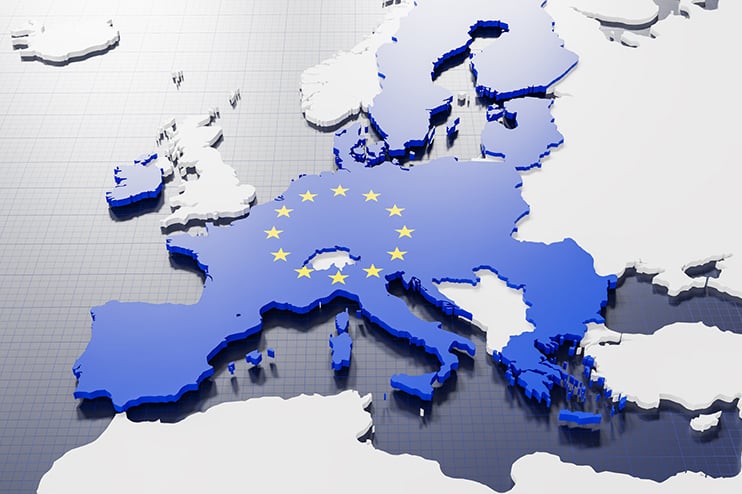
The notion of Europe in its recognizably modern form, as a political community of worldly leaders engaged in a complex quadrille of balanced power, was the cornerstone of the “long peace” from the 1815 Congress of Vienna to the outbreak of the Great War in 1914. A rich, strong, and self-confident Europe of the 19th and early 20th centuries matured during those 99 years. Tragically, it vanished for good between 1914 and 1945.
In the aftermath of World War II, Europe was a pale shadow of its old self. In 1950, the need for a new political and economic paradigm motivated the Schuman Declaration by the French Minister of Foreign Affairs. As a result of this initiative, on April 18, 1951, representatives of six European countries—Belgium, the Federal Republic of Germany, France, Italy, Luxembourg, and the Netherlands—gathered in Paris to sign the treaty establishing the European Coal and Steel Community (ECSC). They created a common market for coal and steel for 50 years and abolished internal tariffs. The member states thus transferred their national sovereign rights to a supranational authority for the first time.
The ECSC was an early and immensely consequential step on the long road toward European integration. The institutional system created exactly 75 years ago has provided the overall framework for the modern European Union. This project has suffered several major revisions over the decades, however, morphing from a pragmatic mechanism to facilitate trade and secure peace to the current, ideologically rigid, and increasingly undemocratic bureaucratic edifice. It has been a remarkable transition with disastrous consequences.
In 1957, the Treaty of Rome established the European Economic Community (EEC). It was not a federalist project, since it was clearly based on the Gaullist concept of l’Europe des patries. Nation-states should be brought together around common interests to remove long ingrained national antagonisms, with France and Germany leading the way. At the same time, each nation-state was to retain its institutions and identity. This is how the early Europe of the Six came into being.
Ostensibly similar, but deliberately federalist in interpretation, was the next stage: the notion of “unity in diversity.” It coincided with the EEC’s enlargement to 12 member states in 1986. Proponents of unity in diversity believed that Europe was not only a mosaic of cultures but also an organic whole. The implication was clear: for an organic entity to be healthy and functional, it requires centralization of decision-making. Accordingly, a major step towards the erosion of national sovereignty was made with the adoption of the Single European Act in July 1987. It did not produce a superstate, but it did grant the EC apparatus great new powers.
The difference between the two models was fundamental. Increasing power, but without a single-state framework, has been the guiding principle of the Brussels apparatus ever since. The creation of a single European market was the formal focus of the reforms, but the hidden intent was political and cultural. From Schengen in 1990 and Maastricht in 1992 to the Lisbon Treaty in 2007, the EU has evolved into a cultural-Marxist “community of values.” A massive apparatus has been created that is loyal to the Union rather than to any nation or state. EU institutions and agencies directly employ around 80,000 people, of which the European Commission alone employs 32,000.
One of the key points in this metamorphosis was the decision that EU member states no longer pass their own immigration laws. With the Treaty of Amsterdam (1999), that competence was assigned to Brussels. At the June 2003 EU summit in Thessaloniki, the rights of migrants were significantly expanded and, since then, include “the right to work, education, health care, social services, housing and participation in social life.” In accordance with the ideological metamorphosis that began a decade earlier, special emphasis was placed on the draconian tightening of measures against “discrimination, racism and xenophobia” in member countries and the imposition of “hate speech” as a criminal offense.
The current Brussels discourse does not rely on facts but on arbitrarily imposed value judgments. “Our European” identity is celebrated in a tight package that includes cosmopolitanism, communitarianism, collectivism, climate fanaticism, redefinition of the family, transgenderism, multiculturalism, secularism, and the promotion of LGBT ideology. The political process in EU member countries is increasingly and openly reduced to the fabrication of ideologically determined outcomes. After the gains of the Alternative for Germany (AfD) in elections for the European Parliament in 2024, Bavarian Christian Social Union (CSU) leader Manfred Weber declared, “We will not allow neo-Nazis to destroy our Europe.” “Extremists want to weaken and destroy our Europe,” warned the (unelected) President of the European Commission, Ursula von der Leyen, but “that will never be allowed.”
When it comes to key issues of sovereignty, identity, immigration, and family, there is effectively only one Eurocratic, leftist party with multiple local branches. Particularly odious is the claim that EU members are blessed to have “our democracy” as the basis of a progressive political system within which all citizens can fully exercise their “rights.” The magnitude of this lie is seen inthe abuses of the French judiciary against Marine Le Pen, the rigging of the presidential elections in Romania, and the defamation campaigns against Orbán in Hungary, Fico in Slovakia, and Babiš in the Czech Republic.
The elites and their Gramscian march through the institutions has unfortunately worked until now. It deprived member states of the substance of statehood, but stopped short of their formal liquidation. The meaning of sovereignty is blurred, even if it still nominally exists.
The ideological vision produces its own reality. The recipients of the message are expected to internalize it, to accept that “our democracy” is also theirs, that “our Europe” is also theirs. Morality is not a function of the actor’s objective behavior; it depends on the actor’s position on the scale of ideological evaluation. Violent and criminal behavior of migrants is concealed, or blamed on “far-right extremists.” The result is a regime of anarchotyranny even darker than the one that the late Sam Francis was describing when he coined the term.
Integrated into a network of relationships that create their own reality, the individual has the choice to conform to the system or to be a dissident, at enormous personal cost. An example of the production of pseudo-reality is the EU institutions’ campaign against “disinformation” as a cover for censorship. Everything the EU undertakes as an institution, or what is proclaimed in its name, becomes “European”—as if it represented what Old Continent used to be.
This trick has profound linguistic and psychological consequences. It excludes countries that are geographically located in Europe but do not belong to the EU, thus questioning the European identity of a large county like Russia. Second, it creates an elitist platform that gives devotees and apparatchiks the illusion that the EU offers the most morally elevated model of organization, and that therefore there is no morally decent alternative. Since Europe is the EU and vice versa, it follows that an authentic European must automatically be an unwavering enthusiast of the Brussels model of integration and control. Asking critically intoned questions reflects an “anti-European” attitude that must be silenced.
It is important that the Trump administration has distanced itself from this grotesque caricature of Europe, which is inherently anti-Western and anti-American, as well as rabidly anti-European. Voltaire’s damning verdict on the Church of Rome —Écrasez l’infâme!—is fully applicable to the Harlot of Brussels, 75 years after the initially promising European integration process was initiated.
The notion of Europe’s unity in diversity is still essentially sound. It deserves another shot, but only on the smoldering ruins of the horrid monster currently nurtured by the likes of Ursula von der Leyen, Friedrich Merz, and Emmanuel Macron.
Leave a Reply