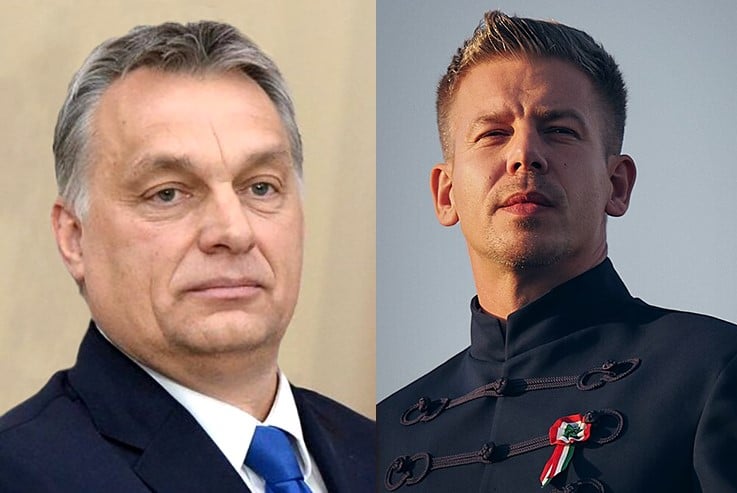
“He’s one of the leaders who was willing to stand up to the bureaucracy in Brussels, that has been very bad for the United States,” Vice President JD Vance recently said to Fox News after the defeat of Viktor Orbán in Hungary to his onetime Fidesz Party ally, Péter Magyar, who broke with the party in 2024. Vance continued, “For example, when you see a European bureaucrat go after an American company, sometimes the only vote ‘No,’ the only vote to protect that American interest, has been Viktor Orbán.”
Vance is, of course, correct, although he is late in making that case to Americans. Within a day of Orbán’s loss, Ursula von der Leyen announced that the EU would move to a qualified majority vote instead of unanimity. That means a majority of powerful EU states can now decide for everyone in the EU. In essence, it is the end of national sovereignty in Europe. Orbán was one of the last bulwarks standing against that, and his departure naturally emboldens the likes of von der Leyen.
Orbán’s defeat, moreover, is a major blow to the Trump administration’s policies, which have been in opposition to the EU’s general globalist drift, and will have ramifications far beyond a mere delay in the EU-U.S. trade and economic rivalry.
What are the potential lessons for the U.S.?
First, Orbán’s defeat reinforces the European Union’s structural power over member states. The EU has increasingly tied funding to the governance standards it seeks to impose. By 2023, billions of euros in recovery funds allocated to Hungary had been partially frozen pending judicial and anti-corruption reforms. This kind of financial leverage has created a persistent asymmetry: Even electorally successful governments face constraints if they diverge from Brussels’s policy consensus. Orbán’s defeat suggests that prolonged financial pressure, combined with reputational framing, can reshape any nation’s domestic political equilibrium over time.
By contrast, under Biden, the U.S. State Department took a more ambivalent stance toward Hungary. While the U.S. imposed targeted visa restrictions in 2024 related to corruption concerns (which Trump later lifted), broader strategic engagement has been limited compared to Cold War precedents. This naturally has policy consequences for trade, Ukraine, and the EU’s internal veto politics. Orbán frequently acted, as Vance rightly suggested, as a dissenting voice within the EU—particularly when it came to sanctions and war policy toward Russia following the Russian invasion of Ukraine. Until now, EU decisions on foreign policy have required unanimity, giving Hungary disproportionate leverage in comparison to its size. A post-Orbán government more aligned with Brussels will likely go along with sanctions, military aid packages, and accession talks with Ukraine. This means Hungary may often be opposed to U.S. interests in Ukraine, and regarding trade and free speech.
On trade, for example, tensions between the EU and the U.S. have grown over digital regulation, particularly the Digital Services Act and Digital Markets Act. These laws impose stricter obligations aimed largely at American tech firms, including Meta and Google. A Hungary aligned with Brussels would likely not obstruct further regulatory tightening or retaliatory trade measures.
Politically, it shows that the EU globalist narrative is more effective at influencing elections in Europe than in the U.S. The EU has consistently framed Hungary as an “illiberal democracy,” a term Orbán himself popularized in a 2014 speech. Since 2018, European Parliament resolutions have described Hungary as at risk of “systemic breaches” of democratic norms, citing concerns about judicial independence, media pluralism, and restrictions on civil society. These assessments form part of a broader normative framework through which the EU defines acceptable governance within its membership. This label is, of course, selectively applied and politically instrumentalized. But the tension here is more than just rhetorical; it is institutional. The EU’s legitimacy rests partly on enforcing what it calls liberal-democratic standards, while member states supposedly retain electoral sovereignty. But this is just a façade of sovereignty. Elections are retained but are not, in any meaningful sense, indicative of national sovereignty. The EU will take this opportunity to consolidate power and centralization.
EU membership entails binding legal and economic commitments that limit unilateral policymaking. Hungary’s disputes with the EU over migration quotas, judicial reforms, and NGO laws illustrate the friction between national sovereignty and supranational governance. The reality is better described as “pooled sovereignty,” where states trade autonomy for market access, structural funds, and geopolitical weight. Orbán’s defeat will not alter this structural arrangement, but it might reduce open conflict with Brussels—meaning Hungary will be more likely to acquiesce to EU diktats, in return for investment.
Most importantly, this should give the U.S. some pause about the policies we pursue in Europe. The idea of a unified “West” has weakened in recent years due to divergent ideological and economic interests and different threat perceptions. Orbán’s loss reinforces this trend by demonstrating that domestic political outcomes in Europe are increasingly shaped by intra-European dynamics and that even nominally conservative European parties, like Giorgia Meloni’s in Italy, no longer consider U.S. interests to be compatible with their own.
Leave a Reply