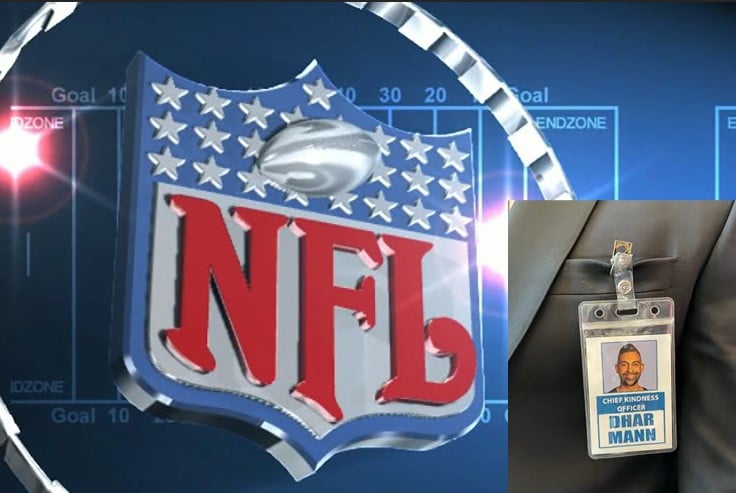
The NFL, it seems, has just come to the realization that football fans tend to be a bit rowdy and enjoy insulting each other. To address this “problem,” the league has hired Dhar Mann as its first-ever “Chief Kindness Officer.” No, I hadn’t heard of him either. But in the pantheon of e-celebs infecting social media, he’s important because he has a YouTube channel with 26 million subscribers and 15 million on TikTok.
Apparently, the thought is that in order to prevent fans—especially Packers and Bears supporters—from fighting in the parking lot on a Sunday afternoon, Mann will create content for the NFL’s YouTube channel, and “lead a series of digital, social, and on-the-ground activations designed to activate kindness and sportsmanship across fans and players throughout Super Bowl events.”
As part of his role, Mann recently launched the “Be Kind to Your Rival” social media campaign, encouraging fans to say nice things about opposing teams and fanbases. If fans post a kind message and share it with three others using the obligatory hashtag #KindnessWinsBig, Mann will donate $10 to St. Jude Children’s Hospital.
Call me a cynic, but I think he will have a hard time making any real difference. The project of socially engineering fans into passive and polite guests at a tea party is a bit like trying to kick water uphill. Fans, much like nations, use flags to build collective identity, turning individuals into unified tribes through shared symbols. Songs foster in-group loyalty and serve as battle cries, while insults against the opposing team help define group boundaries and signal loyalty by demonizing the out-group.
Yet not every athletic competition is dominated by tribal hostility; some, like this year’s Winter Olympics, reveal a strikingly different atmosphere.
Reports about the behavior of fans at the last Winter Olympics suggest that the International Olympic Committee has no need for someone in Mann’s role. Indeed, the atmosphere was like that in a hippy commune—everyone seemed to love one another a bit too much, if anything. Stories appeared reporting that they had run out of free condoms, for example. And who could forget China’s army of highly gifted toddlers, who seemed to spend most of their time hugging competitors and making heart shapes with their hands for the cameras.
Despite the NFL’s best intentions, the behavior they’re trying to change is hardly unique to American football. The fierce loyalty and competitive banter that define NFL fandom are mirrored in stadiums, arenas, and sports bars around the world. From painted faces to passionate chants, sports fans everywhere thrive on rivalry—and sometimes, by pushing the boundaries of sportsmanship.
Whether it’s between fans or players, I lament the loss of respect for genuine rivalry.
Contemporary boxing is hyped through promotional slop and staged wrestling-style antics, but Ali and Frazier’s beef was genuine and legendary—a 30-year grudge match so fierce that Frazier once said he would “open up the graveyard and bury his ass” after Ali developed Parkinson’s disease.
Just as abstractions like skin color, territory, or religion fuel conflict in war, the pursuit of victory in competitive sports fuels aggression. The risk of injury is part of the game. In ice hockey, fighting is so common that referees usually let players punch until one player gives up. For example, the 1997 Bloody Wednesday fight between the Detroit Red Wings and Colorado Avalanche, or the 1984 Good Friday Massacre between the Montreal Canadiens and Quebec Nordiques, resulted in mass brawls, broken noses, early retirements, and players left unconscious on the ice.
Even in Test Cricket—the quintessential gentleman’s sport, where play goes on for five days and breaks for tea and sandwiches—players use sledging, a form of personal abuse, to unsettle opponents. In British football (soccer, if you will), fans are notorious for creative and abusive chants targeting both rival fans and players. Perhaps it’s no surprise, then, that English law now criminalizes racist or homophobic taunts, with penalties including match bans and criminal records. Still, I’d love to see Mann try to reform a Premier League crowd.
Mann’s brand of digital evangelism sums up what I loathe about modern culture: influencers turning every human impulse into a hashtag and every virtue into a viral trend. It’s a secular confessional, whereby reformed heretics are put before a collective hive mind jury for judgment. Now, decency is commodified and sold … like Veganuary. Since when did politeness need a slogan?
For every clout-chasing influencer, there are a thousand shitposters waiting to mock him. Luckily, the internet’s sense of humor might do to the kindness bullies what they can’t do to normal people—troll them into oblivion.
Leave a Reply