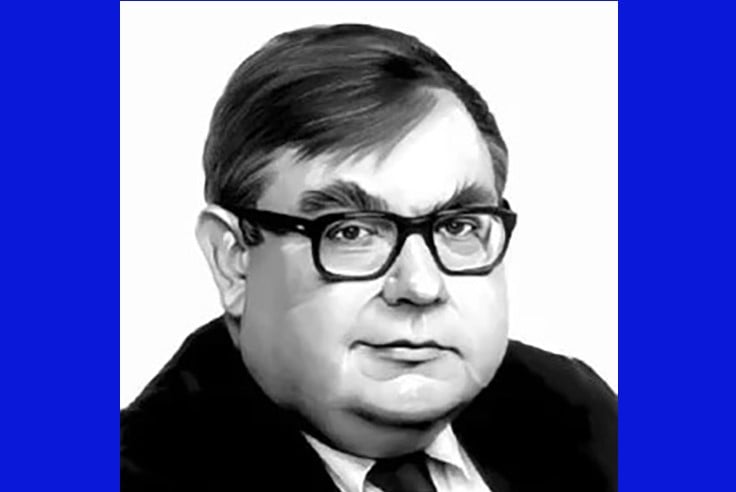
Among the taunts flung at Chronicles by Washington Post hitman, Alec Dent, on the occasion of our magazine’s 50th anniversary celebration in Washington, D.C., was the charge that we had, some decades ago, supposedly published an encomium to the former Klansman David Duke. The author of that presumed abomination was reported to be our revered columnist Sam Francis, whom Dent insists “used the magazine to praise” the former Ku Klux Klan leader, “for defending the American Way of Life.’”
Of course, that accusation did not originate with Dent, who threw it rather insouciantly into his half-baked invective for the Post. But this charge is certainly consequential because it belongs to a now prevalent narrative about the populist right that appears in such leftist bestsellers as John Ganz’s When the Clock Broke, David Walsh’s Taking America Back: The Conservative Movement and the Far Right, and Laura K. Field’s Furious Minds.
Purportedly, Sam Francis’s strategy for creating a populist right, one that he presented to his close friend Pat Buchanan, went back to his earlier infatuation with David Duke, who ran for governor of Louisiana (and lost) in November 1991. According to this venerable legend, Francis lavishly praised Duke, a white racialist who once expressed Nazi sympathies, and Sam even allegedly extolled this miscreant as the defender of a traditional American way of life. Our deceased friend committed this enormity (let me fill in those details that Dent blithely ignores!) in a column, “The Education of David Duke,” which was published in Chronicles on Feb. 1, 1992.
Unfortunately for the legend that Dent sloppily reprises, there is nothing in that piece to suggest that Francis ever fawned over Duke. Indeed, Francis presents the man as the glaringly defective representative of an emerging populist movement. Francis also discerns similar stirrings in “Reagan conservatism.” To whatever extent Duke or Reagan resonated with voters, this popularity “had little to do with supply-side economics and spreading democracy.” Francis wrote:
It had to do with the awakening of a people who face political, cultural, and economic dispossession, who are slowly beginning to glimpse the fact of dispossession and what dispossession means for them and their descendants, and who are starting to think about reversing the process and powers responsible for their dispossession.
According to Francis, Reagan failed to deliver as a populist, and so some of his followers are turning elsewhere: They feel they have been “systematically thwarted, manipulated, and suppressed, not least by the very professional conservatives who have gained from [the incipient populist revolt] and purport to represent it.” These voters, he said, had therefore turned in desperation to Duke, to whom Francis refers as “the ex-Nazi” and “Klansman.”
Contrary to the impression created by his detractors, Francis explicitly warns Duke and others who appeal to populist sentiments that they will have to educate themselves, that is,
lift their minds out of both the tract literature of racism as well as the slogans of bourgeois individualism that can address the threats of the American nation, its people, and their way of life. Such a vision would seek to do more than merely rehearse horror stories of the welfare state and the black crime rate. It would have to make plain that the threat to American national identity is only in part ethnic but also cultural, economic, and political, that the threat comes from the dominance of elites that have vested interests in the dispossession of Americans and in the dispersion of their culture.
Although Francis most definitely does see Duke as representing, for many angry voters, one version of an American way of life, there is nothing in his commentary to suggest that he considered him suitable for that historic role. A truer representative for Francis came in the person of Pat Buchanan, whose confidant he became shortly after penning his comments about Duke. Francis’s other references to the “Klansman” were also far from complimentary. The “Education of David Duke” is a document that deserves to be remembered, but not for the reasons Dent and those he cribbed from offer. This writing testifies not to Francis’s infatuation with Duke, but to the beginning of his articulation of what has become an intergenerational populist vision.
Despite Duke’s unsavory past, Francis concedes in this commentary that his subject “has abandoned his racialist and Nazi noises and espoused the platform that, while rather narrow, is formally and explicitly unobjectionable from a mainstream conservative point of view.” For example, “Duke opposed quotas and affirmative action, urged the need for welfare reform, and objected to the excesses of multiculturalism and the kind of minority racism that upsets even such progressives as Arthur Schlesinger, Jr.” Please note the very minimalist populist program that Francis condescends to praise Duke for adopting during his campaign.
An unmistakably critical view of Duke, for those who may be looking for one, can be found in Francis’s assessment of the “Klansman” published in Chronicles on Jan. 1, 1991, “A Bad Moon on the Rise.” For obvious reasons, this text is less valuable to Francis’s leftist defamers than their cherry-picked or hastily summarized version of “The Education of David Duke.” I am citing this revealing passage in full because most Francis-haters offer inaccurate paraphrases of what they tell us their subject said.
Of course, by itself, Mr. Duke’s ability to gain votes does not constitute a revolution, nor does the candidate himself seem to promise much as a serious leader of one. He simply carries too much baggage, and there are persistent rumors about irregularities in his personal life, which, if true, point to serious character flaws and threaten an eventual political embarrassment. Whatever his plans for the future, Mr. Duke and his supporters shouldn’t count on holding high elective office. He can at most be a gadfly, and perhaps the best thing for him to do now would be to institutionalize the movement he has started in a nationwide organization that could exert cultural and indirect political power and radicalize Middle American consciousness still further.
Although I wouldn’t expect Dent or any of the recent detractors of the populist right to cite such countervailing evidence, it should be obvious to any fair-minded reader that Francis’s relationship with Duke was something less than enthusiastic. But since these Francis-haters are apparently concerned with those who have Hitlerite or extremist associations, perhaps they would care to provide equally pointed commentaries on Barack Obama’s drooling connection to the black nationalist, Hitler-admirer Louis Farrakhan, or his 20-year discipleship under the America-hating black nationalist, Reverend Jeremiah Wright. Such facts, unlike the narrative about Francis’s glorification of Duke, don’t have to be invented.
Lastly, let me explain that I’m not surprised that well-paid wokesters are focusing on Sam’s supposedly admiring relationship with Duke, although it rests almost entirely on fiction. This invention allows the Left to depict the MAGA turn of the American right as arising out of demonic forces. Tied to this, except in David Walsh’s more sinister view of the GOP as being intrinsically fascist for many decades, is the myth that a nice conservative GOP led by such moral giants as the Bush family, Mike Pence, and Mitt Romney (all of whom the left previously demonized whenever it appeared they may be winning) fell into a cosmic struggle with fans of the Third Reich. If the left is looking to exorcise fascist, racialist demons, perhaps it should begin by looking at its black nationalist allies. In any case, Sam Francis’s comments on David Duke don’t yield the evidence his detractors are seeking.
Leave a Reply