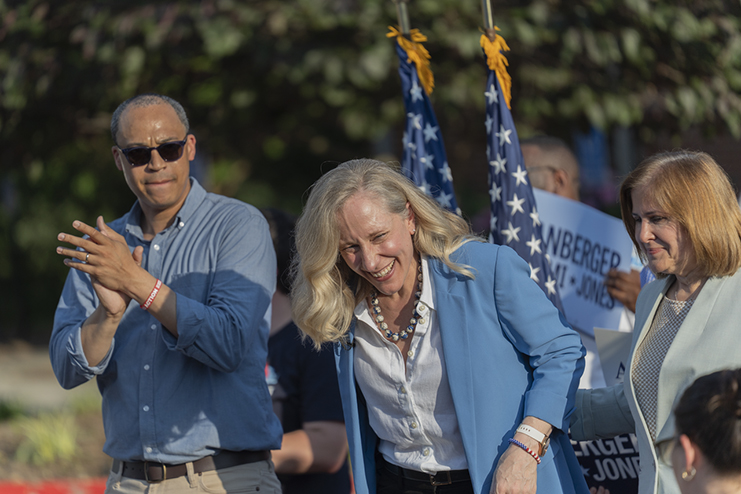
Though few in number, the 2025 off-year elections were significant enough to give Democrats hope and Republicans a jolt. Most contests—including the ones in New Jersey and New York City—ended without surprises, as Democrats triumphed in long-standing blue jurisdictions. But in Virginia, historically a red state that now trends purple, thanks mainly to solidly blue Fairfax County and other DC suburbs, the governor’s mansion switched from a popular but term-limited Republican Glenn Youngkin to former Democratic Congresswoman Abigail Spanberger.
Spanberger ran as a moderate after a congressional career showcasing bipartisanship. Her coattails extended to the lieutenant governor’s and attorney general’s races, both of which were also won by Democrats. Additionally, Democrats retained control of both houses of Virginia’s state legislature.
How is all that moderation manifesting itself for the people of the Commonwealth? Not so well, it turns out. Despite her supposed centrism, Spanberger’s first day in office saw a rush of executive orders, appointments, and new Democratic bills that should stand as a profound warning to anyone concerned with American prosperity.
First, the new Democratic governor immediately rescinded Youngkin’s executive order requiring Virginia law enforcement to cooperate with ICE in enforcing federal immigration law. More than 70 percent of Americans want illegal immigrants to be deported, but the Old Dominion will likely look more like a radical left “sanctuary city” that combats federal authority rather than enforces it.
Spanberger also immediately filled all 27 open seats on the boards of the University of Virginia, George Mason University, and the Virginia Military Institute—all public institutions—and successfully demanded the procedurally unmandated and otherwise unwarranted resignations of multiple Youngkin appointees, including the chair and vice chair of UVA’s board. Last July, UVA’s president, James Ryan, was forced to resign after his institution was found noncompliant with federal directives that prohibit DEI considerations in academic governance. A month later, GMU president Gregory Washington was also found to have violated anti-DEI directives in hiring. Under Spanberger, some of the more vocal board members who sought to comply with those directives have been turned out, while presumably pro-DEI placemen will take all the spots that Youngkin either failed to fill or filled only to have his appointees removed.
Contrary to Spanberger’s campaign focus on “affordability,” the proposed new legislation that she will almost certainly sign into law after it passes Virginia’s legislature will raise taxes on Virginians. These broad tax hikes loom even as Democrats continue to complain about costlier consumer prices and inflation, both of which fell in the first year of President Trump’s second term, and while states across the South seek to cut or abolish income taxes. In Virginia, however, tax increases will affect just about everyone. A 3.8 percent surtax on investment income is in the works, while the state sales tax will be extended to previously untaxed exchanges, including deliveries and home services, levies that will fall regressively on lower-income residents. In purely ideological overreach, gunowners will face a new 11 percent tax on firearms sales, amid other taxes, while gas-powered leaf blowers will be banned statewide.
Finally, under congressional redistricting legislation drafted by Virginia Senate Leader L. Louise Lucas, the state’s 11-member congressional delegation will likely decline to just one Republican representative, down from the five GOP members the state now has in the House. Projected new district lines will extend the blue regions of the state in suburban Washington to encompass less densely populated red rural areas. “It’s just a power grab,” Virginia Republican Congressman Morgan Griffith told Fox News, “the Democrats are pursuing redrawing our lines … to basically ‘Fairfax’ the rest of Virginia.”
Additional legislation will prohibit hand-counting of ballots, extend the period for counting absentee ballots, and possibly allow internet voting. Proposed criminal justice legislation will reduce sentences for a range of crimes.
Some Republicans are complacent about the prospect of losing the 2026 midterms, serving up the lazy argument that “things have always been that way” or that “these things move in cycles.” But with radicals like Spanberger duping voters into thinking they are moderates—and causing unsuspecting citizens to vote themselves into greater crime, more discrimination, higher taxes, and stilted representation, the public interest demands the true agendas be exposed.
Leave a Reply