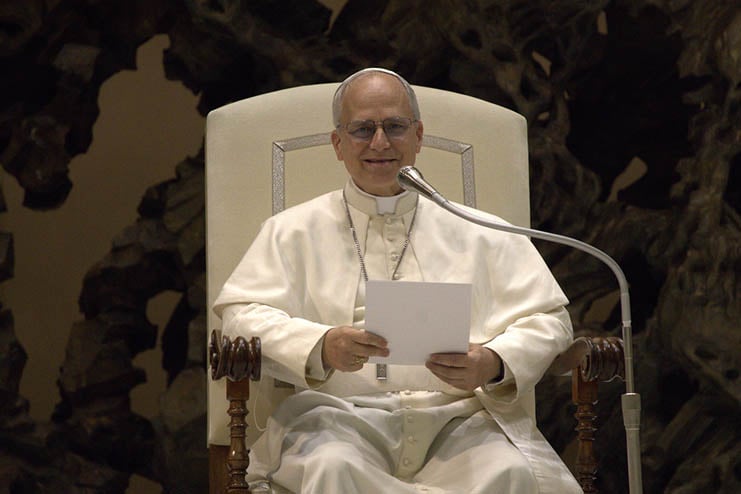
When newly elected popes choose their names, they signal both continuity and ambition. Pope Leo XIV’s decision to invoke Pope Leo XIII was, therefore, unmistakable in its intent. Leo XIII’s 1891 encyclical Rerum Novarum inaugurated modern Catholic social teaching by addressing the social dislocations of industrialization. Leo XIV’s new encyclical, Magnifica Humanitas, attempts an even more ambitious task: a synthesis of more than a century of Catholic reflection on economics, politics, technology, and social order.
The document contains moments of genuine insight. Most notably, Leo rejects the utopian impulse increasingly common in modern culture. He reminds readers that suffering, vulnerability, illness, aging, and failures are not defects to be engineered away but essential features of the human condition. Human maturity requires accepting limits rather than denying them. In an age captivated by technological solutions to every problem, this is a welcome and necessary corrective.
The pope, however, is less thoughtful in his treatment of artificial intelligence. He recognizes both AI’s transformative potential and the dangers posed by systems that increasingly mediate human judgment. These warnings about technological power deserve careful attention, but they lack any deep knowledge or insight into the contours and benefits of AI.
Despite the occasional strengths of this encyclical, ultimately it rests on a flawed diagnosis of the modern world. As a result, its prescriptions remain largely irrelevant.
At the center of Leo’s argument lies a familiar concern: Humanity lacks a shared moral framework. Individuals, corporations, and nation-states pursue competing interests, generating conflict, inequality, exploitation, and social fragmentation. Neither capitalism nor socialism, he suggests, has succeeded in creating a just social order. Artificial intelligence threatens to deepen these problems by concentrating power in the hands of technological elites.
His solution is equally familiar: Humanity needs a universal moral authority capable of guiding economic and political life toward the common good. While not advocating world government, Leo envisions a global moral consensus informed by natural law and nurtured by institutions that transcend national and economic interests. The Roman Catholic Church, unsurprisingly, is presented as a principal custodian of this vision. Yet Leo fails to note the failures of the Church and also the fact that Roman Catholicism commands the loyalty of only about half of today’s Christians. His words are worth debating but are neither authoritative nor magisterial for most people.
A misunderstanding of modern civilization undergirds his argument.
Catholic social thought remains deeply influenced by assumptions inherited from the Medieval, agrarian world. In that world, wealth was largely fixed, land was the primary source of economic power, and society was organized hierarchically. The modern world operates according to a different logic altogether. It is defined by what might be called the “technological project”—the systematic transformation of nature through human ingenuity.
Too often, Catholic critiques assume that technology exists merely to increase material consumption or economic power. Yet from John Locke to Hegel, major thinkers have argued that technological progress is involved in something deeper: an expression of human freedom, creativity, and self-realization. Innovation is not understood simply as economic activity; it is a distinctly human activity.
Ironically, this insight can also be found within Catholic teaching. In Centesimus Annus, Pope John Paul II recognized entrepreneurship, initiative, cooperation, and productive risk-taking as legitimate sources of wealth creation. He understood that modern prosperity arises not merely from natural resources but from the creative capacities of free individuals working together.
Leo XIV appears less willing to embrace this dimension of modern life. Like many of his predecessors, he views markets primarily through the lens of inequality and exploitation, while paying insufficient attention to their capacity for innovation and human flourishing.
This perspective overlooks a central historical reality: Market economies have lifted more people out of poverty than any other system in history. Before Rerum Novarum, figures such as Andrew Carnegie were already arguing that wealth creation carried moral responsibilities. The philanthropic traditions that emerged in Britain and America were not simply charitable; they sought to expand opportunity and foster self-sufficiency.
The broader Anglo-American tradition produced not only modern capitalism but also many of the institutions associated with political liberty, economic mobility, and social advancement. These achievements were not accidental. They emerged from cultural commitments to entrepreneurship, private property, limited government, and the rule of law.
Leo’s analysis also risks projecting outdated class categories onto a world in which they no longer make sense. Like Marx, he often interprets economic life through frameworks inherited from earlier agrarian and industrial societies. Yet contemporary wealth is increasingly generated through knowledge, innovation, and networks of voluntary cooperation rather than through ownership of land or traditional capital alone.
The evidence is difficult to ignore. Countries that have embraced market reforms and technological modernization have dramatically reduced poverty and expanded opportunity. The greatest development success stories of the last half-century were not achieved through centralized moral planning but through participation in global markets and technological progress.
The deeper problem, however, is philosophical.
The intellectual foundations of modern Catholic social teaching remain heavily indebted to the Thomistic synthesis of Aristotle and Christianity. This tradition understands society teleologically: institutions and individuals are ordered toward a so-called common good that transcends private interests.
While valuable in some respects, this framework can sometimes drift toward collectivism if untethered to political realities and not governed by prudence. Political and economic life becomes organized around substantive visions of social ends rather than around the protection of individual liberty. The result is a recurring tendency to place greater trust in political and governmental institutions than in free individuals acting responsibly within a framework of law.
By contrast, the Augustinian and Protestant traditions placed greater emphasis on conscience, self-government, and the limits of political authority. These traditions profoundly shaped the development of constitutional government, free markets, and civil society in the English-speaking world.
The irony is that Leo XIV was formed within his own Augustinian tradition, yet his social vision remains overwhelmingly institutional and managerial. He appears far more comfortable discussing structures and systems than the moral and economic creativity of free persons or corporations. He seems overly swayed by the marginalized and the Global South.
Pope Leo XIV is undoubtedly sincere and well-intentioned. His concerns about human dignity, technological power, and moral fragmentation are serious and deserve engagement. Yet he fails to appreciate how technology, markets, law, and culture have combined to produce the most prosperous societies in human history.
As a result, his reflections on human nature are often illuminating, while his prescriptions for political and economic life remain detached from reality. The encyclical offers important moral observations, but little practical guidance for navigating the challenges of artificial intelligence in the modern world.
That is why, for all its ambition, the document is likely to prove less influential than its author hopes. It is thoughtful in parts, admirable in intention, but ultimately irrelevant to the forces shaping the 21st century.
Leave a Reply