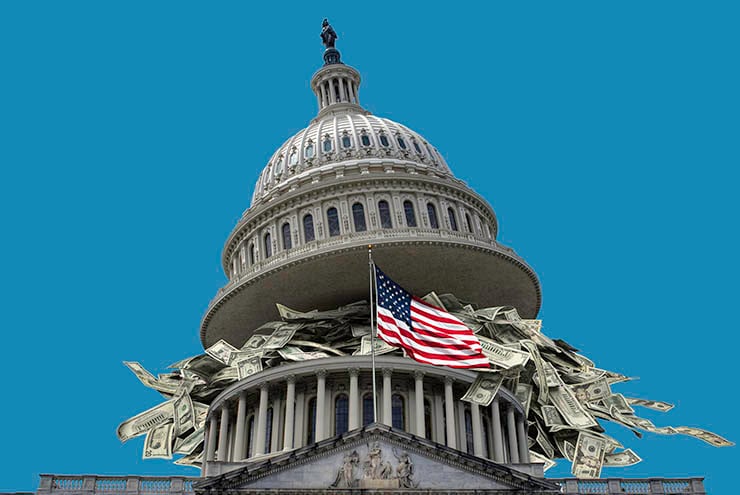
For decades, conservatives have warned that government programs seldom remain confined to their original missions. Agencies and initiatives created to solve discrete problems have a way of accumulating new objectives, broader mandates, and redirecting themselves toward ideological agendas far removed from their founding purposes. The Community Development Financial Institutions Fund (CDFI Fund) appears to be a multibillion-dollar case study in that kind of transformation.
A program that began as a targeted effort to expand access to capital in struggling communities is increasingly intertwined with progressive political priorities that have little to do with community development and much to do with advancing the left’s broader social agenda.
The Community Development Financial Institutions Fund was established by the Riegle Community Development and Regulatory Improvement Act of 1994 to promote economic development in underserved communities. Under the program, banks, credit unions, nonprofit loan funds, and other eligible institutions can receive certification from the Treasury Department and become eligible for federal funding to expand access to financial services in disadvantaged areas. While the program was created to encourage investment and opportunity where private capital was scarce, it has drifted from that limited mission into areas that raise serious concerns about the apparent political and ideological activism of its administrators. What might have begun as a well-intentioned initiative to help poor communities has morphed into something antithetical to America’s values, principles, and history.
Increasingly, evidence suggests that the CDFI Fund has become entangled with broader left-wing ideological projects that extend well beyond traditional community development. Of course, left-wing ideological capture of institutions is nothing new. The left is notorious for transforming institutions into instruments of enforcement for their ideology. This has occurred at universities, nongovernmental organizations, and in other federal programs. The CDFI Fund now appears to be yet another victim of this trend. There is no doubt that many American communities deserve financial institutions capable of assisting them, but these objectives are best served through transparent programs focused on measurable outcomes than by adherence to toxic left-wing ideologies.
According to President Trump’s FY 2027 Budget Request, past CDFI awards enabled lender practices in which race was a key determinant in access to loans and provided funds for products and services that advanced “immigration and climate radicalism.”
The Center for Renewing America documented numerous examples showing this trend. Treasury officials explicitly connected CDFI initiatives to the Biden administration’s agenda of addressing systemic racism and building a more “equitable” economy. The Opportunity Finance Network (OFN), a prominent CDFI association, has published multiple articles about how CDFI-funded institutions advance racial justice and address “a white monopoly on capital.” In addition, CDFI-funded institutions have also been irresponsibly financing Green New Scam causes. $8.5 million from the OFN was committed to six CDFI recipients to support climate focused initiatives.
There is even evidence that CDFI-funded institutions have assisted immigrants and, potentially, illegal aliens. For example, the Social Innovations Journal asserted that CDFI-funded institutions should work more with and provide funds for illegal immigrant families even while acknowledging the Trump administration’s lawful deportations taking place.
The CDFI fund reflects the broader pathology of woke weaponization that the Trump administration is trying to root out of the federal government. Government agencies originally designed to perform specific functions have increasingly assumed vast control over agencies and engrained cultural Marxism in the United States.
Defenders of the CDFI Fund may point to success stories: small businesses launched, housing developments financed, and underserved communities receiving assistance in climbing out of poverty. These achievements should not be dismissed. Yet success in some respects does not immunize programs from scrutiny and does not change the fact that a great many resources designated for the Fund have served radical left-wing goals.
Economic development should mean helping entrepreneurs launch businesses, supporting homeownership, expanding local employment, and revitalizing neighborhoods. It should not require adherence to ideological initiatives untethered from the foundational elements of the American republic.
At stake is a broader question about self-government. Should federal initiatives remain tethered to limited, clearly defined purposes? Or should they evolve into instruments that the left can use to force their agenda on the American people?
The answer should be the former. The genius of the American system rested partly upon its suspicion of concentrated power. The Founders understood that public officials, however sincere, are tempted to expand their authority beyond prudent limits. Institutions created for one purpose inevitably seek additional missions, larger budgets, and broader influence.
America’s civic health depends upon preserving the distinction between serving citizens and shaping them in partisan ways. Institutions designed to strengthen communities should unite neighbors around common interests rather than sort them into competing categories of grievance and identity.
The CDFI Fund began as an effort to help forgotten places participate more fully in the nation’s economic life. If it is to endure with public legitimacy, it must recover that modest ambition—or, Congress should take steps to defund and dismantle this politicized entity, which will help the Trump administration to purge the federal bureaucracy of left-wing radicalism.
Leave a Reply