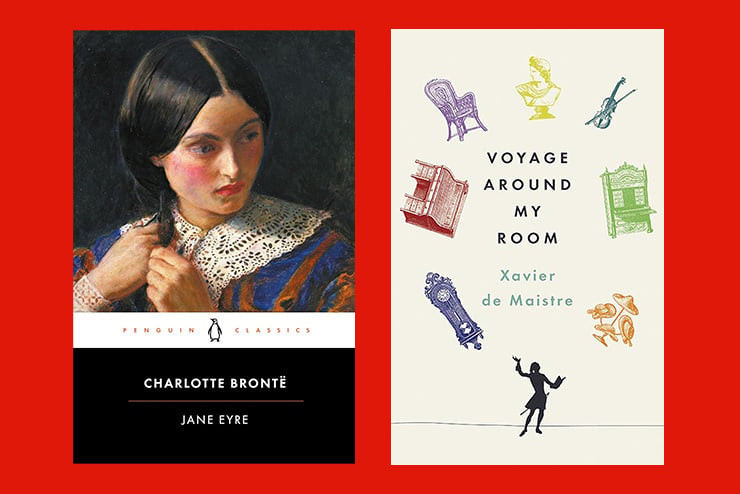
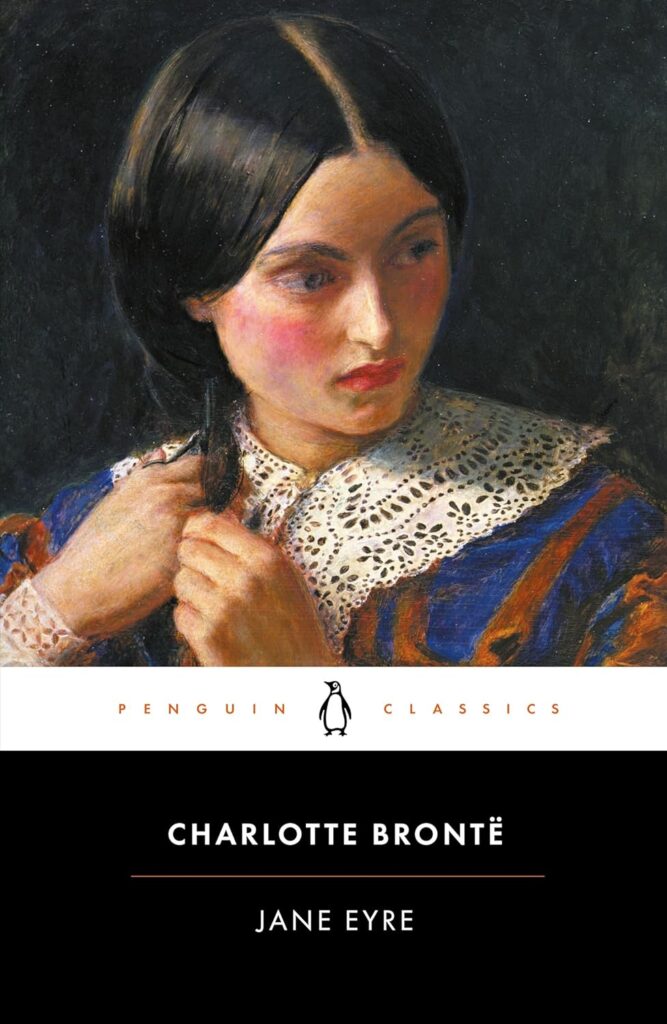
Charlotte Brontë’s Jane Eyre (1847) remains a monument of the Victorian novel. It combined and built upon multiple strains of British fiction from the previous century.
Like Defoe in Moll Flanders (1722), Brontë uses first-person narration, a technique that invites intimacy. Among features readers of the 1800s would recognize are the Romantic Doppelgänger (two wives, in a way) and the romance-and-marriage plot, as exemplified by Austen in Pride and Prejudice (1813). Jane Eyre may be viewed likewise as a feminine Bildungsroman, following the heroine through her early years and growing self-awareness. Without the satire that marks, say, Trollope’s writing, it is also a novel of manners, but even more of social criticism. Like Dickens in Oliver Twist, Brontë indicts abusive authorities charged with children’s education; orphanages and schools are sites of dishonesty, and emotional and physical torment enacted through cruel punishments and semi-starvation.
Jane Eyre (along with Emily Brontë’s Wuthering Heights) kept alive the Gothic novel—an 18th-century genre with shadowy, forbidding settings and mysterious, often evil, antagonists—which had enormous influence in France and remains alive in American cinema and fiction. Its classics include Horace Walpole’s The Castle of Otranto (1764), Radcliffe’s The Mysteries of Udolpho (1794), Mary Shelley’sFrankenstein(1818), and Maturin’s Melmoth the Wanderer (1820).
Brontë uses a wide range of plot devices and descriptive touches to evoke dread and terror at Thornfield Hall and in its dark and brooding master, Mr. Rochester. Unexplained episodes involving a mysterious servant, a puzzling fire, and strange laughter emanating from the top story of the house increase the sense of foreboding.
Two early feminist literary critics, Sandra Gilbert and Susan Gubar, exploited the novel to great acclaim in The Madwoman in the Attic: The Woman Writer and the Nineteenth-Century Literary Imagination (1979). They argued that Brontë was rebelling against the patriarchal literary straitjacket to which men had consigned her sex. Two decades later, Scott Heller called their study, without exaggeration, “the book that created a canon.” It has lost prestige, however, for lacking “intersectionality,” specifically, for overlooking the ethnic heritage of Brontë’s madwoman. Oh, it is not easy to keep pace with changed critical contexts—still less, with the madwomen on campus.
—Catharine Savage Brosman
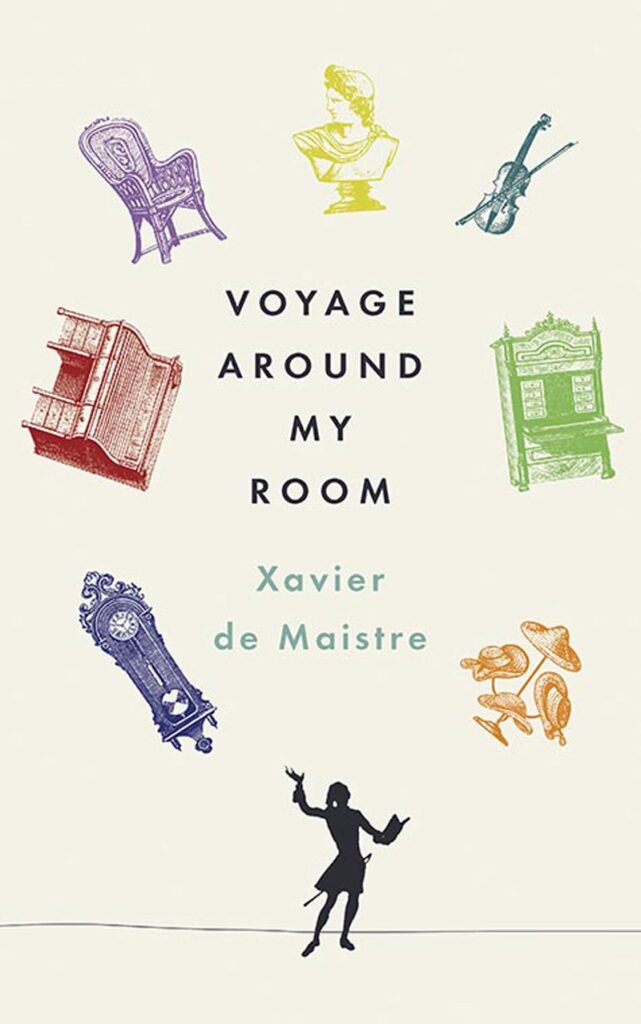
Chronicles readers will be aware of Joseph de Maistre, who was a major influence on 18th and 19th counterrevolutionary thought. Fewer will know of his younger brother, Xavier, yet he too made a unique contribution to literature and was admired by Nietzsche, among others.
In 1790, Xavier, then a 27-year-old Savoyard army officer, was put under 42 days’ house arrest for dueling with another officer. He beguiled those weeks by penning this engaging and thoughtful memoir-cum-rumination on life, which Joseph would publish on his behalf in 1795.
As Savoy was invaded by Napoleon, recaptured by Russia, and then annexed by Austria, Xavier retreated to Russia. There he became first a portraitist, then director of the Admiralty, and a colonel in the Army, serving on fronts from Georgia to Finland. In 1826, he returned to Savoy, where he lived as a lauded littérateur for the next 11 years, before retiring again to Russia, where he died in 1852, aged 89.
Xavier was always intellectually audacious—he ascended in a hot air balloon in 1784, just one year after the Montgolfier flight—and Voyage Around My Room was influenced by experimenters like Goethe and Sterne. His own “sentimental journey” was made within the confines of his involuntary accommodation, inspired by books, poems, and the views from his window down over his beloved but endangered little Savoy, a plaything for great and more ruthless powers.
His worldview is both ludic and lucid, from playful fantasies about a beautiful woman glimpsed on a balcony and humorous anecdotes about negotiating the “terrain” of his room, to penetrating thoughts about the relative merits of the arts and the dichotomy between the soul and “the beast.” A wealth of wryness is contained in his observation: “Never forget that on the day of a ball, your mistress is no longer yours. The moment the dressing begins, the lover becomes nothing more than a husband: the ball alone is the lover … have no illusions.” He is funny, witty, and skeptical, but never cynical.
For all his free-ranging flights of fancy, Xavier clearly shares his sibling’s dislike of abstract ideologies of the kind then busily replacing the admittedly imperfect ancien régimes with revolution, war, and often crueler kinds of authoritarianism. Utopias are for both de Maistres not just a crime, but a mistake. “Plans and hopes are forever doomed to founder against the real sorrows inherent in human nature,” Xavier wrote.
Other travelers have ranged further in fact, but few have found so many truths so close to home.
—Derek Turner
Leave a Reply