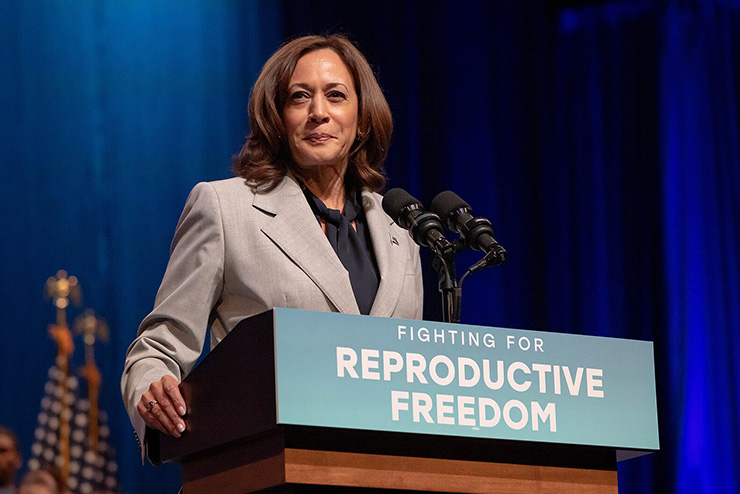
Ten months ago, the American people delivered the political left their harshest rebuke of the modern political era. Their candidate and agenda were so odious to voters that they willingly chose a return to the tumult of the Trump years. To the establishment’s shock, they preferred a “convicted felon” and “election-denier” to the prospect of four more years of leftist insanity.
Since Trump’s return to the White House, Democrats have allegedly been doing some soul-searching. Nary a week passes that doesn’t bring a new autopsy of the 2024 election, or a slew of think-pieces on how the Democrats can rebrand. The party talking-heads and operatives echo the same misguided consensus: that Democrats’ “messaging” is flawed.
The Democrat’s fixation on messaging is the core of their problem. Messaging refers to how political leaders communicate their party’s platform. To look at the past five years and decide that the messaging went wrong presupposes that the actual content of the Democrats’ agenda is just fine, that the only problem is that they simply didn’t say the right things to voters. When Democrats speak of fixing their problems with new messaging, they are saying they don’t intend to change their unappealing policies—only to better conceal them. In confessing their need to message better, they’re really announcing that their hard-won solution to their situation is to dupe the public more effectively.
The Democratic Party cannot accept the fact that Americans don’t want their policies. To accept this fact would require substantive change—far beyond mere talking points—and they’re incapable of that.
Democrats have been so insistent upon progress—their sovereign certitude about what it looks like, and its historical inevitability—that to backtrack on their so-called progressive policies would be to implicitly concede that they were on the dreaded wrong side of history. Further, it would be an admission that history itself does not consist of an inexorable and incremental realization of leftist policy goals. Admitting that Americans don’t want what the Democrats have been offering would be to surrender the philosophical foundation of “progress” as they currently understand it.
Sure, the political left does have some policy goals that are attractive to Americans, but they have no plans to achieve those goals. Everyone would like more affordable housing, but Democrats have offered no practicable, detailed plan for achieving it. No amount of messaging can conceal a dearth of ideas.
There are other issues on which the Democrats do have concrete plans.
The party wants to guarantee that minors have access to “gender affirming care.” The euphemism “gender-affirming care” in this case is the “messaging.” But the fact is that almost no Americans want to make it easier for confused children to get surgical modifications and hormonal interventions that will have lifelong—usually adverse—effects. There is no “messaging” that could convince a plurality of American voters that genital mutilation or elective mastectomies for minors are good policy.
Consider, also, the Democrat’s stance on crime. They had very clear plans, and they succeeded in implementing them in many places. The messaging came first: “Defund the police” and “cashless bail.” These euphemistic phrases were meant to conceal the real, substantive policy: Not punishing crime. Once the public understands that real policy—and recent months have offered us some gruesome demonstrations of it—no amount of messaging can persuade voters that it’s a good idea.
“DEI” is another example of leftist messaging at work. Diversity, Equity, and Inclusion: Who could be opposed to that? The last five years showed that in practice it meant racial preferences, workplace conflicts, run-ins with Human Resources, discriminatory hiring practices, and estrangement of parents from their children’s increasingly radical schools. No messaging can convince Americans to sign up for that. “DEI” was good messaging, but it failed because Americans hated the policies behind the message.
This trend persists on nearly every other issue. Messaging is just about the only thing Democrats have been doing effectively. It’s the policies themselves that are so awful that even expert messaging can’t redeem them.
Under these circumstances, Democrats’ insistence that messaging is the party’s primary problem is an announcement to voters that they privilege style over substance. This is tantamount to telling voters that the party is unwilling to reject policies that the voters, themselves, reject.
If the Democratic Party wants to achieve any meaningful rehabilitation, they will need to reassert the priority of substance over style. The policies matter. They need to be attractive to the average American.
Messaging isn’t a solution to the Democrats’ problem; it is the problem. The only way Democrats will appeal to voters again is to moderate their platform—and show that such moderation isn’t just another rhetorical veneer to conceal their extremist tendencies. Almost a year after their electoral defeat, there’s no sign that they’ve learned their lesson.
Leave a Reply