President Trump’s opponents, most of whom have never seen a local problem they didn’t think a national effort could solve, are suddenly proclaiming their devotion to the cause of federalism. This is in response to Trump’s recent suggestions that he would like to “nationalize the voting” in future elections, which prompted the usual tiresome comparisons of Trump to a banana republic dictator dedicated to stealing elections.
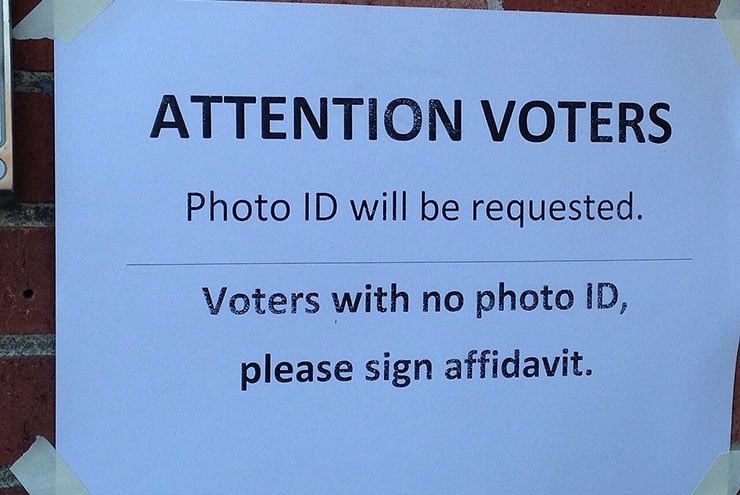
The president has brought attention to an important issue: the need for voter ID. The fact thathis Democratic critics are so vociferously against it is telling.
As the Safeguard American Voter Eligibility (SAVE) Act languishes in the Senate amid partisan gridlock, Democrats are united in their opposition to all efforts to bolster election integrity. This bill, which passed the House in April 2025, would mandate documentary proof of U.S. citizenship for federal voter registration and ensure only eligible Americans cast ballots. Yet Senate Democrats, led by Majority Leader Chuck Schumer, have stonewalled it, requiring 60 votes to break a filibuster they seem eager to maintain.
Elections are the cornerstone of self-governance, and without verifiable safeguards, that foundation crumbles. Requiring a photo ID or proof of citizenship to vote is no more burdensome than showing ID to board a plane, buy alcohol, or open a bank account. Voter ID deters fraud, such as noncitizens voting illegally, which becomes harder to detect in loosely regulated systems. More importantly, it reassures the public that every vote counts equally.
Voter ID is just common sense that falls well within the mainstream of public opinion, transcending party lines and demographics. Polls consistently show overwhelming support: A recent CNN poll revealed that 85 percent of white Americans, 82 percent of Latinos, and 76 percent of black Americans favor requiring photo ID to vote.
Critics will counter that voter ID disproportionately burdens minorities, claiming they lack access to identification. This argument, however, is not only outdated but deeply patronizing and carries racist overtones. It implies that people of color are somehow less capable of obtaining basic documents, a textbook example of the soft bigotry of low expectations.
In reality, most Americans already have IDs: driver’s licenses, passports, or free state-issued alternatives available in nearly every jurisdiction. Indeed, states like Georgia, which implemented strict ID requirements, had record turnout among minority voters in recent elections, debunking the suppression myth. To suggest otherwise is to infantilize entire communities, assuming they can’t navigate systems that millions do daily. It’s a tactic to stoke division and inject a racial component into an issue where it doesn’t belong.
The true, unstated reason for Democratic opposition runs deeper: they benefit from chaotic, unaccountable elections that allow illegal aliens to slip through the cracks. Noncitizen voting dilutes the voices of lawful citizens and tilts the scales in favor of perpetual power for one party.
For an example of how that works, look no further than voting initiatives pushed in Democrat-run locales. In Washington, D.C., the Local Resident Voting Rights Amendment Act of 2022 allows noncitizens—including illegal aliens and even foreign diplomats—to vote in local elections after just 30 days of residency. This means Russian or Chinese embassy staff, potentially acting as agents of adversarial governments, could influence choices for D.C.’s mayor, city council, and school board. (Full disclosure: My organization, the Federation for American Immigration Reform, has sued to invalidate that law.)
Similar efforts in municipalities across California, Maryland, and Vermont are eroding the value of citizenship across the country, setting a dangerous precedent that could spread nationwide if left unchecked. This is not mere inadvertent election fraud; it’s by design. Why else resist a measure that costs so little and protects so much? The only logical explanation is a desire to maintain vulnerabilities that favor electoral manipulation. Loose rules invite mischief, whether through harvested ballots, unregistered voters, or noncitizens padding election rolls. In swing states, even a small percentage of invalid votes could sway outcomes, perpetuating power for those who thrive on division. Democrats’ lockstep resistance to the SAVE Act is an indication of how important this is to the party’s interests.
In contrast, the popularity of Voter ID underscores this disconnect for Democrats. Beyond the CNN polls that show cross-racial support for it, broader surveys show it’s favored by majorities in every demographic, from urban youth to rural seniors. It is only unpopular among political elites and far-left activists who stand to gain from weakened integrity. These groups—typically progressive think tanks and billionaire-funded NGOs—push narratives of “suppression” to justify lax systems that amplify their influence. Meanwhile, regular Americans, regardless of background, want secure elections as the power of their vote diminishes.
Voter ID isn’t a restriction on election integrity—it’s a safeguard for it. By dismissing it, Democrats reveal priorities misaligned with the people’s will. It’s time to show opponents of voter ID for what they really are: out of step with a solid majority of Americans and advocates for election fraud that would benefit only them.
Leave a Reply