The Washington Post is best known outside the newspaper business for the investigative reporting of Woodward and Bernstein—not to mention Janet Cooke. But in the long run, the Post‘s most enduring achievement is that it pioneered the modern newspaper feature section. Until the late 1960’s, most features sections were called “women’s pages,” but when Post...
Year: 1989
Post
No Miracles This Time
Last year, when I was in Helsinki, I made a great discovery:, probably the best informed people on Soviet affairs are the Finns, whose Russian-watching goes back almost two centuries, long before the Bolshevik coup of 1917. I was in Finland talking with veteran analysts, official and unofficial, about the overpowering Soviet military presence that...
Post
Caution: Historical Revisionism at Work
“He who controls the past controls the future.” Nowhere is Big Brother’s dictum truer than in the case of Vietnam and the antiwar movement. Lately, one can detect a new and persistent attempt to remold the history and goals of the antiwar movement in a way designed to make it more acceptable to. the mass...
Post
Continuing Legal Education
Continuing legal education is imposed on lawyers by the Missouri Bar Association and the Missouri Supreme Court, and right before the November election I took a day to fulfill the requirements. The only CLE show in town at the time was a seminar presented by the Missouri Association of Trial Attorneys on using a vocational...
Post
Crime and Capital Punishment
“Missouri doesn’t have a death penalty,” a former prosecutor remarked to me last Christmas. He was wrong, as he well knew. The Revised Statutes of Missouri specifically allow for capital punishment. But as a practical matter, the man was right. At the time he spoke, Missouri had not put a person to death since 1965,...
Post
Dead Souls in the Classroom
“Thanatology” or “death education” now competes with driver’s ed and “social problems” for the attention of the nation’s high schoolers. First introduced on America’s college campuses in the 1960’s by such luminaries as Edgar Jackson, Richard Kalish, Robert Kastenbaum, and Herman Feifel, death education has, like many other dubious pedagogical experiments, trickled down to the...
Post
Making History
The best historical writings, whatever their subject matter, have certain characteristics in common. All display a deft mastery of primary sources, building up from a solid base of fact without allowing the data to drag them down into pedantry. They also bear on their faces both an open and honest viewpoint and objectivity. That is,...
Post
The Speechless Sick
Two-Step is a tall, skinny black man who has lived at the Nashville Union Rescue Mission for seven years. In nice weather he can be seen standing beside the Mission holding his pajama bottom up with one hand and doing a slow, rhythmical shuffle, hour after hour. He has been doing this since he was...
Post
Pound Foolish
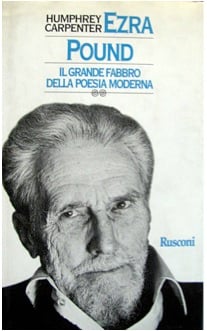
The question arises very early on and looms ever larger as one progresses through this thousand-page-long life: how did Humphrey Carpenter stand it? Pound’s range was from loathsome or contemptible at the beginning to hateful at the apex of his career, and finally to pitiable at the end. To have continued with this distasteful project,...

Post
“The” Patriarchy
Many words current in our culture carry within them a whole buried world of political assumptions and psychological payoffs. Just to use these words is to submit yourself to a powerful attempt by the words’ coiners or redefiners to shape reality and to impose a view of it that they consider advantageous to themselves. Often...
Post
Postwar Oxford
It was an interesting time. The Second World War had gone on two years longer than the First, with resultant fatigue in England’s industrial north, which gave the Labour government its 1945 landslide. Such is admirably explained in Corelli Barnett’s The Audit of War, which shows how the appeal of the shadow Attlee government, particularly...
Post
A Sacred Social Order
In Twin Powers, Thomas Molnar, one of our age’s most imaginative and creative thinkers, confronts us, like Hannah Arendt and Eric Voegelin before him, with an analysis of our social, political, and cultural situation that is both fascinating and frustrating: fascinating, because it seems to explain so much; frustrating, because it appears very difficult to...
Post
Old Possum in his Letters
“Talent is an adornment; an adornment is also a concealment.” —Nietzsche “I think one’s letters ought to be X about oneself (I live up to this theory!)—what else is there to talk about? Letters should be indiscretions—otherwise they are simply official bulletins.” So T.S. Eliot remarked to his Harvard classmate, the poet Conrad Aiken, in...
Post
A Prophet in His Own Country
It took millennia for North Dakota soil to acquire what nutrients it has (and they’re substantial) in the Red River Valley along the eastern border, the silt-rich bottom of huge prehistoric Lake Agassiz. It took only a hundred years or so for man to nearly deplete it. And now John Gardner, a North Dakota agronomist,...
Post
Says Who?
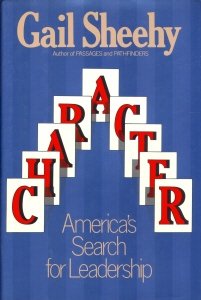
During the long election season just past, Gail Sheehy wrote for Vanity Fair a series of “character profiles” of various presidential candidates. Six of those profiles, together with an introductory essay and a long piece on Ronald Reagan, make up Character: America’s Search for Leadership, Ms. Sheehy’s latest book. In addition to Reagan, her subjects...
Post
The New Eschatology of Peace
The relations of religious faith with political life in the modern world are riddled with paradoxes. In the Middle East, rapid secularization has provoked a fundamentalist revulsion, which seeks vainly to stem the tide of modernity that, at the same time, gives it all its strength. Middle Eastern fundamentalism is little more than a modernist...
Post
E.P., Phone Home
My buddy Ben is a newspaperman in Wilmington, North Carolina. Like many in his trade, Ben is a connoisseur of the grotesque and absurd, and occasionally he sends along a bundle of clippings and wire service bulletins, worth of Elvisiana, and I thought some of you might be interested. After all, a column last year...
Post
Weighing Freedom
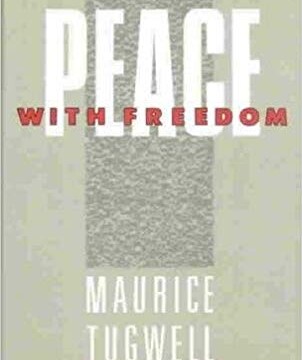
This yearbook, prepared by Freedom House—a private nonprofit foundation from New York—is the tenth in the series of annual comparative surveys of political and civil liberties in the world. Started in 1972, the Freedom House project to assess the status of freedom around the globe has become an indispensable gauge for anyone interested in the...
Post
Tell Them What They Want to Hear
Unremarked by commentators on Canada’s federal election last November was the performance of candidates for the Communist Party of Canada. To qualify for national status, a party must field candidates in 50 ridings, which the CPC manages to do despite a singular lack of voter support. Out of some 13 million votes cast, the CPC...
Post
Madness in Great Ones
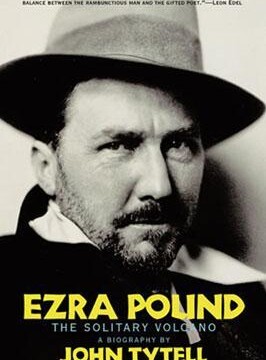
The American poet and man of letters John Berryman created in his half-memoir, half-short story “The Imaginary Jew” what is very likely the most powerfully compressed vision of vulgar, visceral racism in our literature. In this present, honorably intended biography of Ezra Pound by an apparently Jewish and leftist professor at Queens College (whose previous...
Post
Writing in the Tolstoy Tradition
“I always wanted to be a writer I can remember the first book I ever wrote when I was very little. I wrote the title and the index, but I didn’t actually get ’round to the contents.” Nikolai Tolstoy laughs and leans back, trying to fit his extremely long legs under my dining room table....
Post
Defining Life
The morality of abortion is entirely a matter of definition: is the fetus a person or not? The definition—whether derived from millennia of religious tradition or from individual analysis and subjective choice—both generates and justifies the intense emotions that are given free rein when fact is irrelevant. There is no logical or empirical way to...

Post
Life and Death in a House Divided
The Supreme Court’s recent decision to review a Missouri abortion case has raised the spirits of the pro-life movement. In his appeal, Missouri’s attorney general asked the Court to reconsider Roe v. Wade, the landmark civil rights decision that made pregnant women and their physicians sole arbiters over who is born and who is not...
Post
The Lessons of Grenada
“To conquer tumult, nature’s sodin force, War . . . was first devis’d.” —Sir William D’Avenant Grenada’s Communist interlude has become the subject of an intense postmortem by scholars of varying ideological hues. Historically, the small island is destined to be a symbol of the Reagan years. However much the US intervention of October 25,...
Post
National Insecurity
“Diplomacy is utterly useless where there is no force behind it.” —Theodore Roosevelt From the elevation of arms control to the opening of talks with the PLO, the course of American foreign policy in recent years has led some to wonder why Ronald Reagan was once considered such a contrast to Jimmy Carter. The cycle...
Post
John William Corrington, R.I.P.
John William Corrington’s early death ended the career of a distinguished and prolific literary figure. His first book appeared in 1961; it was followed by three other books of poetry, numerous novels, and four of the best short story collections of our times. He had stories selected for the Best American Short Stories in 1972,...
Post
Failed Studies
Some studies have failed to find that executions have any success in deterring homicides. But according to sociologist Steven Stack of Auburn University in the American Sociological Review (August 1987, vol. 52, pp. 532-540), those studies have been methodologically flawed by the highly questionable assumption “that the public is more or less aware of executions...
Post
None Dare Call it Treason
None dare call it treason when a former US President intrigues with the head of an unfriendly foreign government. But when Jimmy Carter met with Sandinista leader Daniel Ortega on February 2, Vice President Quayle had the courage to say: “Obviously, when you have a former President meeting with heads of state we don’t meet...
Post
Caving Into Lunacy
“I’m tired of having to go to the office armed,” my wife said one day last March. She was not alone in going armed—especially not since the local chapter of the American Civil Liberties Union had entered the case of the “Center City Stalker,” a young black man who had committed a series of robberies...
Post
Burned but Never Consumed
The first writer known to have made the outrageous accusation of ritual cannibalism against the Jews was a pagan Greek named Apion. But it was the Christians who established prejudice against and hatred for Jews as a fixture of Western civilization. The Christians’ animus against the Jews derived from the idea that “the Jews” had...
Post
Gnawing Away at Vidal
We do not live in a golden age for homegrown and corn-fed radical critics. Legal restrictions on political speech remain few, but informal strictures and the passage of time have muted those who remember—and like—the free, landed republic that this country used to be, before World War II and the monolithic Cold War state that...
Post
Bad Georgie
The facts of George Garrett’s literary career are laid out in the bibliography here: his 24 books include novels, plays, and collections of poems and short stories. In addition he has served as editor of 17 other books—interviews with contemporary writers, literary criticism, books on film scripts. He has also written a biography of the...
Post
But Why the “Red Flag” of Revolution?
I have never been a flag-waver, nor felt much sympathy for howling mobs, particularly when bent on destruction. But since this year, 1989, marks the bicentennial of the world’s first and most influential revolution (there is hardly a revolutionary notion or motif that cannot be traced back to Danton, Robespierre, Marat, Babeuf, and their spiritual...
Post
Bam! Thwap! Prole!
Fans of George Bush pulled an unusual weapon from their political arsenals in the 1988 campaign—comic books. Delegates and hangers-on at the Democratic Party National Convention in Atlanta reportedly were upset when handed copies of a cartoon magazine ridiculing the public record of Massachusetts Governor Michael Dukakis. The appearance of the “attack” comic book, entitled...
Post
Prodigal Son
“Children begin by loving their parents. After a time they judge them. Rarely, if ever, do they forgive them.” —Oscar Wilde Louis Simpson stands as an easy example of the poet divided, whose best talents and strongest predilections are at odds with one another. He takes Walt Whitman as spiritual father and his relationship with...
Post
The Celtic Heritage of the Old South
Southerners are not like other Americans. Significant cultural differences have always separated them from the North. Even today cultural variations between Southern black and white people are fewer than those between white Southerners and white Northerners. In other words, the population of the United States is more divided culturally along regional lines than along racial...
Post
Unsere Leute
The familiar lane is rutted with two deep truck tracks. “This always happens when it rains,” I think, and worry about getting stuck until I remember that the rain was two days ago and the ruts would have hardened by now, forming a two-lane trail to the farmhouse, Grandma’s house, “Grandma in the country.” Grandma...
Post
Education for a Conquered Nation
Declining test scores. Illiterate, spiritless, and passive graduates who have little motivation to find a job or succeed. Youngsters with no skills to compete in the marketplace. This is the tragic record of American public education, after billions of dollars and 127 years of direct federal funding. The results seem more appropriate for a rebellious...
Post
Under the (Smoking) Gun
In The Wall Street Journal on June 16 last, Mr. Alexander Cockburn—whose regular presence in the premier organ of capitalist opinion, by the way, nicely illustrates Lenin’s maxim about rope—argued that the current antismoking hysteria is a capitalist plot. The loathsome Cockburn adduced an article in an obscure publication of the Spartacist League that maintained...
Post
Passage to India
Though he never came here, Walt Whitman knew India was more than a country: a subcontinent, madhouse of religions, seedbed of civilizations, primordial and immemorial. “Passage to more than India.” How to cope with this vital mess, this messy multiplicity? These hundreds of millions of people in hundreds of thousands of villages? I have learned...
Post
Reading, Writing, ‘Rithmetic and War
Twenty-five years ago when I was a schoolteacher in an Afghan mountain valley I came across a book by an English pedagogue called Teaching English Under Difficult Circumstances. I was reminded of that title as I read this informative monograph by Middle East commentator Antony Sullivan. His short book might have been subtitled, “Teaching the...
Post
The Deconstructive Lyric
“Poetry is certainly something more than good sense, but it must be good sense . . . just as a palace is more than a house, but it must be a house.” —Samuel Taylor Coleridge Margaret Atwood writes in her poem “Mushrooms”: Here is the handful of shadow I have brought back to you, this...
Post
A Way Out
Discussions of the future of apartheid generally assume that South Africa must remain a homogenous “unitary state.” This assumption not only presents a paralyzing dilemma (either democracy or apartheid), but also a prescription for continued social turmoil, if not outright civil war. A unitary state is a “winner take all” state—if there are indeed only...
Post
Tabula Rasa
If George Bush accomplishes nothing else in his lifetime, he has at least earned a secure niche in future editions of Trivial Pursuit. Not since Martin Van Buren trounced the Whigs in 1836 has an incumbent Vice President been elected to the White House. The lackluster record of Andrew Jackson’s successor perhaps does not inspire...
Post
Blood Relations
In 1840, when Edgar Allan Poe wrote the first modern detective story, “The Murders in the Rue Morgue,” an unsuspecting public scarcely realized it was witnessing the birth of a new genre that would actually become the most ecumenical of all literary forms. Since Poe’s time, the detective story has flourished among readers of every...
Post
The Real American Dilemma
This remarkable editorial by Chronicles’ longest-serving editor offered one of the first and best analyses of America’s immigration problem.
Post
A More Perfect Union
In Pursuit is a philosophical exegesis on what is wrong with contemporary social policy analysis. In some ways it is a sequel to Murray’s Losing Ground, having much in common with Part IV (Rethinking Social Policy) of that influential book. Though this is a more enterprising work, it is also a less successful one, leaving...
Post
A Trick Question
“Globalization”—when did it become a central tenet of conservatism? According to Deputy Secretary of State John C. Whitehead, it was in the New Deal era that the US “rejected isolationism and economic nationalism” in favor of the “globalization of our daily lives.” The text of Whitehead’s address to the September meeting of the Economic Policy...
Post
Practical Items
School decentralization was one of the few practical items on the New Left’s agenda of the 1960’s. It was a genuinely radical idea, since the entire history of public education in the US has been the steady progress of consolidation and centralization. Small districts were merged, time after time, into larger consolidated units, and power...
Post
On ‘Caudillo and Generalissimo’
Professor Lee Congdon merits applause for a thoughtful review of two books on Francisco Franco (October 1988). I might raise the point of a number of significant omissions, but this would be unfair. I do, however, take exception to one commission, namely the assertion that Federico Garcia Lorca was shot by the Nationalists in 1936....