This book is a 272-page inventory of Mother Hubbard’s cupboard. Almost without exception, the contributed articles treat the homeless as some vague, faceless group, far distant from the authors’ time and place. There is not even the degree of passion an astronomer brings to the study of Jupiter’s rings. You get the feeling that you...
Category: Reviews
Post
The House of David
Descent from a Founding Father is a matter for celebration to thousands of sons and daughters of the American Revolution and members of the Cincinnati Society, Colonial Wars, First Families, and other sufficiently remote or proud groups. Americans are eager to claim, when they can, ancestry made noble by history if not by “blood.” The...
Post
Tradition and Justice
“We have forgotten the origin of morality in fact and circumstance.” —Wendell Berry Alasdair MacIntyre is our most relentless tracker of the crisis of the liberal regime. In After Virtue, he recounted the history of the triumph of “emotivism” in ethics. In Whose Justice? Which Rationality? he has begun the process of pointing the way...
Post
Why Italy Runs
Americans find Italy a paradox. We love vacationing in a country with such delicious food, friendly people, and so many historical and cultural monuments. Its politics, however, bother us. After 20 years of one party rule, from 1923-43, it seemed to rebound into virtual chaos. There have been 46 governments since World War II, not...
Post
Socialism and Reality in Central America
“It is good also not to try experiments in states.” —Francis Bacon As a term, imperialism underwent a number of visions and revisions at the turn of the century when the fact itself was receding. There was Bernard Bosanquet’s British interpretation and, in France, the Baron de la Seilliere’s multivolume opus. Such were radically redefined...
Post
Worshiping the Golden Self
Are religion and psychology enemies or allies? Can religion and psychology peacefully coexist? Can religion and psychology work together for the sake of social progress? Man and Mind, an anthology of thought-provoking essays, seeks to provide answers to these questions. The essayists are united in their conviction that most modern psychologists consider psychology a good...
Post
Enduring Wisdom
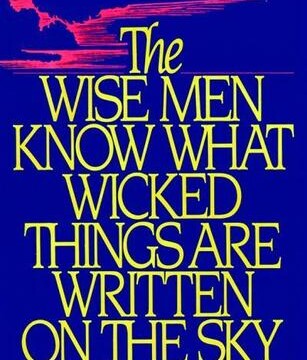
Wise Men is a collection of 11 lively essays by the wise old sage who is contemporary conservatism’s most able prophet. The Kirk neophyte will find these essays most alluring; it is unusual to experience such an affirmation of the “permanent things” in our current age. The Kirk devotee will find this slim volume to...
Post
Opposing the Disneyfiers
Paul Fussell’s enemies are “habitual euphemizers, professional dissimulators,” and the “Disneyfiers of life.” He is in favor of cojones, which is why he ends up in one of his essays liking the Indy 500 in spite of himself, comparing it favorably to the violence of the Falklands War, which is going on while he watches...
Post
The Dinosaur
Lewis was fond of referring to himself as an Old Western Man, one of a soon-to-be-extinct species: a veritable dinosaur. As a classically educated member of the Anglo-Irish middle class, one born at the turn of the century, his opinions to most modernists must certainly appear Paleolithic. He was not a political man, seldom read...
Post
Interpreting Burke
Father Francis P. Canavan, S.J., with the publication of this his second book on Edmund Burke, clearly establishes himself as one of the most—if not the most—able interpreter of Burke’s political philosophy. Here Canavan focuses upon topics of enormous import for fathoming Burke’s political philosophy, including theological influences on Burke, his religious faith, the relationship...
Post
Surviving College 101
Hugh Hewitt’s First Principles is a 125-page manual on how to handle the cacophony of illiberal thought that flourishes in our universities. Consider the experience of one prominent victim, Amy Carter. The freckle-faced little girl who once stood at the knee of the President of the United States has become a self-described “feminist-socialist” in the...
Post
Children of Fortune
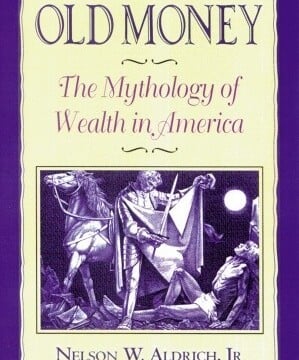
“Each social class has its own pathology.” —Proust Going by the tide and subtitle alone, it would appear that this is either a book about the lies rich people tell each other, or a book transforming the jingle of coins into the crash of magical cymbals. Having read it through, I am happy to report...
Post
Common Sense
Over in my philosophy department they used to shake their heads and smile. They didn’t actually pat me on the head or anything; professors don’t do that. But they did get a kick out of what they saw as my naiveté. “How sweet,” they seemed to think, “that he could really believe that philosophy is,...
Post
Princelings of Peace
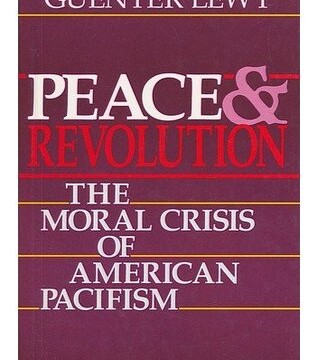
“While at one time pacifists were single-mindedly devoted to the principles of nonviolence and reconciliation, today most pacifist groups defend the moral legitimacy of armed struggle and guerrilla warfare, and they praise and support the communist regimes emerging from such conflicts.” This is the thesis of Guenter Lewy’s study of the most enduring and successful...
Post
The Impossibility of a Book
Andrei Bitov graduated from the Leningrad Mining Institute but chose to become a writer rather than a geologist. His new novel, Pushkin House (the second of his works translated into English), will probably share the “general acclaim” that greeted his short stories in Life in the Windy Weather, published a year ago. It is skillful...
Post
The President’s President
“Politicians neither love nor hate. Interest, not sentiment governs them.” —Chesterfield Richard Nixon’s second term as president ended over two years early with his resignation on August 9, 1974. Someday, when President Reagan’s papers and telephone logs are made public, I think they will reveal that Nixon completed his presidential term in the second Reagan...
Post
Crackers & Roundheads
“The Celt in all his variants from Builth to Ballyhoo His mental processes are plain—one knows what he will do, And can logically predicate his finish by his start.” —Kipling Despite all that has passed since, the Civil War is still at the center of American history. No one has ever doubted this in the...
Post
Molder of America
Nineteenth-century America was an explosively creative country. It opened up new territories to cultivation and poured forth a cornucopia of technical inventions. Its literature ranged from Hawthorne to Mark Twain, from Whitman to Stephen Foster, and its art included the architecture of McKim, Mead and White and the sculpture of Augustus Saint-Gaudens (1848-1907). Saint-Gaudens’s was...
Post
No Water in the Wine
Stanley Jaki, a Catholic priest and a prolific historian of science, has produced a series of scholarly, at times plodding, essays derived from lectures he delivered at Notre Dame. It purports to be the first full treatment of Chesterton and science. He offers us a fair picture of the intuitive genius of Chesterton, whose common...
Post
The Madness of Art
“In relation to Gauguin, Van Gogh and Rimbaud, I have a distinct inferiority complex because they managed to destroy themselves. . . . I am more and more convinced that, in order to achieve authenticity, something has to snap.” —Sartre In “Resolution and Independence,” Wordsworth lamented that “We Poets in our youth begin in gladness,...
Post
Phi Beta Kappa Fake
When I was 11, I saw a photo of the Radcliffe campus in fall, with a beautiful long-haired blonde in a plaid wool skirt sitting on a flight of leaf-covered steps in front of a red brick building. (Fran Schumer saw a similar picture.) A beautiful long-haired blonde is what I hoped to be someday,...
Post
Getting It Right
Writing a history of recent American conservatism is not like writing a history of baseball or the Social Security system. There is fairly wide agreement about what constitutes baseball and Social Security; at issue are specific details. But there is little agreement about what American conservatism is. Not merely the rocks and bushes, but the...
Post
Saint William
Saint William? A canonization has occurred without prior beatification. A still living and breathing William F. Buckley Jr. has been elevated to sainthood. And by whom? Not by the pope and not by Buckley’s own flock, but by a man of the left. And why? Not because of Buckley’s continuing conservatism, but because he is...
Post
Making Love and War
Nearly half a century has passed, yet we continue to be enthralled by World War II. We watch reruns of The World at War on PBS, never miss Casablanca when it’s featured, and can even sit through The Longest Day one more time. Not so with World War I, which, though older, was in a...
Post
Frontier Justice
In the September 1987 issue of Chronicles, Jacob Neusner wrote, “To state matters bluntly, if you have to teach in a college in order to pursue the research you wish to undertake, then go, teach.” In his “Acknowledgments,” Professor Langum admitted doing just that: “I wrote this book over many years and at three different...
Post
Play It Again, Alger
After 40 years, Alger Hiss is still hard at it. Recollections of a Life, his second book, combines a pale, noncommittal account of Hiss’s pre-1948 career as itinerant paperpusher (Justice Holmes, the New Deal, Yalta, the Carnegie Endowment) with yet another rehashing of the old, old story. Whittaker Chambers was crazy. I’m an honest man....
Post
In Search of Absolutes
Caveat lector—shortly after glancing through the early pages of James J. Thompson, Jr.’s accurately but flamboyantly titled Fleeing the Whore of Babylon, I wondered how in this vale of tears I could complete the job assigned to me by Chronicles. How dreadful to contemplate yet another conversion-to-the-One-True-Faith story, this conversion, moreover, from Seventh-Day Adventism. I...
Post
Old Possum
Thirty years ago, in the fall of 1957, the Fugitive-Agrarian poet Donald Davidson delivered the first Lamar Memorial Lectures in a small auditorium usually reserved for piano recitals on the campus of Mercer University in Macon, Georgia. Those three lectures, published in a slender volume bearing the legend Southern Writers in the Modern World, have...
Post
Wings of the Navy
Technology can exalt as well as dwarf the individual. The Great War’s machine guns staged a chattering pageant of impersonal slaughter; yet its warplanes brought forth paladins such as Frank Luke, Billy Bishop, and Baron von Richtofen, their decidedly individualistic exploits providing civilian newspaper readers with a pleasant contrast to the muddy anonymity of trench...
Post
Measured Speech
A maritime artist I know tells me that he once met an eminent critic who claimed to have given up the brush and taken up the pen because he had won all the prizes in art school. Those laurels must be testimony that he was washed up—how could an artist of genuine importance, he despaired,...
Post
Yankee Slavers
“Slavery they can have anywhere. It is a weed that grows in every soil.” —Edmund Burke The better part of a century ago, the great scholar A.E. Housman observed that most of the new books that came across his desk served no purpose whatever “except to interrupt our studies.” This is certainly the case today...
Post
The Two Faces of Freud
When Sigmund Freud took his children hunting for mushrooms he always insisted that they follow a certain ritual. Part of the ritual consisted of placing fresh flowers every day at the shrine of the Virgin near the wood. Although he publicly attacked religion as an illusion, Freud seems to have had a private preoccupation with...
Post
Caudillo and Generalissimo
“People will not look forward to posterity, who never look backward to their ancestors.” —Edmund Burke Not long before his death on November 20, 1975, Francisco Franco asked a young aide if he thought Spain’s future was “inevitably democratic.” On receiving an affirmative reply, he gazed sadly into the distance and said no more. The...
Post
“Here Is Free Country”
During the 1930’s many Americans were enamored of the “grand and noble experiment” called the Soviet Union. Movie stars, clergymen, authors, intellectuals, columnists, and other American opinion makers traveled to the USSR and returned with glowing reports of the joys of socialism under Joseph Stalin. Many immigrants from the former Russian empire believed these stories...
Post
Reader’s Digest
“Ask the booksellers of London what is become of all these lights of the world.” —Edmund Burke Some 40 nonclassic books are discussed by Professor Perrin in this pleasant volume of literary preferences. By a classic, Noel Perrin means a work that everyone recognizes as highly important, even though one may never have opened it:...
Post
Galileo Brought to Book, Again
Galileo Galilei lives in the imagination of every high-school atheist as the archetypal champion of Truth, standing heroically against the malice and superstition of the ecclesiastical authorities who condemned him. This version of the events works wonderfully as melodrama but fails miserably as history—the Italian scholar Pietro Redondi has uncovered documentary evidence that Galileo’s astronomy...
Post
Aristotle Shrugged
“There are two kinds of mind in the world: the Platonic and the Aristotelian,” goes an academic aphorism. To whatever degree this mental division may have been real, the Aristotelians seem to be practically extinct—the essayists in Educating for Virtue must, essentially, be Platonists. The key to that would be this insight from the foreword:...
Post
Pilgrim’s Progress
Like many black intellectuals of his generation, Julius Lester went searching for his roots. Unlike the vast majority, he found them in a most extraordinary place. A professor in the department of Afro-American studies at the University of Massachusetts at Amherst, Lester converted to Judaism in 1983. A metaphysical prodigal son, Lester would say he...
Post
Against a Clockwork God
Western civilization dare not rest on its laurels, warns Professor Molnar, because its laurels are laced with philosophical and religious errors that threaten to topple it. The “pagan temptation”—the ancient pantheism, monism, and mysticism largely displaced by the Christianization of the West—now threatens to “repaganize” the Western world. And, ironically, if Christianity cannot alter its...
Post
Speaking for God or Men?
“Prayer does not change God, but it changes him who prays.” —Kierkegaard For those unaware of the growing influence of religious lobbies in the nation’s capital. Representing God in Washington should prove informative. It shows that religious lobbies of left and right are many and powerful, well-funded and well-staffed. They have learned the ropes of...
Post
Reading Swift Straight
“A joke is an epitaph on an emotion.” —Nietzsche Telling truth in the form of a lie is one of the odder things human beings do. It is hard to imagine irony in Paradise, and there can certainly be none in Heaven, where we know even as we are known, and there is nothing to...
Post
A Portrait of the Artisan as a Young Man
“Who are those hooded hordes swarming Over endless plains, stumbling in cracked earth “ —T.S. Eliot Many 20th-century literary figures have undergone such exhaustive biographical treatment that a scholar wishing to venture into well-traversed territory is compelled to proffer a startling new thesis to vindicate his labors. All too frequently, alas, the “novel” approach is...
Post
American Piety, Then and Now
“All the good the Savior gave to the world was communicated through this book [the Bible]. But for it we could not know right from wrong.” —Abraham Lincoln “The Cosby Show is the greatest teacher of morals in American society.” —Sheldon Hackney, president, University of Pennsylvania “America was born a Christian nation. America was born...
Post
Fraud in Belgrade
In a century of socialist failure, Yugoslavia has shown remarkable staying power as a model of “socialism with a human face,” an “independent” Communist country that actually works. But is it independent, and does it work? Last year, 14 émigrés and dissidents from Yugoslavia got together to discuss the state of their native land. Yugoslavia:...
Post
Hatching Armageddon
Among public officials, “the arms control process” is sacrosanct. The minority are willing to voice relatively narrow and legalistic complaints about specific treaties, never failing to assure us of their support for arms control per se and their eagerness to go back and get a “better” treaty. Their case, however, would be considerably enhanced were...
Post
Why Spy?
“A wise man in time of peace prepares for war.” —Horace Why did some of the best and the brightest of Great Britain forsake king and country in the 1930’s and become spies for the Soviet Union? How was it possible that some of the ring leaders went undetected for 30 years or more, with...
Post
Regulation Issue
“Occupational regulation has served to limit consumer choice, raise consumer costs, increase practitioner income, limit practitioner mobility, deprive the poor of adequate services, and restrict job opportunities for minorities—all without a demonstrated improvement in quality or safety of the licensed activities.” S. David Young, who teaches accounting and finance at Tulane University, brings economic analysis...
Post
The Crash of the Greed Machine
“Thy money perish with thee, because thou hast thought that the gift of God may be purchased with money.” —Acts, 20 The Big Board’s 508-point market meltdown was investigated by presidential commission, Congress, the SEC, and the major stock exchanges. Each of these bodies concluded that stocks fell because they were already much too high....
Post
Revisionist Economics
James J. Hill and the transcontinental railroads. Commodore Vanderbilt and the steamship industry, the Scrantons and the development of the iron-rail industry, Charles Schwab and the steel industry, and John D. Rockefeller and the oil industry are the focus of this intriguing economic history which is simultaneously scholarly and immensely interesting. Folsom presents the subjects...
Post
Empire, Again
Yale historian Paul Kennedy’s book has been a great success, but unfortunately with the wrong people for the wrong reasons. Attention has focused on his concept of “imperial overstretch” which comes about when economic resources can no longer sustain military commitments. This heralds a state’s fall. Liberals love this part of Kennedy’s book and have...