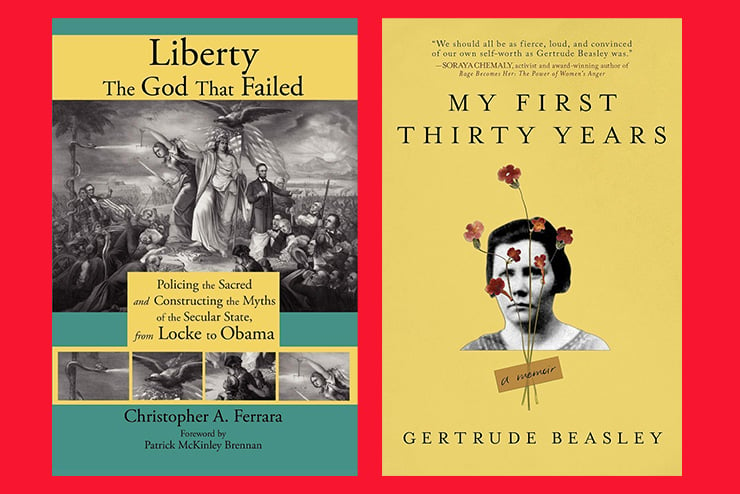

This book is a highly controversial study of the American founding, its early history, and especially its attitude toward religion. Ferrara, who writes from a strongly Catholic viewpoint, contradicts the view held by many American conservatives that America’s current problems can be solved by returning to the nation’s founding principles. On the contrary, he argues that some of these principles are the cause of moral and religious ruin.
Ferrara’s ideal is Christendom, a Catholic political and social order based on a synthesis of Greek philosophy and Christian ethics. He offers a spirited defense of societies based on this order, hailing their philosophy, art, literature, and music as humanity’s highest achievements.
Ferrara argues that Christendom was subverted by Enlightenment thinkers, particularly John Locke, who conceived of the state as a mere defender of person and property with no interest in the souls of its subjects, and confined religion purely to the private sphere. For Locke, freedom meant not the freedom to do good and avoid evil but the absence of restraint on human action. His ideas were highly influential among America’s Founding Fathers.
Ferrara argues that the American Revolution was profoundly radical, leading to the creation of the world’s first secular state and the first based on ideology. He is especially critical of Thomas Jefferson, whom he calls “the tyrannical apostle of Liberty.” Ferrara notes that Jefferson believed that Loyalists should be stripped of citizenship. During his tenure as governor of Virginia during the Revolutionary War, Loyalists faced severe penalties, including imprisonment and seizure of property.
A large section of the book is dedicated to the Civil War, which Ferrara calls the “Second American Revolution.” He is highly critical of both sides in this conflict, in which the principle of liberty was loudly invoked but systematically denied to large numbers of people, such as when President Lincoln suspended Habeas Corpus.
This is a challenging and fascinating book that many Americans will find hard to stomach. His criticism of the American experiment will be disliked by patriots of all political and religious hues, yet it is thoughtful and measured and undoubtedly contains a great deal of truth.
—Piers Shepherd
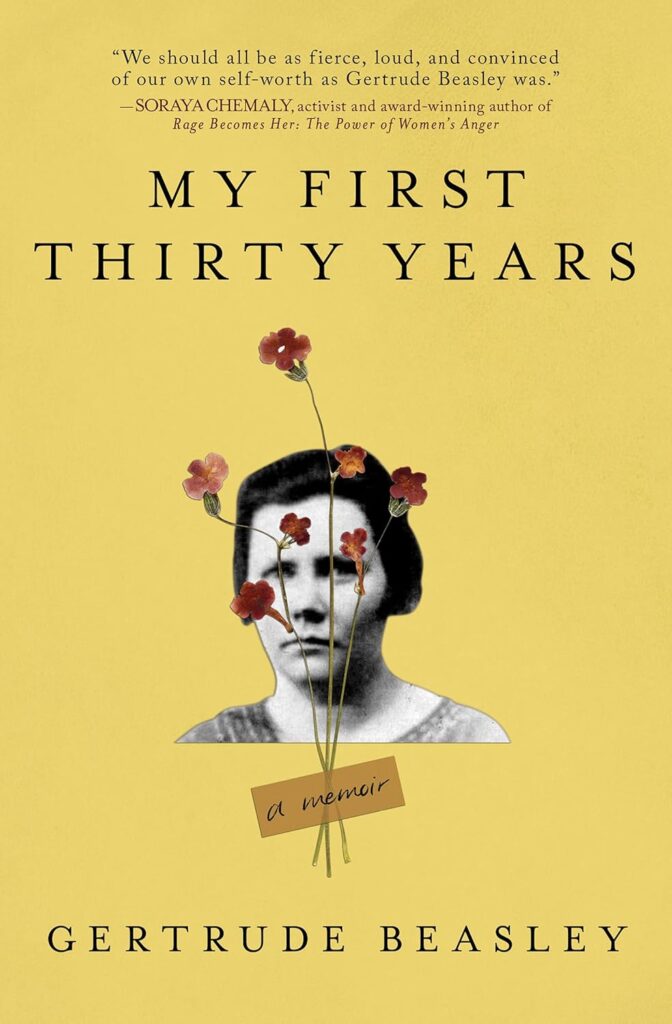
Gertrude Beasley’s My First Thirty Years (1925), about her life in the American South, was published to widespread acclaim and controversy. H. L. Mencken identified it as “the first genuinely realistic picture of the southern poor white trash.” Bertrand Russell called it “truthful, which is illegal.” Authorities labeled the book “obscene.” It was banned in Great Britain, and U.S. Customs destroyed copies. But, unlike other censored books such as Ulysses and Lady Chatterley’s Lover, the book did not prosper thereby. Its candor was, perhaps, premature, and its setting in remote West Texas beyond the pale.
In 1989, the Western novelist and bookseller Larry McMurtry rediscovered Beasley’s memoir. His praise—“the finest Texas book” of its era—led to an expensive limited edition. In 2021, the text was reprinted, its anger appealing to radical feminists and their campus hordes.
This is not the stuff Chronicles readers generally want to dip into. But Mencken was right. Given that the conditions Beasley evokes were far from unique, the memoir, written in a blunt but artful style, has historical and sociological value. Like Kate Chopin’s, her writing is praised for the wrong reasons by observers who possess too little historical context or take literally every hyperbolic dramatization.
True, Gertrude’s early life as the ninth of 13 children, in and around Abilene, was difficult. It was marked by her father’s restlessness, impracticality, and drinking, and her mother’s bitter anger. Texas was backward. Agriculture, on which the economy depended, was risky. Funds were always short, and Beasley’s parents were generally in debt for property or seed loans. Yes, there was also emotional abuse, as well as incest and bestiality (perpetrated by elder brothers) and prostitution (by an elder sister). Such abuse could surely be found in many city slums at that time.
Gertrude’s complaint of lacking “heritage, mental, moral, or physical” was not strictly founded. But schools were scattered, open sporadically, often mediocre and disorderly. (Not until the Gilmer-Aikin reforms of 1949 did Texas mandate statewide educational standards.) But she was fortunate in having a good brain and the will to learn. Her determination to acquire literacy (including Latin), numeracy, and general knowledge led to her becoming a teacher at age 17. She then attended Abilene Christian College.
Modest enlightenment, if you will, but it allowed her to continue her studies at the University of Chicago and become an international radical for several years. Following the publication of her book, she became paranoid about death threats, and she was confined to a mental institution on her return to the U.S. in 1927, where she died decades later.
—Catharine Savage Brosman
Leave a Reply