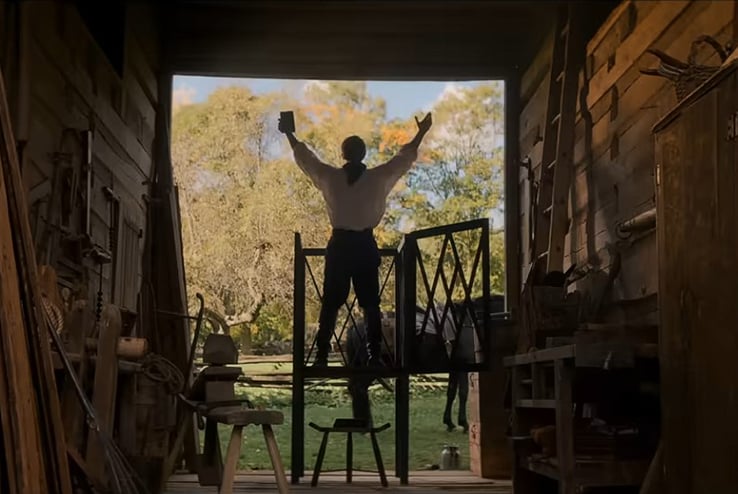
Since the COVID panic devastated the film industry, the landscape of American cinema recalls Mordor as depicted in The Lord of the Rings: Vast stretches of grim, interchangeable wasteland, relieved only by the occasional emergence of horrifying monsters, like the recent failed thriller The Bride or the anti-white polemic Sinners. Thankfully, there are exceptions along the way, which appear as unexpectedly as the eagles at Mount Doom who came to rescue Sam and Frodo. The latest film to swoop in to offer hope is A Great Awakening. It offers more than entertainment and uplift; it serves as a much-needed witness to our country’s real history, and even its moral essence.
Even more important to viewers, however, A Great Awakening is beautifully filmed and powerfully acted, with none of the “cringe” factor that so often sours historical films, especially those produced by self-consciously Christian media companies. The performances are uniformly strong, the religious themes handled earnestly and convincingly, and the movie’s message is conveyed with subtlety and power through a moving human story.
The film recounts the career of the great English Methodist preacher George Whitefield (1714-1770), through the eyes of Benjamin Franklin, whom I learned from this film was Whitefield’s longtime friend and frequent collaborator. That’s right, the crusty pragmatic Deist and roué Franklin teamed up with Whitefield beginning with the first of the evangelist’s seven marathon preaching engagements across the 13 colonies, during which a staggering 80 percent of American colonists heard him preach at least once. Franklin had the shrewd foresight to acknowledge that the man who could fill up fields with some 30,000 eager listeners would likewise sell plenty of copies of Franklin’s The Pennsylvania Gazette, if the paper reprinted his sermons and reported on his crusade. What began as good business turned into a genuine friendship that lasted for decades.
The film version of this story is framed by the crisis of 1787 at the Constitutional Convention, where the interests of small states came into conflict with those of the more populous states. States such as Delaware sought equal representation in the Congress, while larger states like Virginia and Massachusetts demanded proportional representation. And that dispute, of course, presumed that there would even be enough states to agree to ratify the new Constitution—a prospect that seemed increasingly unlikely as the Convention descended into rancor and threats of secession, including threats of an alliance with foreign powers such as Britain or Spain.
Franklin watches impotently as the Convention seems likely to fly into pieces, commiserating with George Washington over the prospect of the newly born nation being strangled in its cradle. It’s in this context that Franklin comes across the journals of his old friend Whitefield and begins poring through them. When asked by his grandson if Whitefield played a role in the Revolution, Franklin answers, “He was the Revolution.”
The rest of the film depicts Whitefield’s pivotal role in helping to create a common American identity across the various, diverse states, centered on a vision of faith that the world now sees as distinctly American: “born-again” revivalism that thrives independent of hierarchical church structures. This powerful, bottom-up version of Christian faith, according to Alexis de Tocqueville, would make the new nation more wholeheartedly religious than most European countries—as it still is even today. Only an America that had passed through the Second Great Awakening would have dared to seek independence from the most powerful empire on earth, the film asserts. (For a book-length treatment of this argument, read Eric Metaxas’ eloquent 2016 If You Can Keep It.)
From the elderly, worried Franklin, the story flashes back to the boyhood and youth of Whitefield in England. We see his youthful interest in stage acting and his unexpected opportunity to attend Oxford University as a “servitor”—getting a free education in return for shining wealthier students’ shoes, doing their laundry, and serving them at table.
It’s there, amidst social shunning at the hands of entitled young toffs, that Whitefield encounters John and Charles Wesley, whose “Holy Club” gathered the most devout students at Oxford for communal prayer and good works among the abandoned local poor. Whitefield is quickly won over, experiences a mighty conversion, and decides to apply his considerable theatrical talents and astounding voice to preaching eternal truths instead of timeless fictions. But first he must go through the crucible of crippling scrupulosity, an almost paranoid self-hatred because of his sins, which recalls the agonies of a young Martin Luther and the excessive mortifications of the newly converted Ignatius Loyola. This segment of the film is surprisingly powerful and convincing, as the Wesleys worry that Whitefield may continue fasting until he dies.
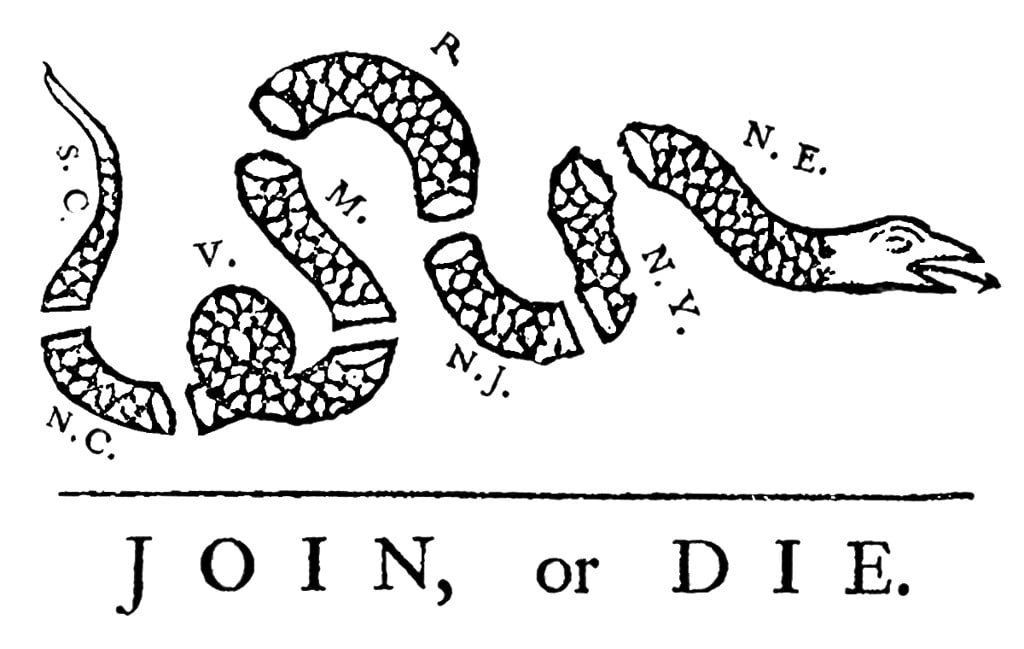
Whitefield finds escape by embracing an absolute version of salvation by faith alone and spends the rest of his life sharing this message to mobs of unchurched, neglected laborers in open field revivals on both sides of the Atlantic. The archly rationalistic Franklin views Whitefield’s faith with bemused skepticism admixed with admiration, which deepens over the decades, as Franklin sees the transformative effects of this theology on ordinary Americans. He also sees that this new, common religious culture helps to unify the Colonies in a way that he had been urging for decades. (Remember his famous cartoon of a snake in 13 segments, with the caption “Join Or Die.”)
A powerful subtext of the film is Franklin’s own religious hesitation, and his Enlightenment variety of Pelagianism, which he explains to Whitefield by unfurling a “virtue chart” by which he self-importantly tries to perfect himself morally by his own powers—a project that horrifies Whitefield, who gasps, “I tried that. It nearly killed me.” More powerfully, decades later and in failing health, Whitefield pleads with Franklin to place his trust only in “the work done by God on a cross of wood.”
It’s this plea that comes back to Franklin as he watches his longtime colleagues in the struggle for American independence tear each other apart over the new, proposed Constitution. That’s when the longtime Deist, whom we’ve heard describe God as a distant, disinterested Watchmaker, speaks up at last to the delegates from the states. He doesn’t offer a compromise, a rebuke, or even a plea. Instead, he delivers a now-famous speech urging lawmakers to return to the practice of praying before each session. This pivotal passage bears the unmistakable influence of Whitefield:
I have lived, Sir, a long time and the longer I live, the more convincing proofs I see of this truth—that God governs in the affairs of men. And if a sparrow cannot fall to the ground without His notice, is it probable that an empire can rise without His aid? We have been assured, Sir, in the sacred writings that ‘except the Lord build the House they labor in vain that build it.’ I firmly believe this; and I also believe that without His concurring aid we shall succeed in this political building no better than the Builders of Babel.
Such prayers were undertaken, and the spirit of the Convention tangibly shifted. Within seven days, the Virginia Plan, which granted two senators to each state and proportional representation in the House of Representatives, was agreed upon, and America united under a single federal government. Both George Washington and James Madison would later call the resolution almost miraculous and attribute it to divine intervention.
This is the kind of film we need in this troubled 250th year of our republic. Enjoy it for yourselves on the big screen, where it richly deserves to be seen.
Leave a Reply