Few figures from the annals of American history embody the toxic blend of ideological zeal and raw defiance against federal authority quite like Bull Connor, the commissioner of public safety in Birmingham, Alabama, during the 1960s. With his attack dogs and fire hoses turned on peaceful civil rights marchers, Connor wasn’t just enforcing segregation, he was thumbing his nose at the nation.
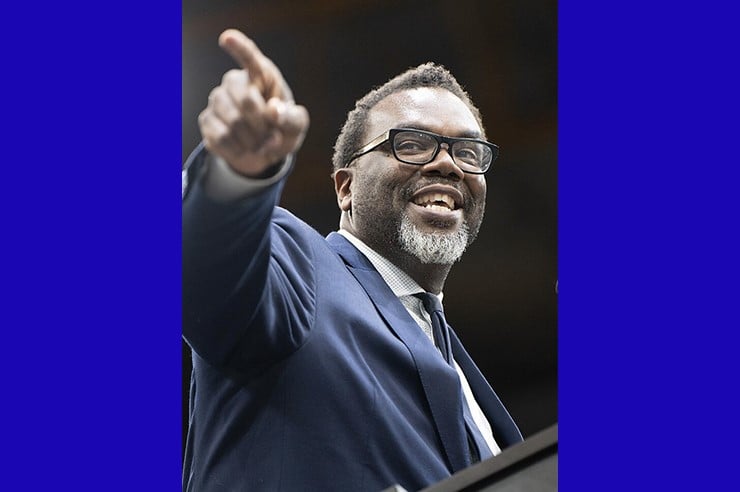
Fast-forward to the present, and Chicago Mayor Brandon Johnson is filling a similar role, signing an executive order that declares swaths of city property “ICE-free zones,” presuming to bar U.S. Immigration and Customs Enforcement (ICE) agents from using public spaces for immigration enforcement. This is a modern-day echo of Connor’s position, repackaged in the rhetoric of sanctuary politics. By shielding illegal aliens—some of whom are violent criminals—from federal law, Johnson may believe he’s protecting vulnerable communities. In reality, he is engineering a constitutional crisis that erodes the rule of law and invites chaos.
Let’s dispense with the sanctimonious framing Johnson peddles. At a press conference, he decried ICE agents as a “rogue, reckless group of heavily armed, masked individuals” roaming Chicago streets, putting residents “at risk.” He vowed to post signs on city-owned parking lots, schools, libraries, and parks proclaiming them off-limits for federal operations, and even extended free signage to private businesses willing to join his “Protecting Chicago” crusade. If agents ignore these edicts? The city’s Department of Law will sue them into submission, with Chicago police instructed not to intervene on their behalf.
This comes amid President Trump’s escalated deportation efforts, including the deployment of National Guard troops to safeguard ICE operations in high-crime sanctuary cities like Chicago. Johnson’s response? Forbid cooperation with federal authorities who prioritize deporting murderers, rapists, and gang members.
Some may call the parallel to Bull Connor hyperbole, but it is historically accurate. Connor, too, cloaked his actions in the language of “local control” and “community safety,” deploying state power to flout federal civil rights mandates under the guise of preserving order. He defied desegregation orders from the courts and the Kennedy administration, arguing that Birmingham’s “way of life” trumped national law.
Johnson acts similarly. Where Connor wielded fire hoses against black Americans seeking equal justice under law, Johnson wields bureaucratic barriers against agents enforcing immigration statutes passed by Congress. Both men prioritize parochial ideologies—Connor’s racism, Johnson’s anti-borders absolutism—over the supremacy of federal authority.
Just as Connor’s intransigence prolonged the injustice of Jim Crow, Johnson’s order prolongs the suffering inflicted by unchecked illegal migration: overburdened schools, strained hospitals, and streets haunted by predators who exploit sanctuary loopholes.
This defiance isn’t mere posturing. It precipitates a full-blown constitutional crisis. The U.S. Constitution’s Supremacy Clause in Article VI couldn’t be clearer: Federal law “shall be the supreme Law of the Land; and the Judges in every State shall be bound thereby, anything in the Constitution or Laws of any State to the contrary notwithstanding.” Immigration regulation falls squarely under federal plenary power, as affirmed by the Supreme Court in cases like Arizona v. United States (2012), which struck down state attempts to bolster immigration enforcement while underscoring that local governments cannot obstruct it.
Johnson’s actions are not brave defiance of a moral wrong, but a direct assault on the federal-state balance that has held since America’s founding. If Chicago can unilaterally declare a federal agent persona non grata on its turf, what’s to stop other cities from doing the same for, say, FBI probes into corruption or ATF raids on gun traffickers? ICE agents, already facing masked protests and clashes in Chicago, now risk lawsuits and police non-assistance for simply parking a van.
The broader threat to society if local politicians like Johnson can cherry-pick federal laws is nothing short of existential. Ours is a federal republic, not a patchwork of fiefdoms where mayors play God with statutes they dislike. Imagine the anarchy: Blue cities reject federal hiring protections in favor of strict DEI-based racial quotas, while red counties flout environmental regulations; coastal enclaves defy trade tariffs as heartland towns ignore federal laws on firearms purchases.
Citizens expect uniform justice, not a buffet table where loyalty to a politician’s tribe dictates enforcement. Johnson’s rhetoric—”If Congress will not check this administration, then Chicago will”—is demagoguery straight from the nullification playbook of antebellum South Carolina. It invites vigilante federalism, where local sheriffs become kingmakers, and national cohesion dissolves into tribal feuds. Bull Connor’s legacy was a scar on America’s soul; Johnson’s could be a blueprint for its unraveling.
Leave a Reply