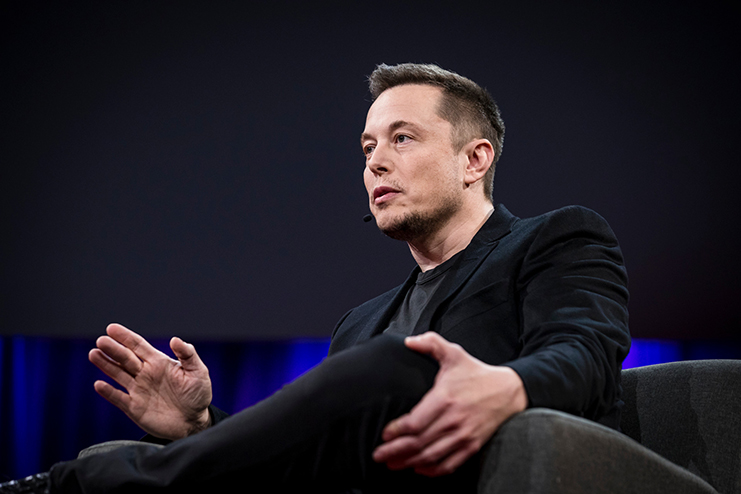
Speaking at the U.S.-Saudi Investment Forum last week, Elon Musk made a stark prediction about the future of the global economy: “Money will stop being relevant at some point.”
Set aside for a moment the question of whether the dream of unconstrained abundance is economically or technologically feasible. Even if it is, it must still be rejected. Human beings need to work in order to thrive. Working is an important part of our nature. But the narrowly focused conservative critique of a future without work fails to capture the essence of why it is so important. Work serves the fundamental human need for distinction in a world now ordered to pretend distinctions do not exist.
Musk’s speculative future has long been a dream of the tech world, often depicted in science fiction. “In 10 to 20 years, work will be optional,” Musk explained, as advancements in “AI and humanoid robots will actually eliminate poverty … and make everyone wealthy.” He said that in this work-optional future, labor would be limited to things like tending a vegetable garden; sure, it’s easier to go to the grocery store, but some people still like to grow their own food.
Unfortunately, the typical rebuttal we get from Conservative Inc. about the importance of a work ethiccomes off as impotent moral handwringing. Pablum from older generations about “idle hands” highlights how people need a productive outlet in life to find meaning and fulfillment. But the “pull yourself up by the bootstraps” discourse is nothing more than an inter-generational dig: “I did it, so you can, and should, too.” However true these platitudes may have been decades ago, in a country with a cohesive identity and a meritocracy that rewarded true merit, they won’t convince younger generations struggling to attain both material and spiritual prosperity.
For them, this BoomerCon wisdom is a path that results in the same future as Musk’s universal income: own nothing, be happy. The job market for young people is fundamentally different from the one their parents and grandparents inhabited. Over-credentialed, underemployed, and often burdened with debt as they compete with the entire world for American jobs, it’s far more difficult for younger people to secure a middle-class livelihood, let alone a life of upward mobility. Under these circumstances, we should understand the appeal of the promise of universal income and life without work—even though it is coming from the same dehumanizing and rootless nihilism that brought us here. Whether we’re all equally miserable or equally well-off makes no difference; there’s nothing left to strive for.
In fact, Musk’s vision is even more dehumanizing than the Boomers’ blind faith in the dysfunctional meritocracy they created. The Boomer vision at least allows for striving, a way to set oneself apart—even if, practically speaking, it exists only as a fantasy. Imbued with tech-grade narcissism, Musk assumes that no one outside his small cohort of “tech leaders” has anything legitimate or interesting to work toward, either for the individual or for society at large. Having ignored all other qualitative metrics of human flourishing, nothing outside his dorky science fiction worldview is even worth attaining.
The Boomers fail to see that competition isn’t a moral good in and of itself, but it is of instrumental value in that it allows inherently unequal human beings a chance to set themselves apart from one another. Ironically, Musk’s materialist ideal of abundance is undercut by just how material it is.
We live in a largely secular and individualistic world; spiritual concepts like “divine right” and “noble blood” simply don’t exist anymore, and it’s silly to imagine they’re ever coming back. But precisely because we are not all equal—in intelligence, ability, passion, or drive—it remains a key, if not the driving part of the human drama to seek distinction. In the modern material world, material success is the way we measure whether we have met this spiritual need. But if material abundance is simply provided, there would be no social mechanism to prop up this spiritual need. Without a path to distinction, abundance just becomes a cause for malaise.
Nepo-babies (the current slang for kids who benefit from nepotism) are a perfect example of how wrong this can go. The critic might argue that once we have our material needs met, we can just channel our competitive need for distinction into something more spiritually productive than the corporate rat race. After all, there’s a reason the children of the rich and famous, without any need to work, stereotypically choose to go into the arts; passion comes out when you don’t need a paycheck. Other than in rare cases of exceptional talent, however, with such low stakes, few excel and seemingly fewer truly care. These aren’t passion projects but ego projects, fixations of bored and restless minds, where overdose is more the norm than innovation. If a life of leisure “work” doesn’t work broadly within this small subset, there’s little hope we can produce it on a society-wide scale.
The few who shine in their chosen realm will do so regardless of the obstacles (or lack thereof) in their path: The truly talented and driven nepo-babies would have been fine without the leg up. As one of these clearly exceptional few, Musk ought to understand this. But his impulse towards total equality goes far beyond the dreams of 20th-century egalitarianism, as he seeks to socially engineer a future where the exceptional are dehumanized and brought down to the lowest common denominator. It won’t stop the truly exceptional from achieving their goals, but everyone in the middle—with smaller but no less valid dreams—will pay the price for this one.
Leave a Reply