There is no surer sign of an idea’s vitality than the fury it provokes in the complacent.
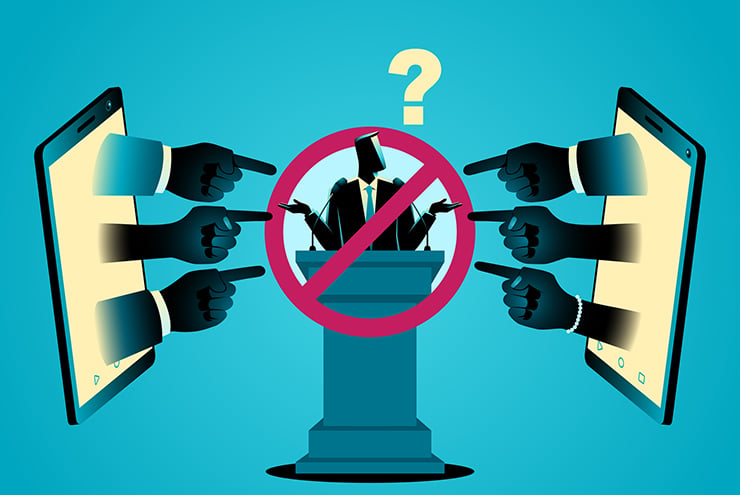
Today, few spectacles are more common than the conservative intelligentsia’s open season on the New Right. Pundits, professors, and whole institutions have devoted their social media feeds and rhetorical energy to denouncing young conservatives dissatisfied with the status quo.
The charge sheet is predictable: Schmittian imprudence, Nietzschean rebellion, crypto-fascist temptation, or the cardinal sin of being “insufficiently liberal.” What these attacks lack in originality, they compensate for in frequency. A generation that once praised Ronald Reagan’s moral courage for declaring the Soviet Union an evil empire now trembles at the thought of young conservatives calling modern leftism, an ideology that has inspired riots, censorship, and political assassinations, an evil faction incompatible with America and one that must be politically defeated.
These denunciations of the New Right are rarely offered in good faith. They also reveal something tragic: that a movement once animated by moral clarity has come to fear its own reflection. For too many of today’s “respectable conservatives,” to name evil is considered impolite and to oppose it with conviction is labeled illiberal tribal politics. Yet to recognize the obvious fact that America now faces enemies both foreign and domestic is not tribalism; it is realism. To express a desire to respond politically to a wave of politically motivated violence is not extremism; it is sanity.
The emergence of the term “woke right,” is a way for its detractors to sneer at the New Right while attempting to silence it. The so-called “woke right” is nothing more than a new generation of conservatives rediscovering moral seriousness. It is not “woke” in the progressive sense—obsessed with grievance, guilt, or speech policing—but awake in the older and nobler sense: morally alert, conscious of injustice, unwilling to pretend that decadence is normal or that neutrality in the face of it is possible. The term “woke,” before its capture by the left, once meant moral wakefulness, being in tune with truth and the need for reform. In both the Christian and classical sense, to be awake is to perceive rightly, to see the moral order of the world as it is.
The modern left, in contrast, has weaponized moral perception. Its version of wokeness transforms conscience into coercion. It mistakes guilt for virtue, confession for conversion, and moral passion for political control. Conservatives make a grave error when they respond to woke leftists by rejecting moral awareness itself. To dismiss all moral passion as “woke” is to amputate the moral dimension of politics, to retreat into proceduralism and irony while the world burns. True conservatism has never been morally neutral. It rests on the recognition that human life, law, and liberty depend on objective moral truths.
Too many conservatives have replaced their intellectual heritage with ideology and substituted wisdom for dogmas about manners, markets, and process. It is difficult to understand how a movement intends to help Americans when it is more obsessed with the methodology and procedures of politics than it is with what it should achieve. Surely the stakes of our current politics demand that the vocation of conservatives is not to conserve etiquette but to conserve the good things of American life: faith, family, honor, courage, justice, and the sacred dignity of the human person. To defend these goods today requires moral and spiritual alertness. A conservatism that cannot see evil cannot defend the good.
This blindness explains much of the right’s ongoing paralysis. A great moral confusion of our time is the belief that to speak of political “enemies” is to abandon charity. But the obvious question for any serious proponent of law and liberty is not whether we will have enemies but whether we will have the courage to recognize them. The right cannot fear allegations of tribal politics more than it fears the real possibility of the nation’s collapse under an ideology that flaunts its hatred of America.
That recognition need not rest on Carl Schmitt’s friend-enemy distinction or a Nietzschean will-to-power, but instead on defending truth and order. Augustine’s City of God presupposes conflict between ordered love and disordered desire. Jesus commands us to love our enemies, but even Jesus did not deny that enemies exist. Aristotle called courage the first civic virtue because it enables citizens to face danger and defend their friends. My working-class parents (who, last I checked, were not crypto-Schmittians) raised me to understand that peace does not mean the absence of conflict. To refuse to name evil—be it ideological, institutional, or moral—is not humility but abdication. Charity without courage becomes sentimentality; peace without justice becomes surrender.
The conservative instinct to “lower the temperature” follows the same pattern of evasion. We are told, endlessly, to “de-escalate” the culture war, to “restore civility.” These calls are noble in intention but naïve in practice. The left is not seeking detente; it is pursuing cultural revolution. Its goal is not coexistence but conquest. A politics of polite retreat will not stop a movement bent on dissolving the moral foundations of the republic. And even if the left is not seeking total revolution across the entire country, why should we accept an Iron Curtain descending across the nation we love so dearly?
Many of today’s anti-“woke right” conservatives repeat a familiar pattern: they mock the moral courage they will one day celebrate. Politeness can be a virtue, but when civility replaces conviction, it becomes cowardice. The so-called “woke right” understands that friendship with truth sometimes requires enmity with error. The challenge is not to suppress moral passion but to discipline it, to order zeal with prudence, not to extinguish it altogether.
Behind much of the resistance to this moral reawakening lies a network of institutional incentives. Legacy think tanks, magazines, and donor networks thrive on moral timidity. Their business model depends on stability, not confrontation. They cultivate moderation as a brand, not as a virtue. The truth is that much of the anti-“woke right” is less a principled movement than a form of social signaling, the anxious effort of a professional class to remain in the good graces of liberal institutions, to prove once again that they are the “good conservatives.” The result is a self-flagellating discourse of purity tests and tone policing, a substitute for political courage.
Meanwhile, the political reality is plain. Donald Trump’s GOP expanded the conservative electorate in every election cycle—2016, 2020, and 2024—bringing in working-class and other disaffected voters, including a higher share of minority voters than other Republicans have managed to do in decades. Yet the establishment treats this expansion as a crisis rather than an achievement. It is true that vox populi is not vox Dei, but few anti-“woke right” conservatives have shown any inclination to elevate Nature’s God above their own ideological commitment to pluralism. If neither vox populi nor vox Dei guides their politics, one must ask: whose voice are these conservatives listening to? Thus, the gap between the intellectual right and the lived experience of its base grows wider each year, and it is precisely this moral and social distance that the “woke right” seeks to close.
At a minimum, intellectual honesty requires acknowledging that our current regime, even if not led by some shadowy global cabal, is led by the grossly incompetent. Rather than quibbling over anyone’s intentions, let us take a page from Eisenhower’s playbook and find a new bus driver. After all, if establishment conservatism has cultivated this kind of leadership and failed to energize the patriotic thymos of America’s median voter, then what option remains but to change? Leo Strauss reminded us that natural right is “changeable” in its applications, that prudence demands we adapt enduring principles to new circumstances. So it is with conservatism. Different eras call for different tactics. The fact that today’s right must sometimes shock, provoke, and disrupt does not make it the opposite of conservative. It makes it alive.
The progressive project—the managerial, bureaucratic, and relativist legacy of the last century—has hollowed out the American soul. If conservatism means anything, it must mean awakening the moral courage of a people who have forgotten what freedom is for. The political status quo is not neutral; it is the slow-motion backsliding of a nation losing the capacity for self-government. That is why the “woke right” insists on recovering the moral dimension of politics, not to mimic the left’s hysteria but to restore the right’s conscience.
For those who still call themselves conservative yet hesitate to admit the state of our political moment, look no further than the bloody benches in Butler, Pennsylvania, the bloody train floor in Charlotte, North Carolina, and the bloody tent in Orem, Utah. There you will find your invitation to recognize that the American experiment cannot endure with nostalgia and optimism as its only fuel. It must be renewed through actions that cultivate the virtues of citizenship and courage through victory.
The task is not merely to defend the remnants of order but to generate it anew—to build the framework for a conservative movement that reconnects moral truth to political practice. Those dismissed by the establishment as “woke right” are not engaged in a betrayal of conservatism but seek to revive it. They are after a moral awakening that recalls the realism, courage, and clarity of the best of our past. The right must not fear being called “woke” if it means being awake to truth. For in the end, to be awake is to love, to love one’s country enough to fight for its soul, as well as to build, through courage, conviction, and education, an American Restoration.
Leave a Reply