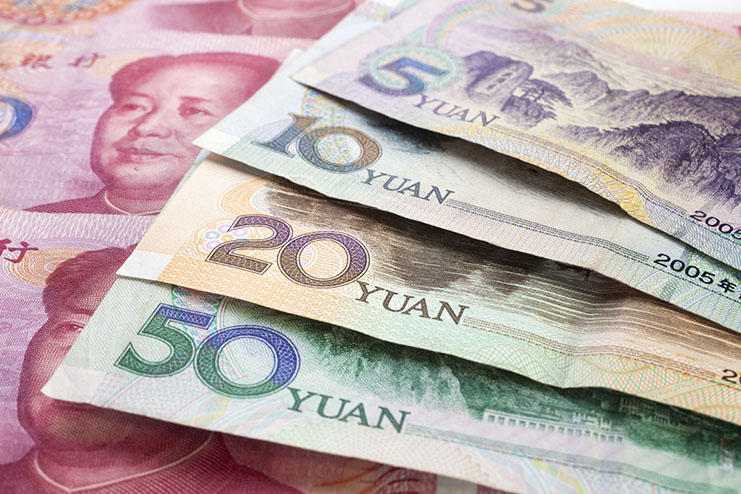
President Trump has indicated a growing desire to challenge China’s expanding influence across the developing world, particularly in regions such as Africa and the West Indies where Beijing has entrenched itself through its infrastructure, financial investments, and political access. Roads, ports, energy projects, and telecommunications networks increasingly bear the imprint of Chinese capital and Chinese priorities. Trump’s instinctive response is competitive. If China is gaining ground, the United States should contest it.
Yet when it comes to a power like China, this ambition confronts a structural problem. China’s advantage in the developing world arises not merely from money or speed but from the absence of any theoretical cultural constraints like those that bind Western foreign policy.
American engagement abroad is filtered through abstract frameworks. Policymakers are trained to think in terms of realism, liberal internationalism, institutionalism, human rights law, and humanitarian responsibility. Every intervention must be in sync with a conceptual vocabulary that justifies action not only in a strategic sense but also in a moral one. China operates differently. There is no indigenous Chinese theory of international relations comparable to Western schools of thought. Beijing does not debate whether it is acting as a realist power or a liberal one, nor does it agonize over norms, legitimacy, or universal values. Its foreign policy is practical, instrumental, and transactional, concerned only with outcomes.
This difference is rooted in deeper intellectual history. As Chad Hansen argued in Language and Logic in Ancient China, classical Chinese thought lacked the Western preoccupation with abstract entities such as ideas, universals, and formal logical categories. Ancient Chinese philosophy was not oriented toward theorizing reality through concepts detached from practice. It was concerned with context, conduct, and social harmony rather than with constructing universal systems of thought. Knowledge was aimed at action. This legacy still shapes modern Chinese statecraft. Beijing approaches international relations not as a domain governed by theory or moral discourse but as concrete relationships that need to be managed and exploited.
China does not condition its assistance to developing countries on good governance or human rights ideology . It builds infrastructure, secures access to resources, and cultivates political loyalty. If the partner government is corrupt or authoritarian, that is not treated as a moral problem so long as strategic interests are served and agreements are honored. China is willing to do business with regimes Western diplomats would avoid or publicly condemn, and it does so without apology or the need to justify itself morally.
American foreign policy must deal with ideological concerns. When Washington supports dictators who align with its interests, it is forced to confront domestic and international backlash. Journalists, legislators, and civil society actors demand explanations for the abandonment odf“democratic” principles. China faces no such pressure because it does not present itself as the guardian of democracy or human rights. It claims no moral leadership and therefore suffers no reputational cost when partnering with dictatorial regimes.
Trump occupies an unusual position within this landscape. His instincts are often closer to Beijing’s pragmatism than the moralism of the American foreign policy establishment. He has shown open hostility toward climate agreements he regards as economically burdensome and strategically naïve. He has dismissed ideologically driven institutions such as USAID as wasteful a. Trump understands why China has been effective in the developing world and why supporting a political ideology often weakens strategic leverage.
At the same time, Trump does not fully abandon America’s self-conception as a defender of the free world. He continues to frame global politics as a struggle between freedom and tyranny. He speaks of the right of countries to self-determination. This creates tension. China does not promise liberation or progress. It offers capital, infrastructure, and diplomatic protection.. For many governments in Africa and the Caribbean, especially those operating within patronage systems, this arrangement is far more attractive than being lectured to about reform.
Corruption is a decisive factor in this dynamic. Because China does not speak the language of transparency or accountability, it can move rapidly within political environments where informal networks and elite discretion dominate. American engagement, even when strategically motivated, is constrained by expectations of good governance. Chinese engagement is not. In regions where corruption is embedded in political survival rather than treated as an aberration, China’s approach aligns more closely with local realities.
There is also a structural economic advantage. China is an authoritarian state with powerful state-owned enterprises and extensive government influence over the private sector. This allows Beijing to mobilize capital for risky projects in unstable regions and to absorb losses for long-term strategic gain. American businesses operate under different incentives. The U.S. does not exercise the same level of control over capital, and American entrepreneurs generally prefer legally stable and sophisticated markets. Fragile states with volatile politics and weak institutions are unattractive unless returns are exceptional.
For a Trump administration to genuinely outcompete China in the developing world, it would need to abandon not only liberal internationalism but much of America’s inherited humanitarian sensibility. It would have to accept transactional relationships tolerate alliances that may offend certain domestic sensibilities. Such a shift would represent a profound break from America’s political culture, not merely from the Democratic Party’s foreign policy.
The deeper issue is whether the developing world is strategically central to the United States. Beyond concerns about illegal migration and security threats Africa and the West Indies are peripheral to American economic power. China’s engagement is driven by long-term resource security and geopolitical patience. America’s interests are narrower and more immediate. Competing with China in these regions may satisfy a rhetorical desire to appear strong, but it risks diverting attention from areas that are more receptive to. American influence.
China’s success in the developing world is not accidental. It reflects a civilization and a state that operate without the need to justify power in universal terms. Trump may admire aspects of this model, but as long as the United States remains a country that promotes certain political values globally, it will always struggle to match China on terrain where Beijing holds a structural advantage
Leave a Reply