In May 1982, a test screening of Steven Spielberg’s film E.T—the Extra-Terrestrial was showcased at the Cannes Film Festival. The attendees, including critics, many of whom were fatigued and uninterested after a week of viewing mainly formulaic and pretentious films, anticipated a frivolous vanity project from the renowned director of Jaws. Over the following two hours, the audience went from apathetic to euphoric, delivering a frenzied standing ovation as the credits began to roll. It caused a sensation. There was a cathartic and reverent reaction to the film.
Upon its general release the following month, it was not merely another hit. It was a cultural phenomenon that reshaped what movies might be and, like The Exorcist a decade earlier, how audiences behaved in darkened theatres. Packed cinemas erupted in laughter and tears from children and adults alike. Spontaneous applause erupted mid-movie. Buzz spread nationwide. Within a few weeks, there were four-hour lines outside theaters across the country. The movie was shown in U.S. theaters for a full year, as the film ultimately eclipsed Star Wars as the highest-grossing movie of all time. During its initial theatrical run, E.T. sold 120 million tickets, equivalent to bringing in approximately one-third of the American population. It was the rebirth of the summer blockbuster.
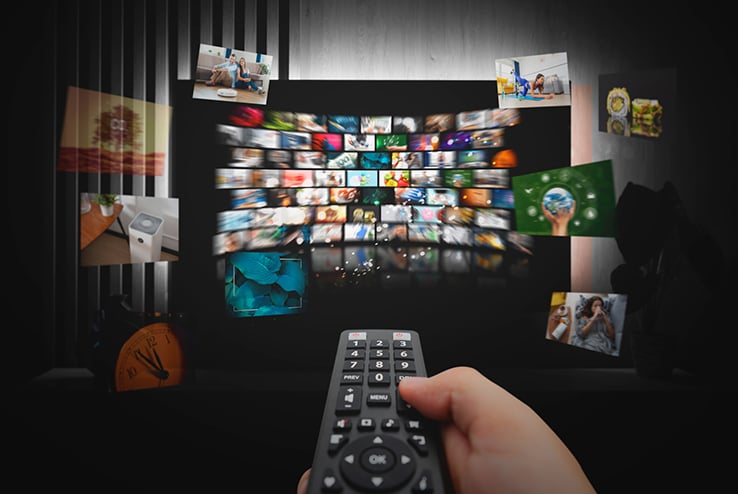
We no longer see epoch-defining experiences and shared cultural moments on our screens. The magic is dying, rendered incompatible with our modern cultural production system. Due to content fragmentation, film is now spread over numerous platforms in addition to the box office—including Netflix, Disney+, Amazon, and Hulu. There is no beating heart. The internet provides us instant access to everything—past and present. And therein lies the problem. The sheer volume of content available to us prevents the possibility for a shared moment. Magic requires time; specifically, low time preference.
The market is adapting to meet our new lifestyle preferences. On average, Americans spend around seven hours per day on digital devices. Johann Hari argues in his book Stolen Focus: Why You Can’t Pay Attention—and How to Think Deeply Again that our addiction to smartphones has made it harder to concentrate on long-form narrative content, whether it is a novel, a film, or a television series.
The current generation of Netflix movies is best defined as slop. Though the films appear to be big, showy, and exciting, upon viewing, most of them feel like simulacrums—a copy of copies. They are the cinematic equivalent of a sigh, requiring little ability, ensuring little lasting impression on the viewer, and having the cultural relevance of a serial killer’s funeral. A film may be watchable but never quite worth rewatching. Slop is never a passion project spearheaded by an aspirational young director: no one involved is truly interested. The objective is to create content only for the purpose of selling something. Don’t ask questions; just consume the product and wait 10 minutes for the next reheated serving.
Due to the influence of Silicon Valley elites, Gen Z has been socially conditioned to expect continuous instant gratification. A generation weaned on dopamine clicks, likes, and retweets has emerged, lacking the emotional fortitude and intellectual curiosity necessary to engage with and sustain complex narratives. Liberal modernity has turned life into what cultural theorist Neil Postman refers to as the “eternal present.” The culture industry’s guiding principle is immediacy, which is catered to with instant access, causing us to lose our ability to defer gratification.
In truth, though, we are all to blame for this. According to data, 83 percent of Americans watch TV while browsing their mobile phones. Instead of sitting down to engage with a movie, really watching and thinking about it, most of us watch while also checking social media or texting friends. This has become so ubiquitous that the televisions in our homes are no longer our first priority—they are second to our phones. We live in a “second screen” society.
Second-screen engagement has become a commonly accepted part of entertainment consumption. Naturally, instead of pushing back against it, studios now design content around the assumption that audiences won’t be engaged or fully paying attention. Storytelling relies on pacing, subtle cues, character development, and emotional buildup, all of which are ruined if the audience is constantly glancing down at another screen without absorbing the plot, themes, and ideas.
Slop serves merely as adjunct entertainment, providing a backdrop while viewers engage in constant doom-scrolling on their smartphones. The experience rarely disrupts the monotony of passive consumption, with the occasional plot points or action sequences momentarily redirecting fleeting attention. Characters, often devoid of depth and genuine connection, seem designed solely to compete for the viewer’s attention, which inevitably returns to the alluring glow of their handheld screens.
You’d think that with the alleged death of woke, we could move on and expect better. Instead, we’re regressing, giving up on creative and ambitious storytelling in favor of a sterile world orchestrated solely by visual muzak. Netflix, especially, is little more than a vending machine dispensing slop created for those with short attention spans.
Visual Muzak and Digital Slop
Leave a Reply