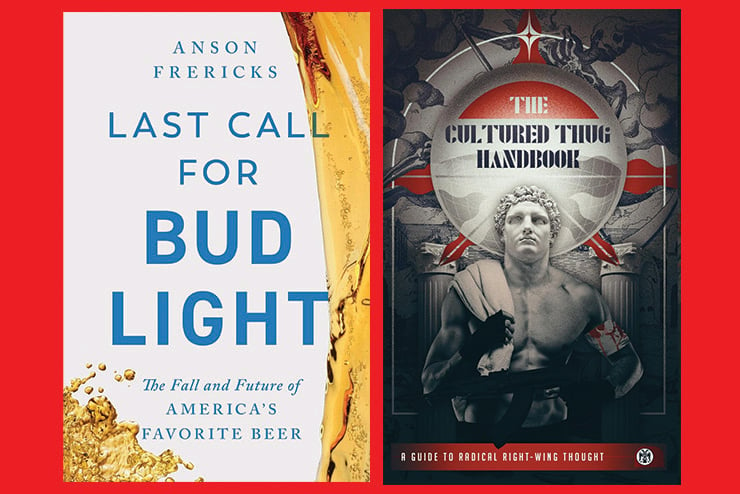
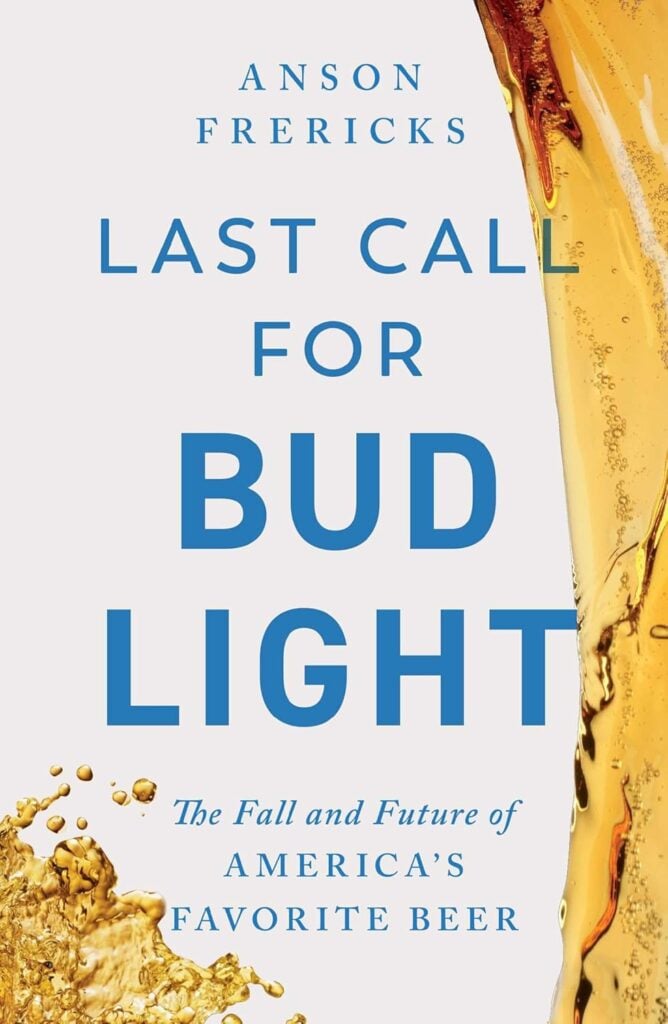
Last Call for Bud Light: The Fall and Future of America’s Favorite Beer, by Anson Frericks (Threshold Editions; 304 pp., $29.99). What were they thinking? This is the question that Anson Frericks asks in Last Call for Bud Light, an insightful study of how a once-leading company managed to destroy its key brand, ruin its iconic reputation, and lose a staggering amount of money along the way. Frericks, formerly a senior marketing and sales executive at Anheuser-Busch, had a ringside seat at the debacle.
Even though Anheuser-Busch presents itself as quintessentially American, it was taken over by a European conglomerate, InBev, in 2008. Frericks traces many of the company’s problems to this, particularly as it shifted its focus from customers and shareholders towards a vague idea of “stakeholders.” When the ideology of wokeness began to appear in the U.S., the new CEO, Brazilian-born Michel Doukeris, embraced it. Support for left-wing causes soon became metrics for hiring, performance reviews, and promotions. Dissenting voices were shouted down. So, the 2023 decision to use transgender activist Dylan Mulvaney as the “inclusive” marketing face of Bud Light was not a radical surprise but the result of a deliberate transformation of the corporate culture.
The consumer reaction to Mulvaney was immediate. A boycott sprang up and within two weeks sales were down 21 percent and the company’s shares plummeted. While Mulvaney had an army of social media followers, few of them drank Bud Light or were inclined to start. It was all downside. Bud Light slipped to third place in the market. “Millions of Americans just didn’t want their choice in beer to be political,” says Frericks. “Not pro-trans, not anti-trans, not any-trans.”
Is it possible to recover from such a disaster? Frericks is not sure. Doukeris remains in the CEO chair, but at least the company has reversed course on its flagship product. Frericks suggests that the Bud Light ad made for the Super Bowl returns the product to familiar ground, showing guys drinking while having fun. The ad is notable, Frericks writes, for what “it communicates only by implication: Bud Light is really, really sorry.”
Will this be enough? We will have to wait and see. But the book contains critical lessons for businesses. First, know and respect your customers. Second, treat any advice from institutional investors with great wariness. Third, consign wokeness to the trash bin, where it belongs.
(Derek Parker)
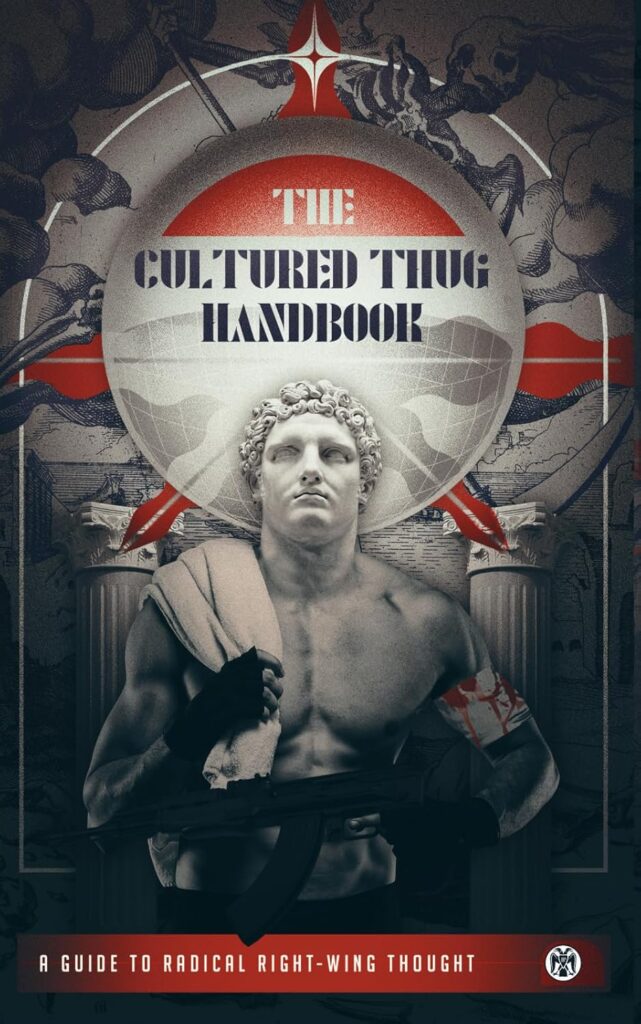
The Cultured Thug Handbook: A Guide to Radical Right-Wing Thought, by Mike Maxwell (Imperium Press; 453 pp., $19.00). The word “thug” originates in the distasteful pagan death cult the British Army very properly stamped out in India. A more positive connotation comes via Bryce “Thug Nasty” Mitchell, the colorful MMA fighter known for protesting COVID lockdowns and denouncing Biden’s war-mongering.
Salutary as Mitchell’s example may be, pure-spiritedness alone cannot prove adequate to the challenges of our time. Hence The Cultured Thug calls for a reconciliation of masculinity with scholarship, two ideals divorced in an age of weasely pundits and illiterate jocks. The tone is conversational and playful, even as the author addresses profound social, political, and religious concepts, and adroitly employs myriad philosophical, scientific, and theological sources.
“If something is true,” Maxwell believes, “and you really know it, you should be able to explain it briefly and in plain language.” And so, briefly, plainly, with occasional vulgarity and consistent wit, this book scrutinizes illuminating red-pill concepts such as oikophilia, anarcho-tyranny, physiognomy, and noblesse oblige, all in the context of a Western canon viewed from the right. Each chapter is punctuated by a handful of key takeaways, such as “There is no fact independent of a worldview.” All this aims at helping the reader live as a conscious agent rather than a clueless victim.
Although the author’s perspective is non-Christian, he is broadminded enough to acknowledge the insights of Catholic luminaries like G. K. Chesterton and Alasdair MacIntyre. Still, a caveat: Appealing and informative as The Cultured Thug is, the common ground between the Nietzschean right and Christian right must not be exaggerated, and even a non-Christian might doubt the author’s assertion that the entire Platonic corpus can be dismissed as proto-liberalism.
Where Maxwell invokes differential ontology, a Christian right-winger would add the mystery of the Trinity and the sacraments; where he looks to cyclical history, we look to the Resurrection; where he attributes the collapse of Western society to bio-Leninism, we note the explanatory power of the doctrine of Original Sin and the need for repentance. A whole vision of human nature must somehow incorporate both “master” and “slave” morality—mercy and compassion, and nobility and virility.
Still, it’s hard to find fault in Maxwell’s counsel to the reader to “get in shape, fix his relationships, build his clan, and read the classics.” There is worse advice to be had.
(Jerry Salyer)
Leave a Reply