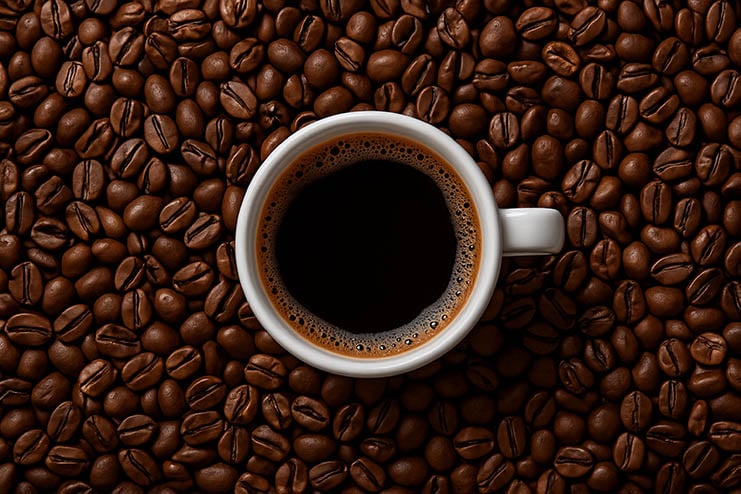
As an unapologetic coffee purist, I loathe what’s happened to the beverage. Frankly, I hold Seattle entirely responsible for this desecration. Stepping into Starbucks, I feel like an alien, bewildered by the barrage of corporate, faux-Italian names chalked up on the enormous menu behind the counter. My regular cup of Joe is simple: black coffee, hold the sugar. When I attempted to order this at my neighborhood café, the barista stared at me like a Victorian scientist examining a platypus. My girlfriend assured me that what I wanted was a flat white. Excuse me, but no. A Baked Alaska blended into a milkshake and served up as 16 ounces of diabetes-inducing liquescent does not qualify as coffee.
To love real coffee is to join a centuries-old rite of calculated stimulation—a choreography of energy, both measured and mysterious. Each steaming cup is an invocation to the morning, the familiar heat of the mug signaling the day’s beginning. For those of us who live within arm’s reach of a French press, this is the liturgy of the first plunge. “I have measured out my life with coffee spoons,” T. S. Eliot wrote in The Love Song of J. Alfred Prufrock. For Eliot, the phrase mourned a life counted in cautious, repetitive gestures, but for me, it marks a small victory. My days are not marked by years or trophies, but by stained spoonfuls of finely ground courage—fuel that rouses my mind at dawn, ignites the embers of creativity, and becomes the gunpowder that propels words onto the page.
My first exposure to coffee was watching the film Split Second, where Rutger Hauer plays Harley Stone—a psychotic, burnt-out, coffee-obsessed cop, armed to the teeth as he rampages through London hunting a serial killer who killed his partner. Cool ’90s action movies aside, it wasn’t until college that I discovered coffee’s holy power. My own exam notes are marked by distinctive black rings, stains like halos left behind as evidence of all-night cramming sessions.
Coffee is ubiquitous among writers, bridging social classes from aristocratic poets to humble workers. Ernest Hemingway, whose prose was as punchy as a double espresso, used the beverage as both a tool and a symbol in his stories. In The Old Man and the Sea, Santiago drinks coffee to stay alert during his struggle to land the marlin. By showing Santiago sharing the beverage from condensed milk cans with Manolin, Hemingway emphasizes the daily ritual and the bond between the old fisherman and his apprentice.
If Hemingway used his morning fix to steady his composure, the French novelist Honoré de Balzac used it to energize a pathological drive for creativity. Balzac is rumored to have been one of the most prolific coffee drinkers in history, reportedly consuming up to 50 cups a day to power marathon 18-hour writing sessions for La Comédie Humaine. He described the influence of coffee on his writing process like the tactics of war: “Ideas begin to move like the Battalions of the Grand Army on the battlefield, and the battle takes place.”
In the 20th century the same explosive energy Balzac tapped in his Bohemian study found a new, louder home American garage bands. Long before the commercialization of the drink through indie pop figures like Hayley Williams of Paramore, this caffeinated elixir was the high-octane mascot of the ’80s and ’90s subculture. The Descendentsembodied this spirit with their 30-second surf-punk blast “Coffee Mug.” The track is a jittery hyper-caffeinated anthem that channels the very rush it glorifies. Lead singer Milo Aukerman’s frantic chant for “mug, mug, mug, coffee mug,” doesn’t merely describe the habit; it becomes the habit itself: short, aggressive, and gone before you can even set the cup down. For the generation of Americans raised on punk, it transformed the morning fix into a symbol of suburban teenage rebellion.
Lagwagon offered a more cynical, self-aware take on this sentiment in their song “Mr. Coffee.” Joey Cape described coffee as “legal speed, the American way,” a nod to the fact that while others pursue illegal highs, it’s blue-collar shift workers and the touring musician who rely on the salvation of a gas station Styrofoam cup at 2:00 a.m. Coffee is the socially sanctioned stimulant of choice for the restless—the productive drug that keeps both the wheels of the tour van and the country in motion.
No tribute to coffee in punk would be complete without mentioning Henry Rollins. The hardcore icon and spoken-word artist is famous for his intense devotion to black coffee, claiming it as his preferred high over drugs or alcohol—an ethos tied to the straight edge movement. For a man defined by relentless touring and high-intensity performance, coffee is the anchor and fuel. In Get in the Van, a book documenting his years on the road with Black Flag, Rollins describes relying on black coffee to fight exhaustion and stay alert through the grueling 1984 My War tour. Rollins proves you don’t need to be a 19th century Parisian novelist to find spiritual integrity in a French press.
The real beauty of coffee lies in its versatility. It’s the catalyst for social interactions, sparking conversation, repairing friendships, and sometimes even kindling romance. Just as easily, it’s the perfect companion for solitude. Its steam curls beside us while we file taxes, write articles, or gaze out the window wondering what comes next. Whether we’re measuring our lives in Eliot’s spoons, imitating Balzac’s speed-of-light inspirations, or adopting Rollins’ philosophical ruminations, we’re all part of the same caffeinated tribe. I’ll drink to that.
Leave a Reply