The Anti-Drug Crusade contains the common hype along with always-commendable pledges to crack down on drug criminals and introduce “zero tolerance” for users. Nonetheless, President Bush’s war on drugs can only fail, for it insists on attacking the symptoms of the problem rather than the real disease itself. Social research on the use of illegal...
Year: 1989
Post
“Fundamental Human Rights”
South Africa has been unable to deflect interference with its exercise of sovereign rights within its own borders. Other states have declared that racial discrimination as practiced in South Africa is such an egregious offense against “fundamental human rights” that interference is required, and since the Carter administration, the United States has relentlessly asserted that...
Post
The Unsovereign Artist
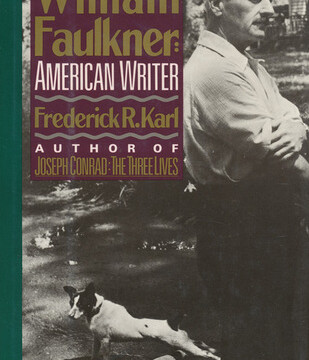
A thousand-page book, like a thousand-foot ship, must not disappoint; unfortunately, Karl Frederick’s William Faulkner is the QE II of American literary biography. “This book attempts,” Professor Karl states in his foreword, “to integrate the latest in biographical information with Faulkner’s own large body of work in fiction and poetry.” He adds that, “It will...
Post
The Lyric of Tradition
“The Lyric of Tradition” is an essay written nearly twenty-five years ago by the late Donald Davidson, celebrated American poet, critic, and philosopher of cultural change who developed, out of his own artistic practice, a comprehensive theory of the role of literature in a healthy society. It was a view not at all like those...
Post
Tugging the Leash
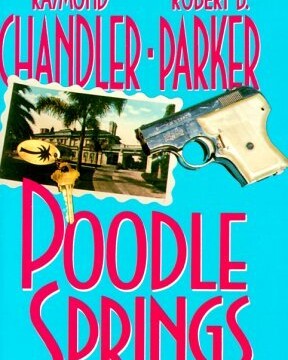
Marlowe’s back, and Parker’s got him. Well he should. Parker knows every one of Chandler’s quirks: he wrote part of his dissertation about Chandler twenty years ago. And then he started writing his Spenser books. (Where do you suppose he got the idea to name his private eye after a 16th-century English poet?) But Spenser...
Post
Make a Joyful Noise. Awomen.
Two years ago, because it felt inevitable and right, I took the happy leap of faith that I had been approaching for years and became a Catholic. The reasons why are perhaps fodder for another letter at another time. Let me just say here and now that current church music and liturgy were not among...
Post
The Puritan and the Profligate
John Lofton Interviews Allen Ginsberg Lofton: In the first section of your poem “Howl” you wrote: “I saw the best young minds of my generation destroyed by madness.” Did this also apply to you? Ginsberg: That’s not an accurate quotation. I said the “best minds,” not “the best young minds.” This is what is called...
Post
Beavers, Banners, and Bulls
Here in Chapel Hill we’ve had this problem with beavers. They’ve been damming creeks, as is their wont. Unfortunately in the process, they’ve been turning great areas into) marsh and creating a mosquito problem, so last year the old boys of our public works department set out to kill the critters, figuring: no beavers =...
Post
In Search of the New American Man
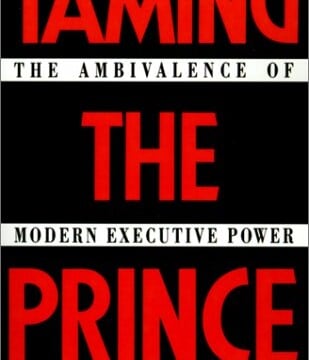
The evident purpose of Taming the Prince is to provide a respectable philosophical pedigree for the usurpations and abuses of power by American Presidents since FDR. (Professor Mansfield dedicates the book to his father, “constant advocate of a strong presidency from Franklin Roosevelt to Ronald Reagan.”) Where conservatives such as Corwin, Kendall, Burnham, and Samuel...
Post
Exorcisms
“Truth rests with God alone, and a little bit with me.” —Yiddish Proverb Moshe Leshem ends Balaam’s Curse with a warning against the growing political power of the Israeli Orthodox rabbinate. By yielding to Orthodox authorities on educational and cultural matters, he says, Israelis are sacrificing their democratic patrimony. For the sake of Israeli democracy...
Post
Poetry You Can Read
“It seemed so simple when one was young and new ideas were mentioned not to grow red in the face and gobble.” —Logan Pearsall Smith In his introduction to the 1962 Penguin anthology Contemporary American Poetry, Donald Hall wrote, “For thirty years an orthodoxy ruled American poetry. It derived from the authority of T.S. Eliot...
Post
Nationalism Looking Pretty Good
If conservatives carried revolvers, they’d probably reach for them at the sound of the word “nationalism.” Perhaps it’s just as well they don’t carry revolvers, since nationalism usually makes its appearance armed with considerably bigger guns. In the Europe of Metternich and Castlereagh, nationalism was the vehicle for the revolutionary destruction of dynastic and aristocratic...
Post
Nunc Est Bibendum
Or Now That Poetry Is Dead, I Think I’ll Just Sit Here and Drink A new battle of the books is in progress. This time, the lines are not being drawn between modern and ancient but between the present and the recent past, and the antagonists are not Homer against Milton or Aristotle vs. Bacon,...
Post
One, Two, Many Colombias
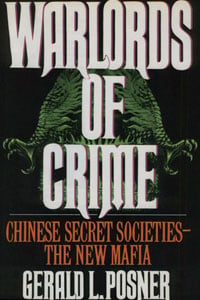
Great Britain’s decision to transfer control of Hong Kong to Communist China by 1997 has spurred a flight from the colony. Despite reassurances from Beijing, money is flowing out of Hong Kong at an accelerating rate. Among those who are moving their assets are the Chinese crime syndicates—the Triads. While they are expanding their criminal...
Post
An Imitation: A Short Story
“It behoveth thee to be a fool for Christ.” —Thomas à Kempis Hawkins was doing his version of an Iranian student who had missed eight weeks of class, yet wanted an “A” in the calculus course. “I know you are wondering why I have not to come to class since school start. I am good...
Post
Feminism Fatigued
The feminist century—ours—is markedly different from any period known . . . I was going to say “to man” but perhaps we don’t talk that way anymore. Events have transformed the relationship of the sexes from one in which men occupied most leadership roles to one in which women make laws, minister the sacraments, and...
Post
Entertaining for Years to Come
The Disabilities Act is likely to entertain C-SPAN viewers for months to come. The bill, which in its current form is a compromise worked out between the Bush administration and congressional Democrats, extends sweeping civil rights protection to the nation’s blind, deaf, lame, and degenerate (AIDS is, of course, a handicap). Times being what they...
Post
No Freedom of Dissociation
Freedom Association has come to mean no freedom of dissociation, at least not in Madison, Wisconsin. There a city statute barring discrimination in housing has been interpreted by the Madison Equal Opportunities Commission (MEOC) to apply to roommates. In other words, when Ann Hacklander and Maureen Rowe were told by their prospective roommate Cari Sprague...
Post
The (Unexpected) Comeback of the Small Farm
The word’s been out for some time: they’re all gone, not a functioning one left. Statistics coming down from on high in the 1970’s “proved” that the small farm—defined as that with a total income of less than $20,000 annually—was about shot. This came as something of a surprise to those still living and working...
Post
The Suez Files
One reads this book almost with nostalgia. The 1950’s, and the dramatic events that occurred during that decade in the Middle East, are the subject of these historically important recollections by Mohamed Heikal, confidant of Gamal Abdel Nasser and distinguished editor of the Cairo newspaper Akhbar el-Yom. Heikal reminds us that during the 1950’s relations...
Post
Pire qu’un Crime . . .
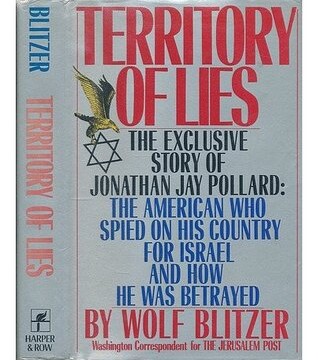
“Arts, Culture, Reverence, Honour, all things fade. Save Treason and the dagger of her trade . . . “ —Oscar Wilde, “Libertatis Sacra Fames” The Pollard treason case is so unusual that I want to start my review of this book with a review of the reviews. I do this because the first-hand story by...
Post
Mother Knows Best
Man may be dying out, but patriarchy—men’s oppression of women—lives on. If only we were more controlled by women, or at least by the feminine aspect of our natures, life would be much better: kinder, gentler, and more “caring.” It is patriarchy, after all, that makes America so aggressive; it is patriarchy that makes American...
Post
The Cow in the Trail
Even in mid-September you cannot go comfortably by day into the deserts of southeastern Utah. Together the late Edward Abbey and I rented horses and rode into the La Sal mountains, following what began as a dirt road and ended as a trail at an elevation of approximately 10,500 feet. From the mountain pass, we...
Post
Phenomenon of Popular Movements
The phenomenon of popular movements of protest succeeding and then being swallowed up by the Establishment is not a new story in American history, but the fate of “conservatism” in the last decade or so gives a remarkable case study. Not long ago, after ages of liberal dominance, conservatism seemed to be in the ascendancy...
Post
Understand Me Completely
Ordinary people, we are told, ordinarily speak in cliches, bromides, and dotty banalities, and it is the task of the literary artist, of the playwright in particular, to give them expressive and convincing words. This is the practice of Aeschylus and Shakespeare, of Tennessee Williams and Tom Stoppard. The success of heightened language upon the...
Post
The End of Art
Reflections on the 1989 Whitney Biennial of American Art “Among the Neo-Minimalists Liz Larner makes a strangely regular tapestry out of human eyelashes. The team of Kate Ericson and Mel Ziegler compares bottles of powdered pigment. Meg Webster makes a big low-lying circle out of nothing but dirt; a second sculpture populates soil with plants,...
Post
Dionysus in the Trenches
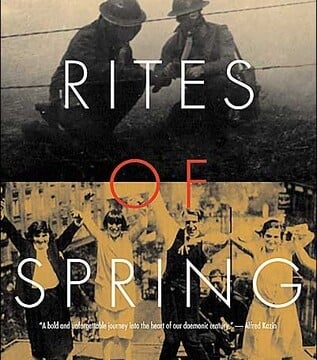
In his masterly Ideas Have Consequences, Richard Weaver (who was fond of the long view) marked the decline of the West from the late 14th century with the development of William of Occam’s doctrine of nominalism. In the short view, though, it is obvious that the Great War was the watershed of modernity: what remained...
Post
A Tour of the Labyrinth
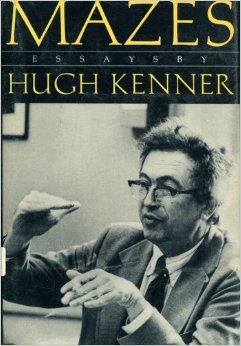
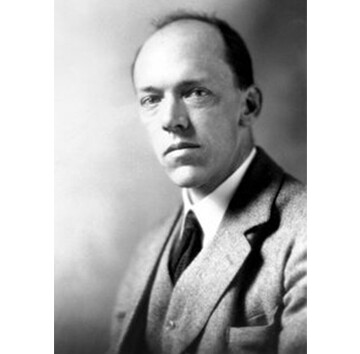
Hugh Kenner, by day an unassuming professor of English literature at the Johns Hopkins University, is our foremost practitioner of the ancient cult of the maze, a celebrant of this endless labyrinth in which we live. Confronted with its mysteries, Mr. Kenner, the new Theseus, confidently draws on a lively knowledge of science, technology, music,...
Post
A Local Globalist
“But they who shared with me my life’s adventure. Who tossed their ducats like dandelions into the sunlight, I know that somewhere they with songs are building, Golden Towers more beautiful than my own.” —”Golden Symphony” Here we have a series of books—two more are planned—that restore to view the literary career of John Gould...
Post
Not a Smashing Success
It’s the little things—not the front-page disclosures—that suggest to us that we’ve been had. Take, for instance, a 1987-88 study by the Oregon Department of Transportation. ODOT studied 551 students between 16 and 19 years of age who had completed driver education programs, 581 students who said they would have taken the course had it...
Post
Allons, Enfants de la Patrie
It was years ago that I first read the collection of Donald Davidson’s essays called Still Rebels, Still Yankees. In one of them, “Some Day, in Old Charleston,” the doughty Last Agrarian addressed one of his perennial themes, the trashiness of modern civilization and the superiority of the Old Southern regime, by describing Charleston’s Army...
Post
The Twenty Years’ War
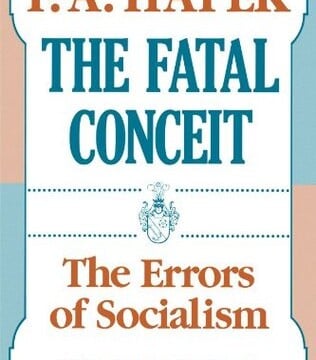
“Intelligence” may offer the clearest example we have of how ideology can corrupt social science. Although the topic has been politicized by both left and right, during the last generation the ideological pressures have come almost entirely from the left, and along these lines: that intelligence is essentially the product of experience—above all, the nature...
Post
Learning to Behave
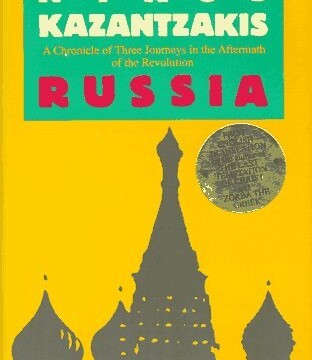
When I heard on the radio one morning in 1974 that Friedrich Hayek had won the Nobel Prize in economics, my first thought was, “Not our Friedrich Hayek?” A few hours later, upon meeting a libertarian acquaintance of some prominence, I asked, “Did you hear about Hayek?” The reply was: “No. Did he die?” I...
Post
Zorba the Comrade
Love him or hate him, Nikos Kazantzakis is a force to be reckoned with. Best known in America for Zorba the Greek and—thanks to the Martin Scorcese movie—The Last Temptation of Christ, Kazantzakis wrote what many consider to be the greatest epic poem of the 20th century, The Odyssey: A Modern Sequel. His impact today,...
Post
The Lure of Rural Life
Thomas Jefferson believed that virtue was to be found in the Spartan simplicity of ancient Greece rather than in the decadent cities of Caesar’s Rome. Agriculture, Jefferson wrote, was what developed moral and political virtue. Big cities corrupted people, he thought, and neither city men of commerce and capital nor city men who labored could...
Post
Public Restroom Equality Law
The New York State public restroom equality law, popularly being referred to as “the potty parity act,” is no laughing matter. Rather, it takes away gains achieved by men in their long struggle, starting with the establishment of the first public restroom, to receive some degree of compensation for past inequities. The purpose of the...
Post
The Brave New World of Public Policy
John Stuart Mill woke up one morning and had this overwhelming feeling that the “answer to the question of the ages” had come to him in the middle of the night. But he forgot what it was. He then placed a quill and paper next to his bed, and a few mornings later he awoke...
Post
Beyond All This
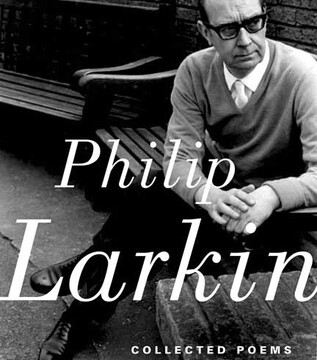
” . . . the wish to be alone.” —”Wants” Philip Larkin, who died in 1985 at the age of 63, has been commonly regarded as the finest English poet of his time. His reputation is founded not merely on the opinion of professional critics but on his remarkable popularity with readers, including many who...
Post
80th Annual Convention
When the 80th annual convention of the NAACP gathered in solemn conclave in Detroit last July, the delegates listened approvingly to Executive Director Benjamin Hooks’ call for “civil disobedience on a mass scale that has never been seen in this country before.” Mr. Hooks was upset that the Supreme Court recently delivered itself of some...
Post
The Terrestrial God
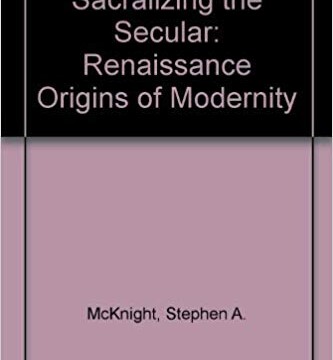
It all depends on what we mean by “sacralizing” and “sacred,” and to a lesser extent by “secular.” The fact that Professor McKnight is a student of Eric Voegelin should not be left unmentioned in this regard, because for the recently deceased great scholar, “sacred” remained an elusive term. The word certainly referred to a...
Post
Those Deadly, Depressing, Syncopated Semiautomatic Assault Rifle Blues
An Exercise in Calculated Hysteria The semiautomatic rifle has been part of the American scene for nearly a century. In 1903 the Winchester Repeating Arms Company marketed the first commercially successful semiautomatic rifle. It was not designed as a military arm, and no sales were made to the US Army. The new rifle was marketed...
Post
High On the List of Priorities
Illegal aliens rank high on any social reformer’s list of priorities. At the very time millions of tax dollars are being spent to patrol our borders and to prosecute the illegals, CUNY—the City University of New York—announced in August that not only will it continue to welcome illegal aliens into its fold, but it will...
Post
Publicly Funded Art
Publicly Funded Art is causing a stir now in Los Angeles, where a mural citing (in part) the Pledge of Allegiance has drawn fire from a neighborhood group. The Little Tokyo Community Development Advisory Committee complained that placing a mural featuring the pledge above LA’s Little Tokyo was, at the very least, insensitive to the...
Post
Tax-Exempt?
Witches and Satanists tax-exempt? When we raised the issue in the September 1988 Chronicles, several members of the nation’s clerical lobby scoffed. But in Rhode Island, the home of Roger Williams and other champions of religious freedom without responsibility, a witches’ coven known as Our Lady of the Roses Wiccan Church has apparently met the...
Post
The Ten Deadly Sins
This book, originally published in Czech in 1973, is based on an amusing literary conceit. Ronald Arbuthnott Knox, an English Catholic priest and important early 20th-century theologian, was also a distinctive figure in the development of the genre of detective fiction. A pretty fair writer of detective stories himself, he also (for instance) wrote a...
Post
Kings of the Wild Frontier
Until 20 years ago, one could count on Hollywood to produce at least one film every few years dealing with early American history. John Ford gave us Drums Along the Mohawk in the 1940’s, and Disney gave us the Swamp Fox in the 1960’s. Such movies may have given the public only “popular” history (before...
Post
A Feudal Phenomenon
Flags are a feudal phenomenon. Not until the French tricolor was the flag a focus of nationalism. Even during the 19th century, flags were used mostly in military, naval, and diplomatic contexts, and were seldom seen by civilians. Often there was not one national flag but a variety for different uses and occasions. Americans did...
Post
Socialist Nostalgia
Since May 1981, when they won a sweeping electoral victory in the parliamentary elections, France’s Socialists have suffered two sobering shocks which, while they have brought many of their soaring dreams plummeting to earth, have made many malcontents. The first shock was administered in 1983 when, after two years of ideological debauch, which resulted in...
Post
The American Covenant
“It is extremely frustrating to write history today because so much effort must go toward correcting the countless distortions that have been inserted into accounts of our heritage by militant secularists who twist facts to suit their narrow anti-religious political agendas.” So writes Benjamin Hart near the end of Faith and Freedom: The Christian Roots...
Post
How the Fourteenth Amendment Repealed the Constitution
“It is easier to make certain things legal than to make them legitimate.” —Chomfort The evisceration of the federal system by the Supreme Court during the last few decades—indeed, most of the modem malfeasance of that august body—has been accomplished largely through the instrumentality of the Fourteenth Amendment. This sorry tale, from the adoption of...