It’s bound to happen. As the prodigal metropolises east and west of North Dakota accumulate garbage, after they’ve tried and failed at recycling and incineration, they’re going to want to put that garbage somewhere—stuff it where it won’t offend a constituent or blemish a perfect urban concrete-scape. These folks are naturally going to think “wasteland”...
Year: 1989
Post
Light Reading
Is it possible, in 50 words or less, to describe today’s woman, the postfeminist 80’s woman, the woman who will soon become the 90’s woman? I’m glad you asked. The typical American woman in 1989 is divorced, in need of financial guidance, worried about her career, either agonizing about her biological clock or searching out...
Post
The Ties That Bind
“The state has no tool delicate enough to deracinate the rooted habits and tangled affections of the family.” —G.K. Chesterton Allan Carlson is a humane man, an effective polemicist, a dedicated familialist, and a scholar trained in macroeconomic theory with its panoply of techniques and its characteristic lingo—opportunity costs, utility curves, and the like. This...
Post
Economic Man
Economists, with justice, are accused of holding a narrow, one-dimensional, and somewhat pedestrian world view. Noneconomic factors can determine how well a society is organized, say the critics. An efficient price system won’t solve all of society’s problems; there are also cultural and moral problems that can undermine society, and these have no economic fix....
Post
The Poet as Cleaning Lady
Kristine Thatcher’s play Niedecker, produced earlier this year by the Women’s Project at the Apple Corps Theatre in New York, is about paradoxes. It is the story of the reclusive poet Lorine Niedecker (1903-1970). She has been dead almost twenty years and is largely forgotten, but when she was alive Ezra Pound championed her. Basil...
Post
Bad Sports
Football season once again, and a profoundly depressing time of year it is. Sundays are all right—football’s an interesting game and the NFL plays it superbly. It’s Saturday afternoon that always makes me blue. Being a good citizen, I cheer for our team, of course, but we really have no business playing Clemson, much less...
Post
All For Love
“Alas, that love should be a blight and shame To those who seek all sympathies in one!” —Shelley, “Laon and Cythna” With the publication of the first volume of an expanded edition of her letters in 1980, and now this biography, Mary Shelley’s reputation is being reconsidered. This renewed attention is not due to the...
Post
The Garden Club: A Short Story
She knew she did it well, had done this well almost all her married life; she would spend days at it if she had to, just to make it right. Still, every time the members of the Garden Club came to Alicia’s house, her mouth dried and her belly trembled. Employed as she was now,...
Post
The Witch
She was a witch, I swear, she was a real witch! —Gogol When my novella, which I was writing obsessively all my senior year at the Academy and a year after that, was accepted by a publisher and I was given a modest advance, I decided to buy myself an apartment. I, of course, didn’t...
Post
When the Schoolhouse Is Our House
Somebody recently did a “study” purporting to discover that at-home mothers spend hardly any more time daily with their children than mothers who work full-time outside the home. This is a neat trick on the part of the at-home moms surveyed, and I would like to know how they manage it. They must have superb...
Post
Recalling the Case Against Female Suffrage
I was asked once on a radio show whether the arguments I was making against feminism wouldn’t also lead me to oppose women voting. I pointed out that though I personally favored giving women the vote, the case against female suffrage was a very respectable one, and was most visibly urged by women when female...
Post
The Two Enlightenments
Stanley Rosen may be every anti-Straussian’s favorite Straussian. Never mind that he denies his own paternity and affirms to his friends and critics: “I am not a Straussian.” Like the postmodern anti-Platonists he describes in his collection of essays, Rosen draws heavily on the school of thought he claims to transcend. One problem among the...
Post
Collitchgirl: Working for United Press in the 40’s
To enter the job market in the middle of World War II was a heady experience. In the year or two following Pearl Harbor nearly ten million young men had donned uniforms, and employers were crying for help. The only large reservoir left to be tapped was women. Rosie the Riveter was born. For college...
Post
The Sociological Model of Law
There is an adage among lawyers and judges that the two commodities a consumer never wants to watch being made are sausages and justice. Donald Black, University Professor of the Social Sciences at the University of Virginia, disagrees. Professor Black is a sociologist, and he explains much of our legal system’s indeterminacy by examining voluminous...
Post
An Illusion of the Future
Barely a week after, the Tiananmen Square massacre, Ronald Reagan showed up in London to deliver himself of some post-presidential opinions. As the nation’s newest elder statesman, Mr. Reagan received international headlines for his speech, which turned out to be a long variation on his best-known line from Death Valley Days: progress is our most...
Post
Wimin’s Work
The women’s movement is in considerable disarray. While most self-described feminists are concerned mainly with job prospects, equal pay, and abortion rights, the radical wing of the movement is busy advocating everything from witchcraft to lesbianism. This was never more apparent than at NOW’s recent convention. While most delegates were content with denouncing the Supreme...
Post
A Prayer for My Daughters
In recent months both San Francisco and New York have been the scene of triumphs for the homosexual rights movement’s efforts to legitimate single-sex liaisons. . . . Newsweek‘s Eleanor Clift, appearing on The McLaughlin Group, summed up the cases as evidence that in the 1980’s the American people were redefining the family. The American...
Post
What Makes a Nation?
When Fernand Braudel died in 1985, The Times of London called him “the greatest of Europe’s historians.” In spite of Braudel’s great merits, many would question this accolade. Indeed, he may be assigned a place among those contemporary historians who justify, by their oeuvre, the sociological school, and who therefore have “betrayed” the historian’s true...
Post
Social Indoctrination
“Hasidic Village in New York wants own public school district” blared The New York Times (July 21). The Hasidic community of Kiryas Joel, NY, already runs its own private schools, but the town (100 percent Hasidic) has been pushing for special religious accommodations in the nearby public school’s handicapped programs. Parents are unhappy with the...
Post
Flag Amendment
A Flag Amendment—what would be the effect? In one school of thought that goes back through Acton to Jefferson to Plato, the health of a society is inversely proportional to the amount of written law (and the number of lawyers) it has. A suspicion of lawmaking is even more justified in the case of constitutional...
Post
A Box Office Sensation
Batman was the summer’s box office sensation. Responses to the film followed the usual pattern: audiences and lowbrow critics loved it; highbrow critics turned up their noses. Pans from serious film critics are the best recommendation a movie can get. Yes, it is a dark and violent movie, and yes, Michael Keaton is a perfectly...
Post
Bias in the Questions
Girl’s SAT scores are lower than boys because of bias in the questions, charges a Center for Women Policy Studies report. Nationally, boys score higher on 4 of the verbal questions and 17 of the math, and the fact that they do better is alone prima facie evidence, according to Phyllis Rosser, that the Educational...
Post
Playing Patron
The yelping began almost as soon as Jesse Helms proposed his plan for bringing the National Endowment for the Arts under control. Helms’ amendment would forbid the use of federal funds to “Promote, disseminate or produce indecent materials.” There was hardly a respectable newspaper that did not yell “censorship” and decry this attempt to “politicize...
Post
On ‘Enemies of Society’
Professor Arthur Eckstein’s fine review of Pete Collier and David Horowitz’s Destructive Generation: Second Thoughts About the Sixties (August 1989) calls attention to the fact that the revolutionaries of the 60’s turned themselves into the professors of the 70’s and the deans of the 80’s. Why? Because the universities in the 1960’s were expanding. So...
Post
Babes in Gangland
E.L. Doctorow is our loudest contemporary champion of the social novel, whose defining characteristic he posits as “the large examination of society within a story” of “imperial earthshaking intention.” (The genre’s American apotheosis is Frank Norris’s The Octopus.) Billy Bathgate is Doctorow’s latest, and if his publicist’s yowling chorus of “masterpiece” is a bit much,...
Post
The Politics of a Death
It is difficult to think of a case comparable to the murder of Sergei Mironovich Kirov. Here one of the top leaders of a great country was killed—most probably by the wish of the supreme dictator, the murder being used as full or partial justification for the arrest, torture, exile, or execution of many, then...
Post
A Species of Reparations
Massachusetts State Senator William Owens, who represents an inner-city Boston district, has filed legislation to require the Commonwealth to pay reparations for slavery. Senate Bill 1621 mandates payment to “people of African descent born in the United States . . . for malfeasance and culpable nonfeasance of the Commonwealth, its agents, employees and citizens with...
Post
Raising a Ruckus
I remember sitting in an airport bar with a few bemused travelers listening to the ads on TV. “America’s ignored crisis,” Tom Brokaw blared at us. “Children in poverty. Most people below the poverty line are children.” First one of us and then the rest broke into gufFaws. “What this country needs is a national...
Post
Passion and Pedantry
“Lord, what would they say Did their Catullus walk this way?” —W.B. Yeats William Butler Yeats’s picture of the scholar is not a pretty one (“All cough in ink. All wear the carpet with their shoes.”) and literature does not give us many scholarly heroes. Most literary pedants are like George Eliot’s Casaubon; boring, impotent...
Post
Objection Sustained
The interdisciplinary field of law and literature is burgeoning, and various academics are making grandiose claims. “The field envisages,” says Richard Posner, “a general confrontation or comparison, for purposes of mutual illumination, of two vast bodies of texts, and of the techniques for analyzing each body.” The pretensions of this fledgling movement, however, indicate that...
Post
The Importance of Being by Ernest
If Ernest Hemingway had any notion of what would happen to his first drafts, miscellanea, letters received and sent, and unfinished manuscripts after his death, it’s likely he would have set fire to his study and all its contents before priming his shotgun and blowing his brains out on the second of July, 1961. For...
Post
How to ‘Out G theG’
Colonel David Hackworth’s highest accolade is to call a man a “stud.” He is certainly deserving of the moniker himself. An Army volunteer at the age of 15, the recipient of a battlefield commission at 20, four times wounded before he was 21, a hands-on battlefield expert on counterinsurgency, an expert leader of men whose...
Post
The Economics and Politics of Book Reviewing
Some months ago, Katherine Dalton of Chronicles wrote an article in which, it seemed to me, she seriously exaggerated the leftist homogeneity of the literary establishment and further overestimated the hegemony of The New York Times. I begin with the question of the hegemony of the Times, but my acknowledgment must be larger than any...
Post
Why Are Universities Different From All Other Centers of Learning?
The oldest university in the West, the University of Bologna, has celebrated its nine hundredth anniversary; but much that is studied there sustains an intellectual tradition of scholarship that is thousands of years old. Universities are not the first institutions in which a systematic and sustained labor of learning has been pursued. Nor would anyone...
Post
“Zip to Zap”
The first “Zip to Zap,” or “Zap-In,” made headlines around the world, in places as different as Pakistan and Russia, to say nothing of Washington and Miami. It was 1969, with civil rights and anti-Vietnam marches, US forces in Southeast Asia at an all-time high, and, the year before, Bobby Kennedy’s assassination and the Democratic...
Post
Complaint Department
Americans complain endlessly about income taxes. And yet we hardly ever reflect on the heart of the matter: that even if every tax dollar were wisely spent, the very principle of the income tax is unfair. The purpose of taxes is to pay for government. In exchange for taxes we get highways, soldiers, and diplomats....
Post
Taking the King’s Shilling
Historically, the primary function of schooling has been to teach the young how to live responsibly and productively in their own society. In our day, the notions of civic, familial, and vocational obligations have been virtually banished from pedagogy. Today’s ethically and morally barren system of education has not only failed to fortify its students...
Post
Of Collard Greens and Kings
My godson was graduated from a Chicago high school last May. To my delight, he wanted to go to a Southern college. Unfortunately he picked Duke, which means that his idea of the South will probably come to include things like the rice diet, deconstructionism, Mercedes Marxism, and holistic therapy with crystals (“voodoo rocks,” my...
Post
Wild About Budapest
Come down the Danube through a “painters’ paradise” of low hills, past a “bosky island,” around a bend where suddenly the spires and parapets and bustling quays spread before you “in a pearly, blue-gray light.” Glimpse the Royal Castle, its cupola “studded with stony warts, a suggestion of an old Magyar warrior’s semibarbaric helmet.” Debark...
Post
The Ethics of English
“When a thing ceases to be a subject of controversy, it ceases to be a subject of interest.” —William Hazlitt The treason of the teacher of English: that is the principal subject of Professor Booth’s discourses over two turbulent decades in the academy. Dr. Booth, a temperate rhetorician, does not call this dereliction of duty...
Post
As We Go Marching
” . . . Your tragic quality Required the huge delusion of some major purpose to produce it. What, that the God of the stars needed your help?” —Robinson Jeffers, “Woodrow Wilson” “When a term has become so universally sanctified as ‘democracy’ now is,” wrote T.S. Eliot in 1939, “I begin to wonder whether it...
Post
Left, Right, Up, Down
Since the time of the French Revolution, the labels “left” and “right” have served as universal symbols on the road atlas of modern politics. The exact meaning of the symbols has never been clear, especially when they are applied outside the narrow streets of practical politics and extended to the broader ranges of philosophy, religion,...
Post
The Spiritual Meaning of Philosophy
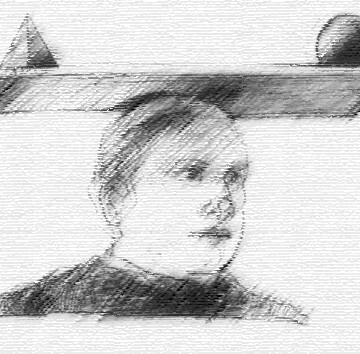
In 525 A.D. the Lady Philosophy reminded Boethius, in his death-cell, that true philosophers must think body, rank, and estate of less importance than their understanding of what was truly their own. This understanding of philosophy, which is also Epictetus’s and Aurelius’s, as something more than a pleasant enough word game, has been neglected by...
Post
The Closing of the Conservative Mind
Why do we call it liberal education? When an eighteen-year-old graduates from high school and goes off to college to pick up a smattering of history and literature, why should we describe his course of study as the liberal arts? Educators once knew the answers to these questions, but it has been many years since...
Post
Everyone Knows
Everyone now knows what the Methodists have done to their hymnal. Inclusive language once again triumphs over not only tradition and elegance, but even reason. Economists arc not exempt from such folly. In an otherwise excellent and informative book, Breaking the Academic Mould: Economists and American Higher Learning in the Nineteenth Century, there is an...
Post
On ‘Globalization’
Regarding my thesis that the 1929 stock market crash was caused by the imminence of passage of the protectionist Smoot-Hawley Tariff Act of 1930, William Hawkins (Polemics & Exchanges, June 1989) dismisses my findings as the work of a mere “journalist, not an economist.” It was precisely my expertise as a political journalist, not an...
Post
On ‘Those Who Can’t Do . . . ‘
I must commend Jacob Neusner for his review of Profscam: Professors and the Demise of Higher Education (June 1989). I should like to note two important scams that Sykes does not address. Sykes would have us believe that professors are, generally, extremely well paid and cites average salaries from prestigious institutions as evidence. But the...
Post
On ‘Letter From Washington’ and ‘Letter From the Southwest’
On ‘Letter From Washington’ In his June 1989 column (“Our Nation, Your Money“), Samuel Francis claims that Carl Hagen’s Progress Party in Norway is one of the right-wing European parties that are nationalist and socialist. In fact, the Progress Party grew out of the Norwegian tax revolt; its platform combines immigrant-bashing with a healthy distaste...
Post
On ‘The Cost of Revolution’ and ‘Burden of Liberalism’
On ‘The Cost of Revolution’ George Watson, in his article “The Cost of Revolution: England and 1789” (June 1989), goes to extensive lengths to distinguish between “revolutions.” Given the “preservative” nature of the pre-1789 experience, one wonders whether the term “rebellion” may be more apposite. Discarding the common dictionary distinction, which hinges on the issue...
Post
“Enemies of Society”
“The essential matter of history is not what happened but what people thought or said about it.” —Frederic Maitland In the late summer of 1985, the San Francisco Bay area celebrated the 40th anniversary of VJ Day and the end of World War II. Part of the celebration consisted of a cavalcade of American Navy...