Affirmative Action Art is all the rage in California. Recently, the California Arts Council decided that, because of ”social conditions which have historically denied some groups access to the mainstream and . . . complicated patterns of cultural bias,” race-blind awarding procedures were no longer adequate. A new “cultural outreach” was called for with hundreds of thousands of dollars especially...
Perversion of the Law
“Perversion of the law” took on new meaning recently when homosexual groups forced Georgetown University—a Catholic school—to grant them official recognition. In a 2-to-1 decision handed down with the unusual stipulation that the case must be reargued before a full appeals court, a three-judge panel of the District of Columbia Court of Appeals reversed a lower court ruling and declared...
The Cultural Alienation of the Press
The cultural alienation of the press was recently seen in its least flattering light, when the Associated Press distributed a picture of a grief-stricken father beside the body of his drowned five-year-old son. Originally published in the Bakersfield Californian, the picture provoked a storm of local outrage: within two days 500 people had called to protest the paper’s exploitation of...
Behind the Pogonias
In 1922 The Literary Digest asked selected American poets and novelists to name “the most important” living American writer: Joseph Hergesheimer finished first and Eugene O’Neill Second; Sherwood Anderson edged out Willa Cather for third. For fifth place James Branch Cabell tied Robert Frost, who first gained wide attention in 1915 with the American publication of A Boy’s Will, his...
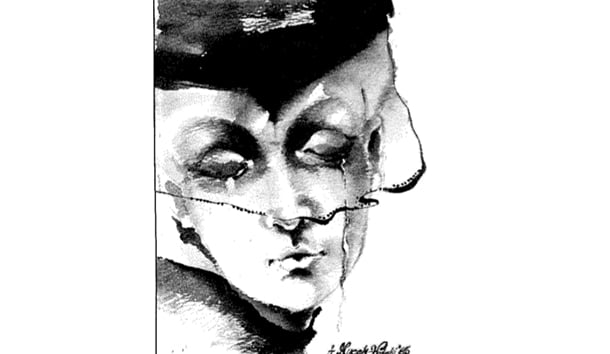
Bianca and the Commissar
I was reading at the Periodicals Room of Yale’s Sterling Memorial Library the other day. The magazine I happened to pick up was called Soviet Literature, subtitled “A Monthly Journal of the Writers’ Union of the U.S.S.R. published in English, French, German, Spanish, Hungarian, Polish, Czech, and Slovak.” The issue, for March 1985, “marked the occasion,” as its editors put...
TRUTH in Green Trousers
When the young American poet Ezra Pound arrived in London in the autumn of 1908, he had considerably more on his mind than a tour of Westminster Abbey and a boat ride down the Thames. He was determined to become a noted poet, and—convinced that his own country was little more than a cultural slum—he had come to England to...
Looking for Love in All the Wrong Places
Love is everywhere the theme of popular culture, but only rarely a subject for serious contemporary philosophy. Irving Singer, professor of philosophy at MIT, attempts to remedy this imbalance with these two volumes, the first two parts of a trilogy. Laudable in breadth and clarity, his work nonetheless reveals only too well why most modern philosophers are embarrassed by love....
Writing Without Letters
Whatever happened to the old middle-to-highbrow American culture? Once upon a time, there was a fair-sized literate class that kept up on fiction and verse by reading the great organs of literary opinion. These days there is a great gulf between serious literature and general-interest journalism. “Literary” magazines—Kenyon Review, Daedelus, or Sewanee Review, for instance—now constitute a small and isolated...
Reagan’s Rhetoric
It may well be indicative of real progress in America that we are now able to read the Presidential speeches of a man that leading commentators frequently declared unelectable a decade ago. But now that Ronald Reagan’s electability is established beyond doubt, the national media have been busy tagging him as the “most ideological” of Presidents. The ordinary citizen, vaguely...
Signs of Life
The ancient Western tradition of political thought, appropriate to men seeking freedom and virtue in community, has in our century been hounded into obscure corners by materialists and romantic revolutionaries. Yet, here and there, the tradition remains alive and even shows signs of a renewed vitality. One such sign is the work of William C. Havard, professor of political science...
Smashing “Ugly Monuments”
Adler begins his latest book with Aristotle’s admonition: “The least initial deviation from the truth is multiplied later a thousandfold.” Adler concludes with a recommendation: “The recovery of basic truths, long hidden from view, would eradicate errors that have such disastrous consequences in modern times.” For 10 delightfully lucid chapters in between, he uncovers and corrects the “initial deviations” that...
An Uncritical Mixture
From its inception in 1923 as the Institute of Social Research until the death of Theodor Adorno in 1969, the Frankfurt School was at the forefront of the debate over the meaning of Marxism. Its leading members included the psychologist Erich Fromm, the sociologists Adorno and Max Horkheimer, the philosopher Herbert Marcuse, the political scientist Franz Neumann, and Leo Lowenthal,...
Playing Pointless Games
Lanham is certainly ambitious enough. He proposes to resolve “three overlapping perplexities”: a literacy crisis so widespread it has shaken our national self-esteem as an educated democracy; a school and college curriculum that no longer knows what subjects should be studied or when; and a humanism so directionless, unreasoned, and sentimental that it seems almost to quest for Senator Proxmire’s...
American Idol
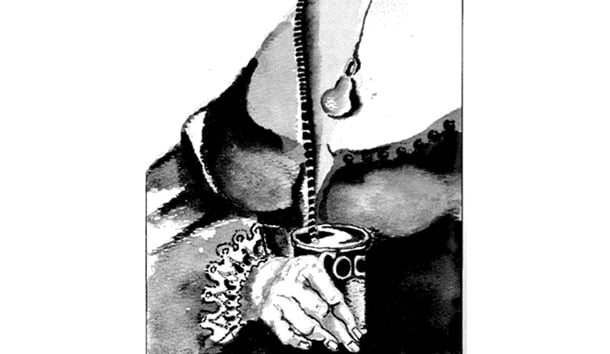
“Eldorado banal de tous les vieux gargons.” —Charles Baudelaire The last sentence in Russell Banks’s magnificent novel is surprising in its inevitability: “Go, my book, and help destroy the world as it is.” Here is a sentence to conclude a politically radical novel, a story of socially revolutionary purpose. But there is no hint in Continental Drift about the personal...
Noble Savagery
The Emerald Forest was often discussed as the surprise film of the summer season. It is certainly that and perhaps more. Although Mr. Pallenberg’s tribute to pristine nature suggests that yet another environmental evangelist walks the corridors of a Hollywood studio, the sheer visual beauty, exacting detail, and anthropological authenticity give this film a majesty rarely found in contemporary movies....
Grand Designs
“Liberty, the daughter of oppression, after having brought forth several fair children, as Riches, Arts, Learning, Trade, and many others, was at last delivered of her youngest daughter, called FACTION.” —Jonathan Swift There are many things wrong with this book, beginning with its title. The Liberal Mind is not what this book is about. (Nor were the 1940’s and 1950’s...
Threepenny Marxist
The Marxist and the artist view human existence in fundamentally different ways. Marxism regards human existence as absolutely knowable because scientific laws govern history and because materialism underlies all of existence. It is not so simple for the artist. Although the artist may study history, he knows that nature is not a closed circle within our grasp, and he regards...
Tell About the South
Why a monthly letter from the South in a national (indeed, international) publication like this one? A good question that deserves a thoughtful answer. When Thoreau heard about the construction of a telegraph from Maine to Texas, it’s said, he asked whether Maine and Texas had anything to say to one another. He meant, of course, that they were different,...
Trenchcoat Treachery
This is a dry, almost mechanical description of a poorly understood but intriguing and vitally important subject: the GRU. After the KGB, the GRU (Chief Intelligence Directorate of the General Staff) is arguably the second largest and most powerful intelligence agency in the world. The author, whose true name and identity are masked, is a defector uniquely qualified to reveal...
Boredom, Sex, and Murder
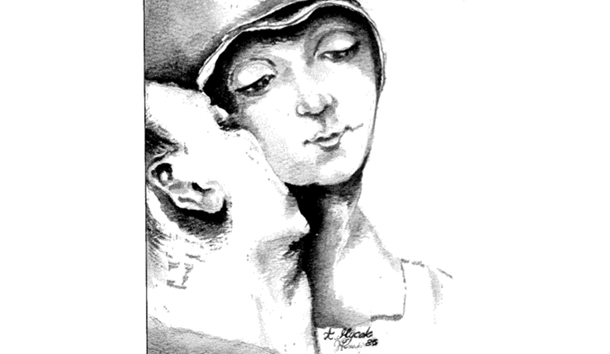
” . . . knew every quirk within lust’s labyrinth and were professed critic in lechery.” —Ben Jonson Cracks are appearing in the idol of high culture fabricated by the Victorians. Matthew Arnold eloquently expressed the vision of the educated person who joins moral commitment with breadth of vision and transcends the narrowness of religion and the shallowness of pure...
To the Pretoria Station
Governments, Lenin once wrote, never fall unless they are first pushed. Whatever his faults, the old Bolshevik must have known something about how to get rid of unwanted regimes. In the Revolution of 1917, it was the Imperial German government that helped to push over what was left of the Russian state by dispatching Lenin and his friends from Swiss...
The Sumptuous Basket
In New York City there is a room for wonder. Each year, for the past decade and more, the exhibitions held in this small room have left viewers in awe. The extraordinary quality of these shows devoted to the art of China makes a visit to China Institute worthwhile at any time of the year, but particularly during one of...
Letter From College
The much-ballyhooed young conservative movement of the early 1980’s may soon come to an inglorious and grinding halt. While the early 80’s were marked by a certain gusto on the part of conservatives fighting to overthrow entrenched liberals, the middle 80’s are a time of unwarranted complacency. One can almost hear cries of “Reagan is in and all’s well!” throughout...
Criticism With Character
This book presents essays written by George Panichas, which initially appeared from 1962 to 1980. Panichas’s essays take the measure of a generation. What is their verdict? It is not a happy one. Panichas finds modern conditions to be those defined by technology and Benthamism, by empiricism and quantification, and everywhere “humanistic values . . . have come under threat...
Waiting For the End
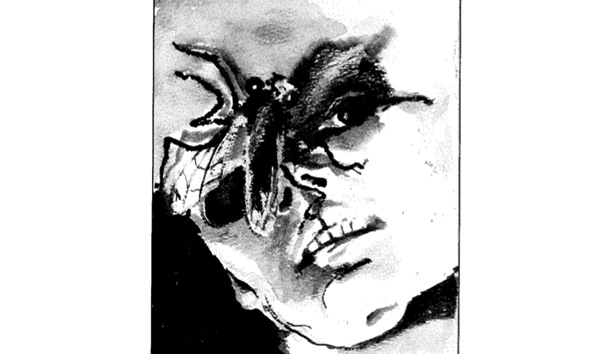
In the Gilbert and Sullivan series running currently on PBS, many American television viewers were treated for the first time to a performance of Patience, a masterful satire on the pretensions of aesthetes-the crowd George I described as “boets and bainters.” When the heroine decides to humble herself by trying to love the high priest of culture, Mr. Bunthorne, the poet...
Economist in the Pulpit
“Dosn’t thou ‘ear my ‘erses legs, as they canters awaay Proputty, pioputty, proputty—that’s what I ‘ears ’em saay.” —Alfred Tennyson George Stigler won the Nobel Prize for Economics in 1982, the second member of the Chicago School to win that award in less than a decade (the other being Milton Friedman in 1976). These prizes are highly visible evidence of...
Scientism’s Sins
Few theologians have influenced the spiritual life of the West as profoundly as the lay physicist Galileo Galilei when he successfully challenged the Church’s geocentric world view. Though the Copernican doctrine he championed was originally discovered by a devout Christian, Galileo redefined it within a mechanistic world view which exiled God to the periphery. Shaped in succeeding centuries by thinkers...

Our Orwell, Right or Left
“Tyranny is always better organized than freedom.” —Charles Peguy In Moscow in 1963, there was a saying: “Tell me what you think of Solzhenitsyn and One Day in the Life of Ivan Denisovich, and I’ll tell you who you are.” A similar principle applies today among Western intellectuals and their opinion of George Orwell and Nineteen Eighty-Four: your attitudes here are...
Academic Anomie & Root-Canal Remedies
“Of skillfully constructed tales . . . there are very few American specimens.” —Edgar Allan Poe During the 1920’s and 30’s, it was possible for a talented young American author to earn a living publishing virtually nothing but short fiction. Scribner’s, Collier’s, The Saturday Evening Post, and numerous other widely circulated magazines all aggressively sought fiction that was not too radically...
The Great Cham at Prayer
For Samuel Johnson, imperatives were dictated by literature and religion. The two were closely tied together in his mind. Indeed, in his laudable study of Johnson’s religious life, Charles Pierce Jr. concludes “that Johnson came to regard his own work as a professional writer with religious seriousness. [H]e believed that his writing was the principle professional means by which he could...
Stretching Angles and Banishing Angels
Geometry, most high school students will attest, is a dull subject. This dullness, however, is not only inescapable but essential. Memorizing theorems and deriving proofs is no fun, but doing such tasks teaches us—as “relevant” and “creative” courses in “communication” or “personal development” do not—that the mind must submit to truth, not the other way around. The only alternative to the...
To Market, to Market
With the rising interest in art education in this country, these two books have appeared at an opportune time. John Hardy translates several essays by the brilliant art historian Max Dvorák that originally were published in Kunstgeschichteals Geistesgeschichte in 1924. Rémy G. Saisselin refers to Dvorák’s explorations of “Geistes geschichte,” which he defines as “the history of the human spirit.” Dvorák was...
Mentor to Chesterton
Encountered in the right circumstances, Belloc’s prose can become a lifelong addiction. Fortunately, the craving can be as readily satisfied as a thirst (if that is the right word) for cocaine in Hollywood. He wrote so much that one cannot easily run out, and the best of his works (Hills and the Sea, The Cruise of the “Nona,” and The...
A Textbook Case
Texas Politics, by Wilbourn Benton, professor of political science at Texas A&M, is a textbook that surveys the constitution of the state of Texas, with heavy emphasis on the written, legal structure of how the state is run. Much of the book is a dry summary. When he can, the author tells the story of the laws he discusses, as...
Passé Passions
Irving Bernstein graduated from the University of Rochester in 1937, the same year as the spectacular series of sit-down strikes in the Midwest industrial heartland, the Memorial Day “massacre” at the Republic Steel plant in South Chicago, and the publication of the LaFollette committee’s report on antilabor techniques. His college years saw the emergence of American industrial unionism with the...
Unsung but Unvanquished
Though one of the original Agrarians—men now widely considered prophets—Andrew Lytle is an unheralded man of letters. He has been an influential editor, essayist, farmer, poet, and novelist; yet, outside of a small group of men devoted to Southern letters, Lytle has not been fully appreciated. John L. Stewart, the oft-praised Northern historian of the Agrarian movement, has concluded that...
Fractured Future
Philip Jose Farmer of Peoria, Illinois, is one of the great masters of science fiction. The first of a new series, Dayworld, depicts events in seven distinctly different, wild Manhattan life-styles of the year 3414 A.D. By portraying a future world government rooted in modern ideas and dilemmas, Farmer continues the science fiction tradition of sounding warnings of possible manipulations...
Perilous Panacea
Books like this one frighten the intelligent reader, while raising the hopes of the naive. By taxing demand deposits at 3 percent per year, Mr. Dahlberg promises to erase all the evils that have tortured this economy for decades. No more inflation, budget deficits, poverty, or unemployment Unfortunately, he is not the first to offer simple solutions to the highly...
Did You Ever . . . ?
The past few years have not been good ones for Southern comedians (some of our politicians aside). First we lost the Reverend Grady Nutt, whose gentle Baptist humor was one of the high spots of the syndicated television program Hee Haw. Southern Baptist preachers drink a lot of iced tea in the line of duty: it was Grady Nutt who...
Transports of Power
“Jason [the tyrant of Pherae] used to say that he felt starved whenever he was out of power.” —Aristotle Phenomena, like words, suffer much in translation. To know is to understand, but to be merely informed is far from knowing. We agonize through our books vicariously, then sit to enjoy our dinner. In the West, and probably in the East...
A Pack of Lies
“The Reverend Canon Kingsley cries History is a pack of lies.” —Bishop Willkin Stubbs Marc Ferro sets out to broaden our horizons. He picks 14 countries (or sometimes ex-countries) to tell us “the vision of the past which is proper to each.” By “proper” he clearly does not mean “correct,” for he puts his stamp of approval on precious little...
Champion of Choice
After a long neglect, the Austrian school of economics is enjoying a resurgence of both academic and lay interest. In 1981, New York University, a center for Austrian economic thought, convened a conference in honor of the most distinguished leader of this school, Ludwig von Mises (1881-1973). A product of that conference, Method, Process and Austrian Economics reflects the inspiration...
The Big Guns Sound Off
The Health Sciences auditorium at Emory University was the scene last April of a two-day discussion, presided over by two former chief executives of the United States: Jimmy Carter and Gerald R. Ford. Invitations for the event came from the Carter Center of Emory University (not actually to be built until 1986), and sponsors included Coca Cola, Delta Air Lines,...
Prime-Time Whitman?
The title alludes to Whitman’s Democratic Vistas, and David Marc, a professor of American Civilization at Brown University, begins, ends, and sprinkles the middle of this study with quotations from Whitman. The preface announces “a Whitmanian faith in the ability of the individual consciousness to mingle with a collective cultural conscious ness.” And part of the book’s strategy is to...
Leave the Kids Alone
The recent Supreme Court decision striking down a Silent Prayer Law in Alabama came as a shock to many people. What harm could be done by a moment of silence that the students were free to dedicate—or not dedicate—to a Supreme Being? Religion, it now seems, is to be treated like the daughter who disgraces herself: it’s not enough to...
The Serbian Muse
The literature of the Serbs must be among the least known in Europe, standing somewhere between the Albanians, whose most famous cultural contribution is John Belushi, and the Scandinavians, who—if they pooled their resources—could field at least a basket ball team of literary celebrities. In modern times, the literary Serb best known to the West has been Milovan Djilas, although...
The Ideological Temptation of the Media
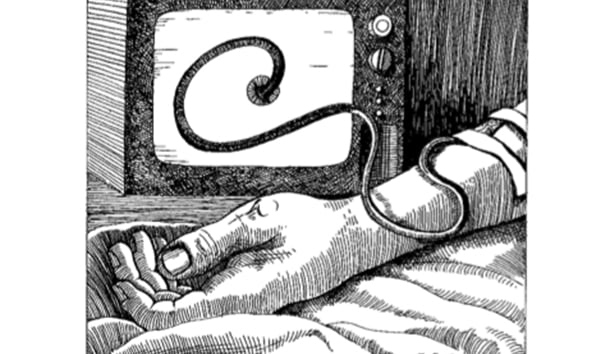
There have been, in recent decades, two focal points around which radical, utopian ideologies could concentrate. As a result, these two focuses-labor unions and youth-were surrounded by a veritable cult, and they acquired power, both political and cultural, even though the second of the two focuses was not, as such, organized, let alone structured. Power and cult were the result...
On Thunder on the Right
Right off, let me say that I agree with 85 percent of what you say, and that I for one applaud your willingness to shoot from the hip: the so-called 11th Commandment of conservatism, “Thou shalt speak no ill of a fellow conservative,” has done nothing but retard the intellectual and moral maturity of the right. That said, I’d like...
Paparazzi
Andy Warhol used to say that the day would come when every American would have his five minutes on the Tonight Show. Warhol, although he squandered his talents on films and interviews with nonentities, was still a prophet of sorts: he must have realized that nothing drives a decadent society so much as the hunger for celebrity. Whenever actors and...
Renaissance in Education
When I accepted President Reagan’s appointment to be chairman of the National Council on Educational Research, I did so because I welcomed the opportunity to learn firsthand how professional bureaucrats approached America’s many and increasingly serious educational problems. After some time spent at my appointed task, I realized that bureaucrats were not capable of solving the educational problem, because they...