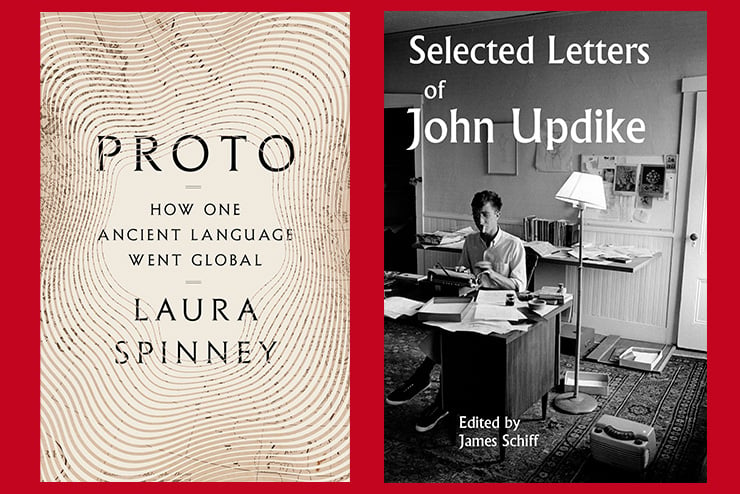
Proto: How One Ancient Language Went Global, by Laura Spinney (Bloomsbury; 352 pp., $29.99). About 5,000 years ago, as civilization dawned in Asia’s fertile river valleys, a band of herdsmen spread from the steppes of their ancestral homeland in what is today southern Russia, roughly where the Don and Volga rivers veer toward each other in massive bends. Laura Spinney, a sometime novelist who also wrote a popular history of the 1918 influenza epidemic, tells the story of these audacious pastoralists who left no written records, few material artifacts, and no lasting constructions apart from burial mounds later called kurgans.
A kurgan typically sat over a pit (yama in Russian) where great warriors were interred. The limited evidence of these Yamnaya people, as Slavic linguistics adjectivized them, suggests that they domesticated horses, cows, and sheep; mastered wheeled transport; maintained a high-protein diet; shared a genetic mutation that allowed them to digest lactose after early childhood; tended to be taller and stronger than the peoples around them; worshipped a sky god whom they honored through animal sacrifice; and functioned in a hierarchical society led by men who prized military prowess.
Initially numbering in the low thousands or even hundreds, the Yamnaya spoke a distinctive language at a time when modern paleolinguists estimate our species experienced its greatest linguistic diversity, with perhaps 15 million humans divided by as many as 15,000 languages, compared with the approximately 7,000 languages (nearly half of which are nearly extinct) spoken by more than 8 billion people today. Within about 1,500 years, that ancient language, now known as Proto-Indo-European, came to dominate human speech from Ireland to India and beyond, with scores of descendant languages spoken by about half of all living humans today.
Spinney’s subject is a vast detective story, spanning thousands of miles and hundreds of years of scholarship, that originated in Enlightenment-era observations of far-flung languages and metacultures sharing unignorable commonalities. New technology has expanded what was once a speculative philological and archeological exercise. Spinney carefully avoids dropping any shoe that could associate her Proto-Indo-Europeans with 20th-century “master race” connotations, but her evidence nevertheless suggests that an exceptionally fit, competitive, and mobile group of ancient humans enjoyed natural advantages that helped them either replace or assume a dominant role over less adept populations.
(Paul du Quenoy)

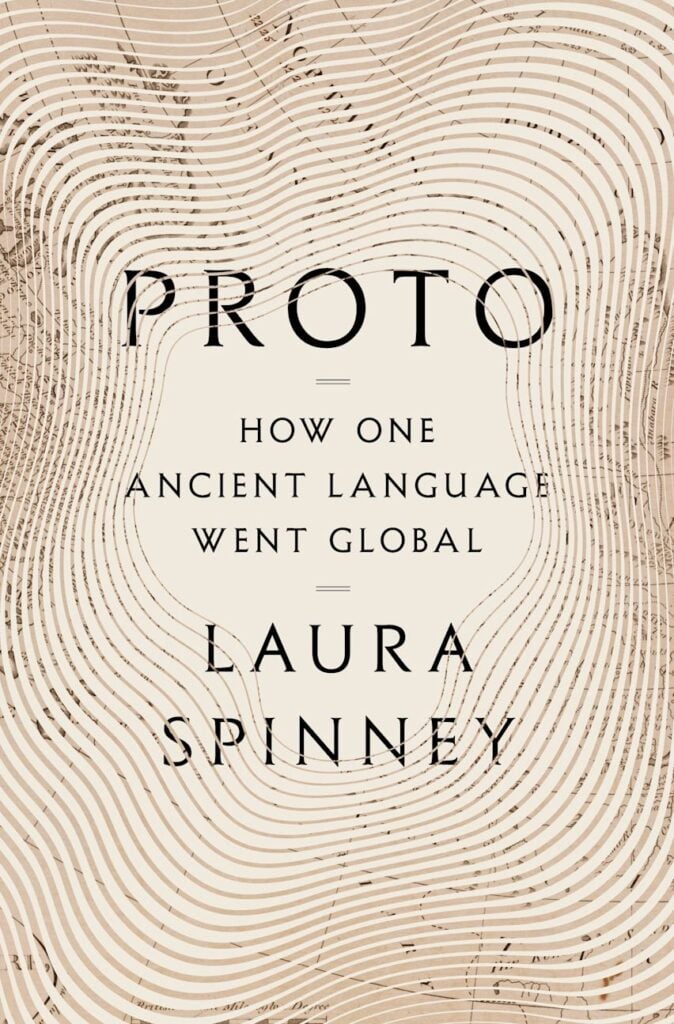
Selected Letters of John Updike, edited by James Schiff (Penguin Random House; 912 pp., $55.00). Authors and their letters! What’s the sense of a literary career without such volumes? Recent years have seen the collections of James Dickey, Saul Bellow, and Norman Mailer, as well as those between Walker Percy and Shelby Foote, and Robert Penn Warren and Cleanth Brooks. The collection of T. S. Eliot’s letters spans 10 volumes, while Ernest Hemingway’s stands at seven.
John Updike’s turn. Updike’s early years read like the classic small-town-boy-meets-big-city-success story: High school valedictorian, Harvard, New Yorker staff writer, and, at age 26, runaway success in 1960 with his first novel, Rabbit, Run. For New York intellectuals, the ’50s was a time of alienation. Updike defiantly declared an optimistic view of this prosperous nation. His subject would be the “American Protestant small town middle class,” and he would pursue it with amazing productivity, writing three more Rabbit novels.
Harry “Rabbit” Angstrom is a red-blooded high school basketball star whose fortunes take a dramatic downturn in adulthood. The novels take place in the author’s home in eastern Pennsylvania. The familiar setting inspired Updike’s vivid, lyrical prose. Domestic tranquility, as represented by life around the dinner table or the television room, is at the heart of Updike’s fiction. Any young person who reads Updike will immediately want a family of his own.
Was Updike’s optimism warranted? In the late ’60s and early ’70s, American culture was falling apart, and Updike addressed the chaos in the second novel of his tetralogy, 1971’s Rabbit Redux. It is Updike’s civilizational novel, in which Rabbit’s family drama unfolds amid urban decay, race, violence, and promiscuity.
Yet the times did not shake Rabbit’s belief in America.
Some of Updike’s later correspondence was with such fellow writers as Philip Roth and Joyce Carol Oates, who, like Updike, were avid long-distance runners. The three enjoyed their status among America’s most famous writers. Updike and Roth made light of the culture wars, tearing down the artifice of American letters. Updike may not have realized the depth of the left’s hostility toward men. In 2022, Oates famously declared that New York agents were no longer interested in books by white males.
Updike, however, cannot be ignored. Few gave more to the cause of American literature, and no one is more inspirational to young Americans who aspire to write the next Great American Novel.
(Joseph Scotchie)
Leave a Reply