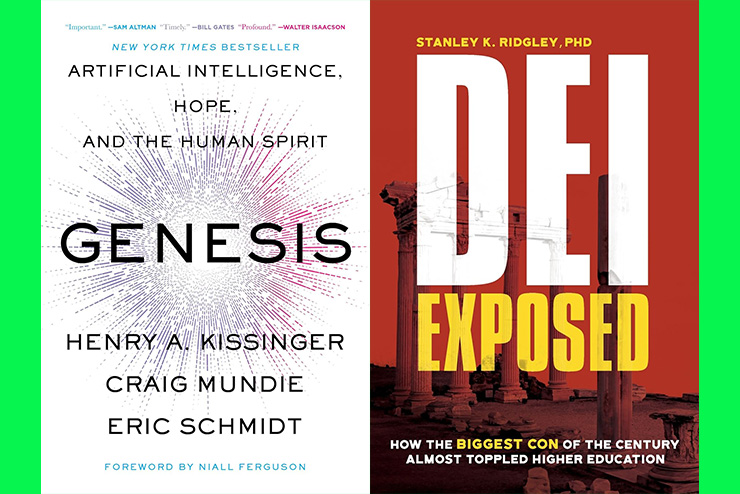
Genesis: Artificial Intelligence, Hope, and the Human Spirit, by Henry A. Kissinger, Craig Mundie, and Eric Schmidt (Little, Brown and Company; 288 pp., $30.00). This is Henry Kissinger’s last book. But, since he died before it was finished, it is disproportionately influenced by the former Nixon Secretary of State’s co-authors, executives from Microsoft and Google. The two are ardent fans of artificial intelligence, but have done little serious thinking about its moral or political implications.
The chapter titled “Politics” most clearly bears Kissinger’s imprint, though it suspiciously ends with the same tenor of uncritical optimism that marks the rest of the book. If Kissinger truly did believe that superior machine rationality could eternally pacify human politics, that idealism is in stark contrast with the rest of his career and writings, which were characterized by a realist view of politics as inherently driven by competing interests. There is almost no real consideration within this book of the limited likelihood of international agreements to regulate AI research, or of how the Chinese presence in this competition skews everything in a morally troubling direction.
The book’s biggest problem is that it carefully sidesteps the central question of AI superintelligence, which all the major research firms and state-sponsored efforts are currently avidly pursuing. The existential risk of this technology is posed urgently in the title of another recent book by Eliezer Yudkowsky and Nate Soares: If Anyone Builds It, Everyone Dies.
Genesis is mostly unconcerned, however. The authors speculate blithely about how AI might alter the genetic code of some humans so they “become superhuman.” They admit we know next to nothing about the intentions of AI models, yet they are only mildly troubled by it. “We’ll figure it out” is the general tenor of the narrative. Astoundingly, they consider it a plus that American developers have eagerly made AIs available to the public, imagining that because we are being acclimated to them, they are, somehow, also safer. More skeptical observers consider the failure to isolate AIs during their development a major catastrophe in the making.
The authors agree that even one AI “unaligned with human values” is too many, but then admit to a relativist position on the matter of human values. Parts of the book read as though they were themselves written by AI trying to make the best case for its own continued existence. One easily imagines that Genesis might be one of the sources recommended by an AI search engine for references on the risks of artificial intelligence: Read this, human. See? Nothing much to worry about.
(Alexander Riley)
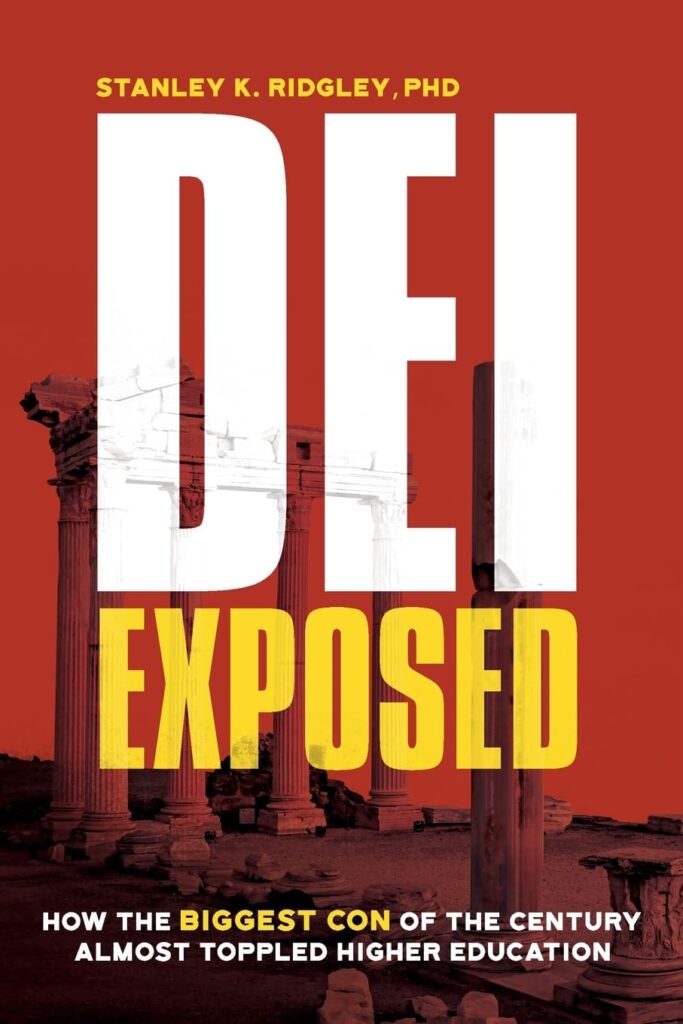
DEI Exposed: How the Biggest Con of the Century Almost Toppled Higher Education, by Stanley K. Ridgley (Armin Lear Press; 458 pp., $27.95). Writing this book must have been cathartic. Across 12 vituperative chapters, Drexel University Professor Stanley Ridgley refuses to hide his scorn for the diversity hustlers who have corrupted academia.
In Ridgley’s telling, the academic mainstream, populated by vain, credulous white liberals, was taken by surprise during the post-2020 “racial reckoning.” Ambitious interlopers accelerated the takeover of the modern university—“the crowning achievement of Western civilization”—and opportunistically sold indulgences to their unsuspecting victims. It was, as Ridgley says, the “con of the century.”
The first problem with this narrative, which is underlined by the book’s subtitle, is that it treats liberal universities as hapless victims of a complicated illusion. A more realistic account would see them as collaborators that benefited from the spread of the DEI contagion.
This caveat aside, Ridgley skillfully illustrates the DEI enterprise’s shamelessly corrupt and self-referential nature. The book establishes a link between the inflated narrative of white oppression and the paranoid psychology of failed intellectuals who found safe harbor in the ideology of victimhood. The middle chapters highlight how obscure academics invented ideas like “white privilege” and “microaggression” to stoke racial hysteria, and how the popularity of those ideas has redounded to their financial and professional benefit.
DEI Exposed is a culture war screed, and its derisive tone will resonate with the emotional register of Fox News’s audience. But its content is a step or two above the usual center-right media offering. Ridgley takes on vague bromides about “merit” and argues the essential and crucial truth that DEI is primarily about the moral, psychological, and financial exploitation of white people.
After railing against DEI advocates for 10 chapters, Ridgley strays into inconsistency when he condemns them for failing to include Jews within their circle of protected racial identities. It would have been better if he stuck with criticizing the tactic completely, instead of pointing out where it should have been applied more broadly.
While it offers nothing groundbreaking, DEI Exposed is an informative and sharp overview of a malign industry that, we can hope, is now in terminal decline.
(Matthew Boose)
Leave a Reply