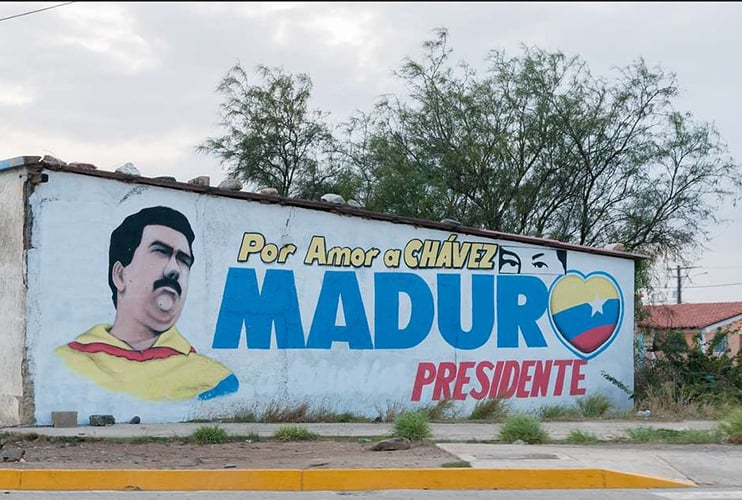
President Donald Trump’s operation to bring former Venezuelan leader Nicolás Maduro to justice marks a seismic shift in Latin American geopolitics. The move is not only a chance for a brighter future for Venezuela’s citizens, who have endured economic collapse, hyperinflation, and authoritarian rule under Maduro’s regime, but it also opens the door for the United States to reset its immigration and border policies with Venezuela to create a safer America.
A potentially more stable and less hostile government in Caracas would allow America to expedite deportations, curb violent border crossers, and stem the tide of illicit drugs. The end result? Safer communities across the U.S. and fewer preventable deaths among our citizens.
For years, the Maduro regime’s instability has fueled a humanitarian crisis, driving millions of Venezuelans northward in search of refuge. While some may be genuine asylum-seekers fleeing oppression, the chaos has also allowed dangerous elements to exploit our formerly porous Biden-era borders. Chief among these threats is the transnational gang Tren de Aragua (TdA), which originated in Venezuelan prisons and has metastasized, claiming a strong presence in U.S. cities under Maduro’s rule.
This syndicate, known for extortion, kidnapping, and violent turf wars, has most notably terrorized Aurora, Colorado, where local authorities have documented TdA’s involvement in crimes ranging from robbery to money laundering. TdA members in Aurora have been linked to armed takeovers of apartment complexes, displacing residents and overwhelming police resources. A federal crackdown in late 2025 indicted dozens of TdA affiliates for drug trafficking, murder-for-hire, and firearms offenses, highlighting the gang’s nationwide reach.
Maduro’s fall from power presents an opportunity to dismantle this menace at its roots. Under his regime, Venezuela’s government was uncooperative, if not complicit, in shielding criminals from extradition. A new, post-Maduro administration, potentially led by opposition figures committed to democratic reforms, could collaborate with U.S. immigration authorities to verify identities and criminal records more swiftly. This would accelerate deportations of TdA members and affiliates, many of whom entered the U.S. illegally or under false pretenses during the migration surge.
The human cost of unchecked Venezuelan migration under Maduro extends beyond gang activity. Too many Americans have fallen victim to violent criminals who slipped through the cracks of a broken immigration system. Among them was Laken Riley, a 22-year-old nursing student at Georgia’s Augusta University who was brutally murdered in February 2024 while jogging on campus. Her killer, José Ibarra, a Venezuelan national who entered the U.S. illegally, had prior arrests but was released due to sanctuary policies and overwhelmed border enforcement. Ibarra was convicted of murder and sentenced to life in prison, but Riley’s death ignited national outrage over immigration lapses.
Similarly, in June 2024, 12-year-old Jocelyn Nungaray was abducted, raped, and strangled in Houston, Texas, her body discarded in a creek. The accused perpetrators, two Venezuelan men who crossed the border illegally, were detained, but only after the irreversible loss of an innocent child.
These cases are not isolated. They underscore a pattern where Maduro’s failed state exported not just refugees, but predators who prey on vulnerable Americans. With Maduro gone, a reformed Venezuelan government could provide better intelligence sharing and repatriation agreements, allowing the U.S. to screen and bar high-risk individuals more effectively.
Compounding these threats is the Maduro regime’s deep entanglement in the global drug trade, which has flooded U.S. streets with deadly illicit drugs like fentanyl. Since 2020, the U.S. Justice Department has charged Maduro and his inner circle with narco-terrorism, accusing them of conspiring with cartels to traffic cocaine and other drugs northward.
Venezuela, under Maduro, became a preferred transit route for narcotics, exacerbating America’s opioid crisis and contributing to tens of thousands of overdose deaths annually. Fentanyl, often laced into other drugs, has devastated families from coast to coast, with Venezuelan ports serving as key smuggling hubs.
The Trump administration’s action against Maduro should disrupt these networks profoundly. By working with a Venezuelan government less tolerant of corruption, the U.S. can negotiate anti-trafficking pacts, joint interdiction operations, and economic incentives to seal off smuggling routes.
This shift promises to save countless lives, reducing the importation of fentanyl, which is the leading cause of death for Americans 18-45 years old. By resetting immigration policies, we can deport gang members faster, bar violent predators, and choke off drug pipelines. The outcome will be significant: quieter streets in places like Aurora, justice for families like those of Riley and Nungaray, and fewer funerals from overdoses. Venezuela is entering a new era. America, too, can enter a new era, one that is safer and stronger.
Leave a Reply