Category: Reviews

Home Reviews
Poetry You Can Read
Post

Poetry You Can Read

“It seemed so simple when one was young and new ideas were mentioned not to grow red in the face and gobble.” —Logan Pearsall Smith In his introduction to the 1962 Penguin anthology Contemporary American Poetry, Donald Hall wrote, “For thirty years an orthodoxy ruled American poetry. It derived from the authority of T.S. Eliot...
One, Two, Many Colombias
Post

One, Two, Many Colombias

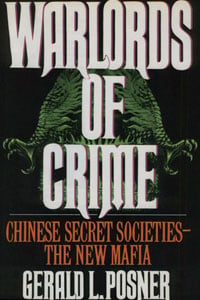
Great Britain’s decision to transfer control of Hong Kong to Communist China by 1997 has spurred a flight from the colony. Despite reassurances from Beijing, money is flowing out of Hong Kong at an accelerating rate. Among those who are moving their assets are the Chinese crime syndicates—the Triads. While they are expanding their criminal...

Feminism Fatigued
Post

Feminism Fatigued

The feminist century—ours—is markedly different from any period known . . . I was going to say “to man” but perhaps we don’t talk that way anymore. Events have transformed the relationship of the sexes from one in which men occupied most leadership roles to one in which women make laws, minister the sacraments, and...

The Suez Files
Post

The Suez Files

One reads this book almost with nostalgia. The 1950’s, and the dramatic events that occurred during that decade in the Middle East, are the subject of these historically important recollections by Mohamed Heikal, confidant of Gamal Abdel Nasser and distinguished editor of the Cairo newspaper Akhbar el-Yom. Heikal reminds us that during the 1950’s relations...

Pire qu’un Crime . . .
Post

Pire qu’un Crime . . .

“Arts, Culture, Reverence, Honour, all things fade. Save Treason and the dagger of her trade . . . “ —Oscar Wilde, “Libertatis Sacra Fames” The Pollard treason case is so unusual that I want to start my review of this book with a review of the reviews. I do this because the first-hand story by...

Post

Understand Me Completely

Ordinary people, we are told, ordinarily speak in cliches, bromides, and dotty banalities, and it is the task of the literary artist, of the playwright in particular, to give them expressive and convincing words. This is the practice of Aeschylus and Shakespeare, of Tennessee Williams and Tom Stoppard. The success of heightened language upon the...

Dionysus in the Trenches
Post

Dionysus in the Trenches

In his masterly Ideas Have Consequences, Richard Weaver (who was fond of the long view) marked the decline of the West from the late 14th century with the development of William of Occam’s doctrine of nominalism. In the short view, though, it is obvious that the Great War was the watershed of modernity: what remained...

A Tour of the Labyrinth
Post

A Tour of the Labyrinth

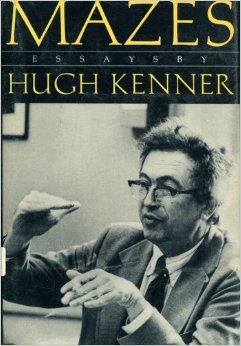
Hugh Kenner, by day an unassuming professor of English literature at the Johns Hopkins University, is our foremost practitioner of the ancient cult of the maze, a celebrant of this endless labyrinth in which we live. Confronted with its mysteries, Mr. Kenner, the new Theseus, confidently draws on a lively knowledge of science, technology, music,...

A Local Globalist
Post

A Local Globalist

“But they who shared with me my life’s adventure. Who tossed their ducats like dandelions into the sunlight, I know that somewhere they with songs are building, Golden Towers more beautiful than my own.” —”Golden Symphony” Here we have a series of books—two more are planned—that restore to view the literary career of John Gould...

The Twenty Years’ War
Post

The Twenty Years’ War

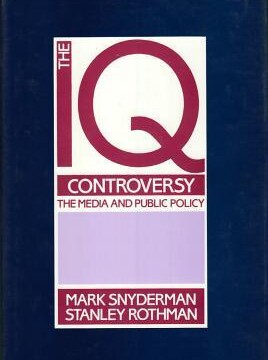
“Intelligence” may offer the clearest example we have of how ideology can corrupt social science. Although the topic has been politicized by both left and right, during the last generation the ideological pressures have come almost entirely from the left, and along these lines: that intelligence is essentially the product of experience—above all, the nature...

Learning to Behave
Post

Learning to Behave

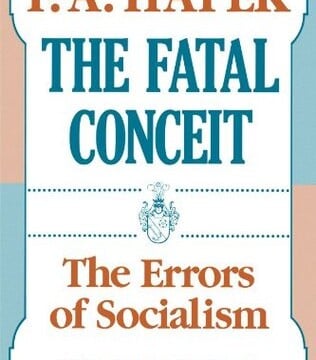
When I heard on the radio one morning in 1974 that Friedrich Hayek had won the Nobel Prize in economics, my first thought was, “Not our Friedrich Hayek?” A few hours later, upon meeting a libertarian acquaintance of some prominence, I asked, “Did you hear about Hayek?” The reply was: “No. Did he die?” I...

Zorba the Comrade
Post

Zorba the Comrade

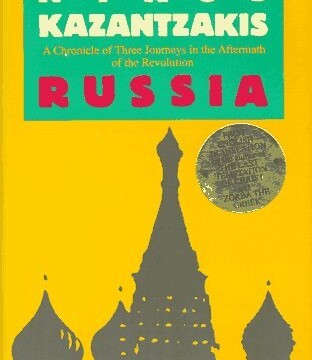
Love him or hate him, Nikos Kazantzakis is a force to be reckoned with. Best known in America for Zorba the Greek and—thanks to the Martin Scorcese movie—The Last Temptation of Christ, Kazantzakis wrote what many consider to be the greatest epic poem of the 20th century, The Odyssey: A Modern Sequel. His impact today,...

Beyond All This
Post

Beyond All This

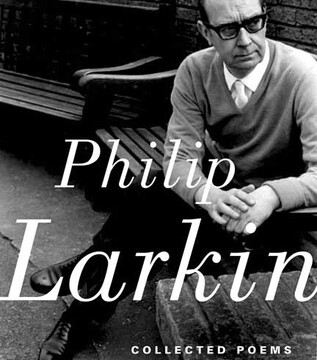
” . . . the wish to be alone.” —”Wants” Philip Larkin, who died in 1985 at the age of 63, has been commonly regarded as the finest English poet of his time. His reputation is founded not merely on the opinion of professional critics but on his remarkable popularity with readers, including many who...

The Terrestrial God
Post

The Terrestrial God

It all depends on what we mean by “sacralizing” and “sacred,” and to a lesser extent by “secular.” The fact that Professor McKnight is a student of Eric Voegelin should not be left unmentioned in this regard, because for the recently deceased great scholar, “sacred” remained an elusive term. The word certainly referred to a...

Post

The Ten Deadly Sins

This book, originally published in Czech in 1973, is based on an amusing literary conceit. Ronald Arbuthnott Knox, an English Catholic priest and important early 20th-century theologian, was also a distinctive figure in the development of the genre of detective fiction. A pretty fair writer of detective stories himself, he also (for instance) wrote a...

Post

Kings of the Wild Frontier

Until 20 years ago, one could count on Hollywood to produce at least one film every few years dealing with early American history. John Ford gave us Drums Along the Mohawk in the 1940’s, and Disney gave us the Swamp Fox in the 1960’s. Such movies may have given the public only “popular” history (before...

Post

The American Covenant

“It is extremely frustrating to write history today because so much effort must go toward correcting the countless distortions that have been inserted into accounts of our heritage by militant secularists who twist facts to suit their narrow anti-religious political agendas.” So writes Benjamin Hart near the end of Faith and Freedom: The Christian Roots...

Post

How the Fourteenth Amendment Repealed the Constitution

“It is easier to make certain things legal than to make them legitimate.” —Chomfort The evisceration of the federal system by the Supreme Court during the last few decades—indeed, most of the modem malfeasance of that august body—has been accomplished largely through the instrumentality of the Fourteenth Amendment. This sorry tale, from the adoption of...

Post

The Ties That Bind

“The state has no tool delicate enough to deracinate the rooted habits and tangled affections of the family.” —G.K. Chesterton Allan Carlson is a humane man, an effective polemicist, a dedicated familialist, and a scholar trained in macroeconomic theory with its panoply of techniques and its characteristic lingo—opportunity costs, utility curves, and the like. This...

Post

Economic Man

Economists, with justice, are accused of holding a narrow, one-dimensional, and somewhat pedestrian world view. Noneconomic factors can determine how well a society is organized, say the critics. An efficient price system won’t solve all of society’s problems; there are also cultural and moral problems that can undermine society, and these have no economic fix....

Post

All For Love

“Alas, that love should be a blight and shame To those who seek all sympathies in one!” —Shelley, “Laon and Cythna” With the publication of the first volume of an expanded edition of her letters in 1980, and now this biography, Mary Shelley’s reputation is being reconsidered. This renewed attention is not due to the...

Post

The Two Enlightenments

Stanley Rosen may be every anti-Straussian’s favorite Straussian. Never mind that he denies his own paternity and affirms to his friends and critics: “I am not a Straussian.” Like the postmodern anti-Platonists he describes in his collection of essays, Rosen draws heavily on the school of thought he claims to transcend. One problem among the...

Post

The Sociological Model of Law

There is an adage among lawyers and judges that the two commodities a consumer never wants to watch being made are sausages and justice. Donald Black, University Professor of the Social Sciences at the University of Virginia, disagrees. Professor Black is a sociologist, and he explains much of our legal system’s indeterminacy by examining voluminous...

Post

What Makes a Nation?

When Fernand Braudel died in 1985, The Times of London called him “the greatest of Europe’s historians.” In spite of Braudel’s great merits, many would question this accolade. Indeed, he may be assigned a place among those contemporary historians who justify, by their oeuvre, the sociological school, and who therefore have “betrayed” the historian’s true...

Post

Babes in Gangland

E.L. Doctorow is our loudest contemporary champion of the social novel, whose defining characteristic he posits as “the large examination of society within a story” of “imperial earthshaking intention.” (The genre’s American apotheosis is Frank Norris’s The Octopus.) Billy Bathgate is Doctorow’s latest, and if his publicist’s yowling chorus of “masterpiece” is a bit much,...

Post

The Politics of a Death

It is difficult to think of a case comparable to the murder of Sergei Mironovich Kirov. Here one of the top leaders of a great country was killed—most probably by the wish of the supreme dictator, the murder being used as full or partial justification for the arrest, torture, exile, or execution of many, then...

Post

Passion and Pedantry

“Lord, what would they say Did their Catullus walk this way?” —W.B. Yeats William Butler Yeats’s picture of the scholar is not a pretty one (“All cough in ink. All wear the carpet with their shoes.”) and literature does not give us many scholarly heroes. Most literary pedants are like George Eliot’s Casaubon; boring, impotent...

Post

Objection Sustained

The interdisciplinary field of law and literature is burgeoning, and various academics are making grandiose claims. “The field envisages,” says Richard Posner, “a general confrontation or comparison, for purposes of mutual illumination, of two vast bodies of texts, and of the techniques for analyzing each body.” The pretensions of this fledgling movement, however, indicate that...

Post

How to ‘Out G theG’

Colonel David Hackworth’s highest accolade is to call a man a “stud.” He is certainly deserving of the moniker himself. An Army volunteer at the age of 15, the recipient of a battlefield commission at 20, four times wounded before he was 21, a hands-on battlefield expert on counterinsurgency, an expert leader of men whose...

Post

Wild About Budapest

Come down the Danube through a “painters’ paradise” of low hills, past a “bosky island,” around a bend where suddenly the spires and parapets and bustling quays spread before you “in a pearly, blue-gray light.” Glimpse the Royal Castle, its cupola “studded with stony warts, a suggestion of an old Magyar warrior’s semibarbaric helmet.” Debark...

The Ethics of English
Post

The Ethics of English

“When a thing ceases to be a subject of controversy, it ceases to be a subject of interest.” —William Hazlitt The treason of the teacher of English: that is the principal subject of Professor Booth’s discourses over two turbulent decades in the academy. Dr. Booth, a temperate rhetorician, does not call this dereliction of duty...

Post

As We Go Marching

” . . . Your tragic quality Required the huge delusion of some major purpose to produce it. What, that the God of the stars needed your help?” —Robinson Jeffers, “Woodrow Wilson” “When a term has become so universally sanctified as ‘democracy’ now is,” wrote T.S. Eliot in 1939, “I begin to wonder whether it...

Post

“Enemies of Society”

“The essential matter of history is not what happened but what people thought or said about it.” —Frederic Maitland In the late summer of 1985, the San Francisco Bay area celebrated the 40th anniversary of VJ Day and the end of World War II. Part of the celebration consisted of a cavalcade of American Navy...

Post

The Streetwalker’s Story

Prostitution may not deserve its reputation as the world’s oldest profession, but it has been around for millennia, appearing in virtually every society. In this revised edition of a book originally published in 1978 (under a slightly different title), Vern Bullough and Bonnie Bullough document the ubiquity and diversity of prostitution, tracing the practice from...

Post

Good as Goldwyn

“They designed an entire solar system in just six seconds. It took God six days, if you believe the Old Testament.” —Gene Roddenberry in an interview “It’s not his life, it’s a fairy story,” wrote John Dos Passos of the life of Sam Goldwyn in a documentary section of Mid-Century (1961). Even though Dos Passos...

Post

Waters of Life

The Arkansas River is born from melting snow on Mt. Arkansas at 13,795 feet above sea level in the state of Colorado. Rushing down through cataracts and gorges, it gathers strength from a multitude of rivulets and creeks to burst free from the mountains laden with silt. Across the Great Plains of eastern Colorado and...

Post

Our Postmodern Age

Eliseo Vivas once said, “I would not for a minute pretend solidarity with men who do not realize that one of the essential marks of decency today is to be ashamed of being a man of the twentieth century.” He had no desire to turn the clock back; he was simply advocating that rather than...

Post

Novel Ideas

“Nigger” is the word upon which Bill Kauffman balances and dances his first novel, Every Man a King. It is, to say the very least, a difficult word. It is a word denied to white lips in polite society, and is now heard only coming with any frequency from trash-mouthed blacks. The saying of the...

Post

The Structure of Meaning

Levy’s latest and very ambitious new book is an inquiry into the fundamental characteristics of political order from two perspectives: philosophical anthropology and the political philosophy of Eric Voegelin. The outcome is a vigorous defense of our institutions and traditions. The anthropological perspective has its roots in Max Scheler’s work in the 1920’s and 1930’s....

Post

By Blab Befuddled

Words cannot take us everywhere, nor should they. Before the most sublime truths, we grow reverently still. Confronted with bestiality, we shudder at the unspeakable. But in the Age of Blab, everything must be talked about.” Indeed, modem journalists consider it progress to be able to chat endlessly about depravities our wiser ancestors refused even...

Post

A Cultural Cincinnatus

There are passages, even whole poems in Fred Chappell’s new collection for which there are clearly precedents in, or one might say kinships to, the work of other poets. The urbane chattiness of “Subject Matter,” for instance, makes no bones about it. It is nice to imagine how Auden would open a poem about the...

Post

The Ethos of Freedom

“That’s just rhetoric!” So we dismiss statements we have little respect for. Readers of Tacitus’ Dialogue on Orators will remember that the Roman historians thought that eloquence is a sign of a free state. There was a time when the speeches of Burke and Canning, of Daniel Webster and Abraham Lincoln were studied in school...

Post

The Other Jewish America

From the general media and Jewish weeklies published in most large American cities the reader will learn more than he cares to about the political and social doings of what Ze’ev Chafets calls “federated Judaism,” an interlocking directorate of the leadership of upscale synagogues, the fund-raising community federations, and the inevitable country clubs. These people...

Post

Merlin of the Woods

The matter of the Celts has had a strong hold on the English-speaking imagination for a long time, at least since the publication in the mid-18th century of the forged Poems of Ossian; but it was a symbolic moment of great importance when Matthew Arnold told his Oxford audience how, on a seaside holiday at...

Post

Blaming America First

Paul Hollander is dogged, if not downright mulish, in his intellectual focus. As is the case in Soviet and American Society and his celebrated Political Pilgrims, this collection of previously published articles and reviews explores the perceptions and beliefs of American intellectuals in regard to Marxist-Leninist countries. What Hollander lacks in the flourish and breadth...

Post

The 31st President

George Nash, though still in his early 40’s, has become one of our most prolific American historians. His output consists of a seminal study of the postwar American Right, numerous essays on American conservatism, and since 1975 a multivolume biography of Herbert Hoover. His exhaustive research into Hoover has yielded an introductory volume of more...

Post

The Straight and Narrow

“Lessons are not given, they are taken.” —Cesare Pavese Although subtitled The Invisible Revolution in the Third World, Hernando de Soto’s The Other Path is as much revelatory as revolutionary. For one who has grappled with the problems of Third World development, seeking to define and articulate a certain truth sensed to be hidden beneath...

Post

Soviet Strategy

“He crucified noble, he sacrificed mean, He filled old ladies with kerosene. While over the waters the papers cried ‘The patriot fights for his countryside!'” —Rudyard Kipling, “The Ballad of Boh da thone”     For 40 years two topics have dominated popular discussions of international conflict. The first is the specter of nuclear war...

Post

Family Finances

Once a social ideal for many Americans—progressive reformers, labor leaders, enlightened businessmen like Henry Ford, and some New Dealers—”the family wage” has fallen into disrepute in recent decades. Under the spell of egalitarian feminists, America’s political and cultural leaders now reject as hopelessly “sexist” the notion that a man should earn enough to support his...

Post

Those Who Can’t Do . . .

I wanted to hate this sustained attack on the academy, which condemns everything to which I have dedicated my life, but I loved every word. This man is a truth-teller, therefore he is shrill, obnoxious, abusive, aggressive, offensive, and absolutely right. His indictment spells out the following academic felonies: “teachers who don’t teach, students who...