Farming “will remain the same though Dynasties pass,” thought Thomas Hardy. In our own day, the farmer is beginning to be treated like an endangered species, a poor moulting bird that tenderhearted environmentalists want the government to take under its brooding wing. Hollywood became interested in him a few years ago, and a spate of movies with well-known actresses appeared...
Trojan Asses
“Then unbelieving Priests reform’d the nation, And taught more pleasant methods of salvation.” —Alexander Pope, An Essay on Criticism On April 22, 1950, I published in the London Tablet an article entitled “The American Catholics Revisited,” which provoked an avalanche of letters to the editor, wildly protesting against my observations. Nearly all of them came from “God’s Own Country.” My...
The Poet and the Plowman
Surprisingly often we talked about Vergil, usually about the Aeneid, but sometimes about the Georgics, and then with the wry sentimental fondness of old students who had been made, not quite willingly, to go to school to the poem. And during the plentiful longueurs of the Redskin games of the mid-1960’s, we would regret that so many traditional attractions of...
Pastor to the Pariahs
Dramatic conversions happen. F.F. Bruce, the noted New Testament scholar, is not alone in insisting that no one can understand Paul of Tarsus without considering his experience on the road to Damascus. And whether you believe, as Christians do, that he there met the resurrected Christ or not, all admit that he was not the same man afterward: Saul the...
Price Supports & Poetic Justice
Next winter it’s Phoenix or Honolulu for me, courtesy of the Writers’ Set-Aside payment I’ll be getting from my Uncle Sam. The program—a brilliant idea, if you ask me—started with farmers, of course, getting paid to let certain fields lie fallow or to give up certain crops for a time because the market couldn’t support any more wheat or sunflowers;...
Selling the Farm: Country Music in the 80’s
If it ain’t broke, don’t fix it. For 30 years country music has alternately ignored and embraced that small truth, always bouncing between the apparent threat of extinction and last-minute rescue. And now, after a decade of “evolution” and “transition,” the country music industry again is surprised that the real thing was good enough all along; that, indeed, the real...
Letter From the Lower Right Poetic Gems
Alas, for the South! Her books have grown fewer— She never was much given to literature.” . . . Thus, South Carolina’s J. Gordon Coogler—“the last bard of Dixie, at least in the legitimate line,” as H.L. Mencken put it in his scathing essay “Sahara of the Bozart.” Mencken’s essay has by now introduced several generations of readers to the...
The Re-Possessed
“In the end I shall have to renounce optimism.” —Voltaire Among other, more profound things, Dostoevski’s anti-revolutionary novel, The Possessed, is a withering dissection of liberal intellectuals. In its pages, liberals parade as hostile and irresponsible critics of a society that affords most of them a life of comfort and status. They are the “fathers” of those nihilist sons who...
California Monologue
Author of one previous history of the American West, Richard Batman has attempted in The Outer Coast to provide a history of foreigners in California from the founding of the first mission in 1769 until the attempted annexation of Monterey by a drunken American Navy captain in 1842, which, in Batman’s eyes, marked the end of California’s isolation from the...
Disintering Détente
The Soviet Union has reached the peak of its military power by reducing its economy to a shambles. If it continues to lavish its resources on the military, the economy will further decline, eventually imperiling the military budget. If the Soviets shift investment to the civilian economy, less money will remain for guns. If the Politburo permits significant economic reform...
The Maze of Metaphor
Jacques Derrida has in recent years made himself one of the most influential figures in literary criticism on American college campuses. The movement he has inspired, alternately known as “deconstruction” or “poststructuralism,” asserts that all language is metaphorical and that there is nothing outside the literary text. Following Derrida’s lead, Joseph G. Kronick challenges the traditional concepts of literary history...
Fruitless Grain
The great American story for at least 100 years has been a tale like Mr. Smith Goes to Washington or Hawthorne’s “My Kinsman Major Molineux”: the rube who comes to the city and loses his innocence. Like Jack in the fairy tale, we are eager to trade in the family cow for a chance to get fabulous wealth. The change...
Hillbillies and Rednecks
“Taake my word for it, Sammy, the poor in a loomp is bad.” —Tennyson Two professors at Mississippi State University, a sociologist and a communicationist, have decoupaged their observations, experiences, and intrapsychic projections into a “phenomenological analysis” of The Southern Redneck. If their work has any redeeming social value, it is as a kind of thematic apperception test that tells...
The Gelded Age
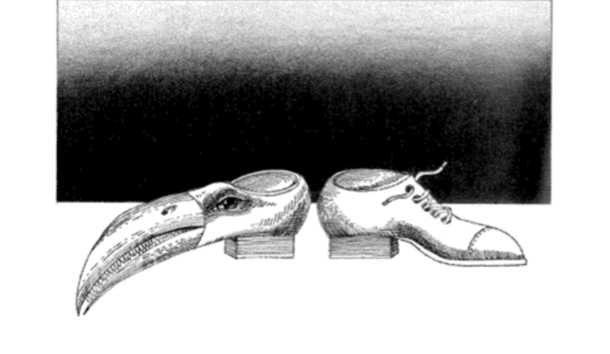
“If the Model Boy was in either of these Sunday schools, I did not see him.” —Mark Twain What do men want? In the gloried 1950’s, Sports Afield and Rod and Gun exemplified a male ethos resting on the quest for game by the primeval hunting band. With Playboy, Hugh Hefner moved the American male indoors. The plush apartment, the...
Companion to Coleridge
In graceful prose not unworthy of his subject, the distinguished English biographer Lord David Cecil paints an endearing portrait of “St. Charles,” as Thackeray was later to call Lamb. Saint he was, certainly, and sinner, too. The death of Lamb’s mother at the hands of his intermittently mad sister, Mary, caused him lasting grief and was permanently to color his...
The Eyes of Adam
Alberto Giacometti was almost a living caricature of The Modern Artist. Such a judgment would strike his biographer as unfair, but it cannot be helped. The popular mind has formed some definite ideas about how an artist behaves: he is above all shabby—wearing clothes he might have slept in, spattered with paint (or caked with dust), badly in need of...
Shotgun Marriage
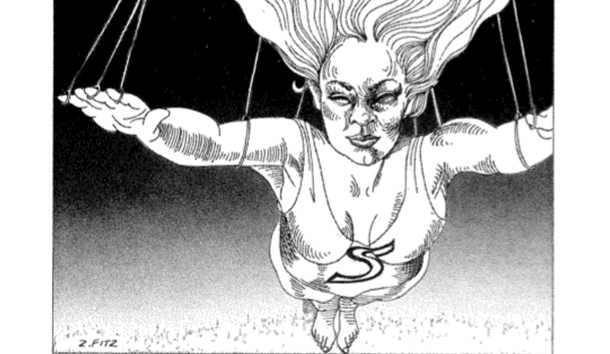
“The Shadowy Female absorbing The enormous Sciences . . . “ —William Blake Reproductive control and genetic manipulation have been making the headlines for years. One day new developments in birth control herald a freer, happier world for women. The next day, knowledge also gained from those very same developments foretell a future of horror in which babies will be...
Selling Out the Kids
Most parents, especially those with teenagers, know the increasing costs of having children, but in Pricing the Priceless Child, Viviana Zelizer investigates the declining economic value of American children during the past century. Zelizer charts this decline from 1870-1930, noting the simultaneous increase in the sentimental value of children. She notes that, starting in 1860, the economic value of American...
Sexual Politics
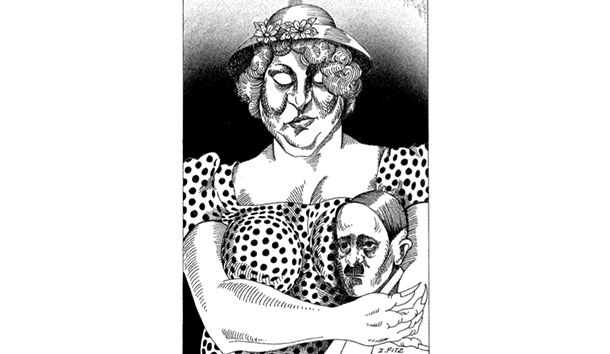
The 1980’s witnessed one of the greatest miracles in the history of American politics and the climactic triumph of one of the most effective political leaders ever to emerge in America. That leader was a woman, and however well-known she is today, she has never achieved the honor and celebrity of her many inferiors. The national newsmagazines have never granted...
Walden Pond Socialists
Nietzsche’s comment that “the enemy of truth is not lies but convictions” comes to mind while reading An Environmental Agenda for the Future, a collection of statements by leaders of major environmental organizers. In a book of scatter-shot propositions, a few hits are inevitable: the contributors are surely right to criticize misuse of resources and to recommend that some pristine...

Lady and the Vamp
“No womman of no clerk is praised.” —Chaucer An old-fashioned historian can be forgiven for feeling a touch of empathy for the bewildered Egyptians upon whom Yahweh emptied the vessels of wrath some 3,500 years ago. The Hebrews’ God plagued the Egyptians for a matter of days, but the stern Minerva who reigns over academe has tormented historians for two...
Snow Job
Around here, folks are awfully worried. It’s strange, though—we’re not worried about what the nightly news says we’re worried about. Contrary to (seemingly) popular opinion, we don’t spend every waking moment in a nuclear catatonia. Our children—at least the children I know—don’t have nightmares of “the fire next time.” They don’t even think about nuclear war (or about what they...
Train of Fools
In the 30 years since it first gained broad popularity, rock ‘n’ roll has put on some show; it has been by turns entertaining, grotesque, energetic, absurd—and always “successful.” There were even times when it had a good beat and you could dance to it. But since the 60’s, the decade of pervasive Relevance, an even better show has taken...
Death of a Communist
Look elsewhere for amusement this month. This is not a lighthearted letter. It is a reflection on the life of a man who was once a friend of mine, a man whose life and work demonstrate that meaning well is not enough. Al and I were graduate students at Columbia in the 60’s. For a short time we worked together...
Love and Death in the American West
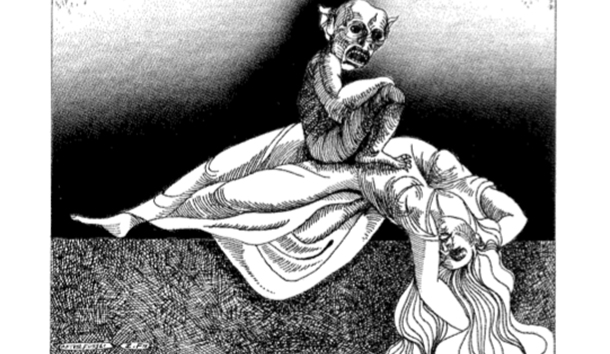
“Let sixteen cowboys come sing me a song. . . . For I’m a young cowboy and I know I’ve done wrong.” —Anonymous, “The Cowboy’s Lament” The American West has become a place of simultaneous myth and reality. There is a West where zesty young men mounted on noble steeds occasionally rounded up some cattle to be driven to market,...
Stage Props & Program Notes
Eugene O’Neill’s life was a purgatory, as he never ceased informing us. His final plays, those written or revised from 1939 on, leave us with a vision of him plodding at last toward the top of that inverted mountain, the man emerging from his lifelong torments and the artist from his befuddlements. O’Neill is unique among American dramatists in having...
Material Wealth and Spiritual Poverty
Down and Out in Beverly Hills has a lot going for it. The film was directed and co-written by Paul Mazursky (Moscow on the Hudson). It has Richard Dreyfuss, Nick Nolte, and Bette Midler in the lead roles, as well as Tracy Nelson and “Little Richard” Penniman in supporting roles. The film was photographed in cheerful colors by Don McAlpine,...
Old Adam, New Eve
Feminist writers sometimes give us the impression that the nonworking mother is a rare bird like the Bach man’s Warbler—sighted (not very reliably) once a decade or so in a corner of I’on Swamp in the South Carolina low country. The ladies magazines do occasionally report on rumors that some professional women like Janet Fallows have taken a few years...
Getting America Right
American novelists no longer write about America. That, at least, was the judgment of many foreign writers who attended the recent PEN Conference. It would be hard to make the same complaint about our poets. In fact, it is hard to escape the feeling that a good many American poets are engaged in an exploration, a rediscovery of the terra...
Out On a Limb
“Such was that happy garden-state, While man there walked without a mate. . . . “ —Andrew Marvell Kingsley Amis has been practicing the writer’s trade long enough to have produced a full shelf of books. Last year’s Stanley and the Women was not only his 17th novel but a signal that three decades have suddenly elapsed since the publication...
On “After the Big Bang”
I read with great interest Bryce Christensen’s “Before the Big Bang” in the March 1986 issue. In what is other wise an excellent review, I must bring your attention to a most grievous error. Mr. Christensen writes: After all, before then no one except Christians had believed that the physical universe appeared suddenly from nothing. The obvious reference to Genesis...
On “Academic Freedom”
Please allow me to comment on your column in the Cultural Revolutions section of the January 1986 issue wherein someone states: “During the 60’s and 70′ s, while other universities were committing academic suicide by eliminating all merely ‘academic’ requirements, Fordham held firm.” My dear sir, if Fordham held firm, then Idi Amin is a disciple of Mother Teresa. As...
Pedantry and Progress
He wrote one of the most distinctive and original prose styles of his time, paralleling the techniques of his Yankee contemporary, Henry James, anticipating those of Pound and Eliot. But he used that style to write Greek grammars and commentaries on obscure Greek and Latin poets and page after page of “brief mentions,” mini-reviews, of pedantic monographs. Like Browning’s Grammarian,...
An Untimely End
There used to be two Daniel P. Moynihans. One wrote interesting essays on the foibles and pitfalls of crafting public policy. While seldom mistaken for a rigorous social scientist, this Moynihan had a gift for translating the esoteric findings of the research sociologists into the vernacular. He saw through the pretentions of political hubris and could always be counted on...
The Man of Mode
“Man at his best” is both the slogan and promise of Esquire magazine. “Best,” in this context, turns out to mean all that money can buy in the way of automobiles, wristwatches, adoring women, and clothes. Fernando Lamas’ paradoxical aphorism (taken seriously by a dull-witted comic who parlayed it into a career) sums it up: it doesn’t matter how you...
Equal Opportunity and the Limits of Liberalism
The last two decades have seen a remarkable revival in academic political philosophy, particularly in the English-speaking world. A subject which was widely pronounced dead in the 1950’s has recently produced thousands of articles and numerous books of real importance. One indicator of the scale of this revival is the length of a recently published annotated bibliography about just one...
The Bismarck Bypass
In their own quiet way, arts activities are as vigorous in the Midwest as anywhere else, a fact that few seem to realize—including Midwesterners. A year ago I was privileged to escort an emigre lecturer around my state for a week. At one evening’s talk he impetuously introduced me as “not one of your long-haired Greenwich Village poets” but one...
The Rights of Tradition
“Ah, kuinel, you see, Injun man ain’t strong like white man!” —William Gilmore Simms We are approaching an important centenary, though there probably will be little public notice amid the hoopla over the bicentennial of the Constitution. In 1888 Franz Boas joined the newly formed faculty at Clark University to become the first professor of anthropology in the United States,...
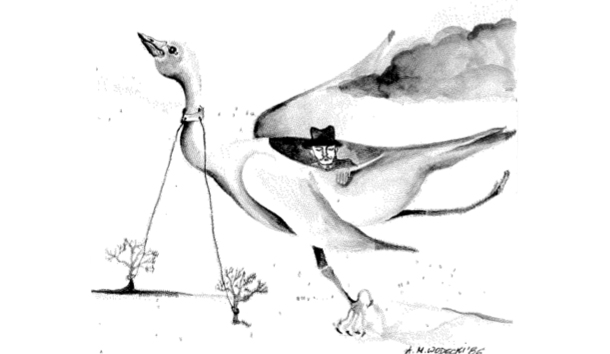
Broken Eggshells & Winged Seeds
“Imaging . . . is properly the work of a poet; the [rest] he borrows horn the historian.” —John Dryden Here is an unAmerican story. A young man writes a successful novel. Thousands of Americans, in the oddest places, esteem it highly. So do the most reputable publishers in New York. When he attempts the sequel of that novel it...
Dr. Bob’s Unusual University
Bob Jones University. Isn’t that the segregationist place down in South Carolina someplace? Well, yes and no; or, rather, no and yes. BJU is in Greenville, South Carolina. And it did lose its tax exemption not long ago because its administration—which means the Reverend Dr. Bob Jones Jr., son of the founder—forbids interracial dating on what it/he believes to be...
Bridge Out
It is impossible to read Gorham Munson’s The Awakening Twenties without thinking of Malcolm Cowley’s Exile’s Return, since both are memoir-histories of the 20’s. Munson, however, is concerned only with 1913-1924. “America will never be the same.” So opined the New York Globe after the official opening of the 1913 Armory Show. . . . In an unspecific way, the...
Iconoclast of the Center
The New Republic claims with some pride to be schizophrenic: it infuriates both the right and the left, while claiming subscribers from the elite of both wings. It has published one of the most damning articles yet on the Sandinista government, while likewise exposing the atrocities of the Contras. And what other magazine offers both the amusement of seeing Congressman...

The Chapel and the Voting Booth
“I do not yet see the absolute necessity of extirpating the Christian religion from among us.” —Jonathan Swift I am sure it is possible to praise too highly James Reichley’s Religion in American Public Life, but it would take some doing. Reichley, a Senior Fellow at The Brookings Institution, has produced a superb historical and analytical survey of religion’s role...
Karl Bodmer’s America
To see America through the paintings of Karl Bodmer (1809-93) is a rare experience. Last summer and fall, thousands of Americans shared in this experience by visiting an exhibition of Bodmer’s works at the Metropolitan Museum of Art in New York City. The exhibition, commemorating the 150th anniversary of the 1832-34 North American expedition of Bodmer and the German naturalist...
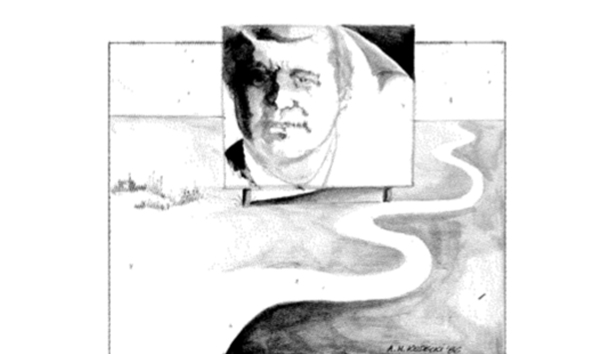
John F. Kennedy: Character and Camelot
John F. Kennedy first gained national attention at the age of 23. His book Why England Slept, published in 1940, became a best-seller and earned the new Harvard graduate plaudits as a man of learning and thoughtfulness. Kennedy was heard from again in the summer of 1944 when the New York Times carried a front-page story describing his dramatic rescue...
Rock ‘N’ Roll Never Forgets: Healing the Wounds of the 60’s
In 1985 the senior members of the baby boom generation turned 40. Many of them are surprised to be still around. The films and songs of the 50’s and 60’s were so full of “disorder and early sorrow” that it was, perhaps, no surprise how many real-life actors and singers, who took the place of soldiers and athletes in the...
Trouble in Paradise
The origin and nature of the state has been at the heart of political theory from the time of Plato and Aristotle. While speculations about man’s primal innocence in a state of nature cannot be taken seriously as science, they continue to influence political propaganda. Liberal philosophers like Rawls and Nozick continue to write about man’s natural equality or our...
Refuting the Planners
Richard McKenzie, a member of the economics department of Clemson University, here assesses the probable impact of new government regulation of the economy under what politicians like to call “National Industrial Policy” (NIP). He sets forth the major legislative policy proposals promoted under this rubric, and he examines their probable effect upon international trade, capital taxation, and central planning. Citing...
Fathoming Seas of Red
Unlike the world of democratic politics with its ever-present television cameras and investigative reporters, the world of communism is a realm of mysteries and shadows, understood by few who do not actually hold power. Richard Staar and the 79 regional specialists who have contributed to this encyclopedic volume have performed an invaluable public service by sifting through the available documents...
True Grit
Tuska’s thesis is that Westerns are not attempts to portray the old West with documentary fidelity, nor do they merely reflect the attitudes of the American public. They are the creation of directors and producers, great and insignificant, men indifferent to historical accuracy and full of their own insights and biases. Furthermore, these insights and biases rarely reflect the attitudes...