When historians draw up their lists of ruthless autocrats, Ivan the Terrible is usually near the top. When political scientists assert that totalitarianism is not a new phenomenon, they back up their claim with a reference to Ivan the Terrible, the 16th-century leader of Russia who dominated both church and state. This first Czar of Russia is clearly a benchmark...
Roundhouse Marxism
There is danger in reading too much into popular entertainment, particularly into a film that was obviously thrown together to extend Sylvester Stallone’s string of money-making movies. The Wall Street Journal may be correct in saying that this latest blockbuster is mostly a tiresome rehash of its predecessors. All of them, including this one, roll on, through slovenly dialogue, to...
The Most Unbelievable Thing
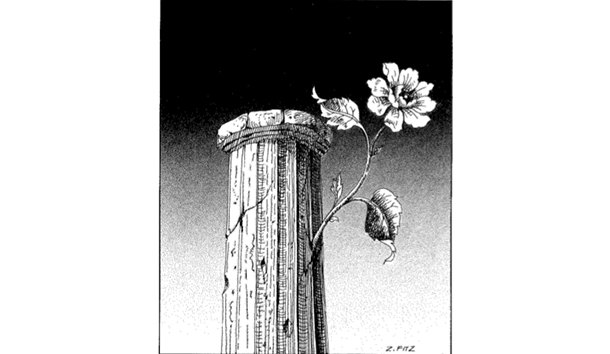
The following is the text of Professor Nisbet’s speech at the 1985 Ingersoll Prizes Awards Banquet: One of Hans Christian Andersen’s lesser-known stories bears the title “The Most Unbelievable Thing.” A king offered a fortune to the subject who created the most unbelievable thing in the arts. Competition was intense and prolonged. When at last the day of judgment came,...
Tales of Apocalypse
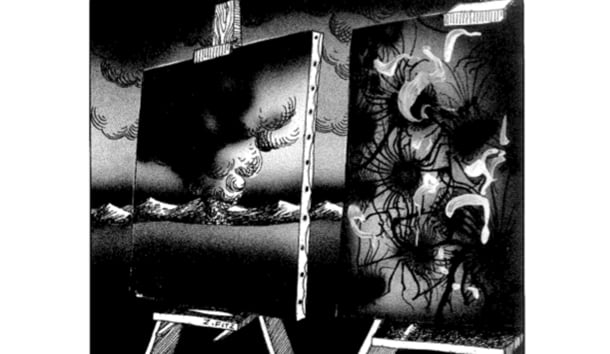
“Therefore nowe is it tyme to me To make endyng of mannes folie.” —The Last Judgement, York Cycle Plays Nothing seems very certain nowadays for writers of fiction. Traditional religious and moral values have been under attack for so long that many writers uncritically assume they are thoroughly discredited. Even much of the certainty of science is now considered tentative, history...
King, Queen, Knave—Mind, Brain, and Body
“Where so’er I turn my view All is strange, yet nothing new; Endless labour all along, Endless labour to be wrong.” —Samuel Johnson Epicurus had an answer for everything. The universe consisted of nothing except atoms and void; the qualities of matter and of our sensory experience—hardness, color, heaviness, etc.—were determined completely by the size, shape, and motion of the...
Successful Crimes
Crime is big business in the U.S. It is bigger than the billions of dollars that are made in the drug traffic every year and the astronomical revenues from prostitution, gambling, and armed robbery. (Robbers alone are estimated to cost us $355 thousand a day.) Even honest citizens gel a piece of the action: law enforcement professionals, judges and lawyers,...
Natural Philosophy
At last there is a scientific work that justifies the term natural philosophy. In every discipline there should eventually come a time when it is possible to repeat the words of a great historic occasion in America: the man and the hour are met. Such events are increasingly rare in the sciences, where specialization and barbarity of style almost preclude...

Embarrassment of Riches
“Semper inops quicumque cupit” (Whoever yearns is always poor) —Claudian During the 1950’s, an increasing number of middle Americans no longer took seriously the principle that honest work carefully performed is its own true reward. As the exhortative Vance Packard and a host of other social critics noted, these Americans defined themselves not by the work they did, but by...
A Stranger to His Kind
“Poetry,” declared T.S. Eliot, “is not a turning loose of emotion, but an escape from emotion; it is not an expression of personality, but an escape from personality.” More than one set of eyebrows has arched at that pronouncement. For surely we read in part to know the man behind the work. A blind bard, Demodocus, sings in Odyssey VIII,...
Class Acts
There is a kind of unity in Sam Shepard’s career—as dramatist and actor—that seems the result more of art than of chance. A new staging of his 1977 play Curse of the Starving Class gives us a rare opportunity to look back. Bradley Whitford, who plays the son Wesley, even looks like a younger Sam Shepard. With Wesley’s sensitivity and...
The Libertarian Temptation
Is it possible for the traditional conservative concern with virtue and the good society to be reconciled with the libertarian emphasis on individual freedom? Should libertarianism be considered part of conservatism, or is it an alien presence? These are some of the crucial questions editor George W. Carey and a variety of conservative and libertarian authors examine in Freedom and...
Proust Among the Buckeyes
Originally published in 1963 by the Ohio State University Press, Ohio Town quickly drew a near-cult following that Harper & Row would now evidently like to amplify in the wake of Santmyer’s best selling ” . . . And Ladies of the Club.” This personal diary of a small, Midwestern town’s evolution can be best summed up in Santmyer’s own...
Priam’s Daughter
Christa Wolf is an East German novelist who delivered several lectures at the West German University of Frankfurt on a work-in-progress focusing on the Trojan seeress, Cassandra. Cassandra survived the sack of Troy to be taken back to Greece by Agamemnon, only to be slain with him by his wife, Clytemnestra. Her novella on this theme and four essays were...

Realism and the Spirit
The following is the text of M. Ionesco’s address at the 198S Ingersoll Prizes Awards Banquet: I am extremely proud and honored to have been awarded the very prestigious T. S. Eliot Prize, which has been given to such persons as Jorge Luis Borges and the novelist Anthony Powell, artists who exemplify the prime values of the humanist tradition. Since...
Going First Class From Karakorum to Moscow
In August-September 1985, I traveled as a faculty lecturer with a group of Rice University alumni on a journey from Mongolia to Moscow by way of Siberia. The trip began in the village of Khujirt near Genghis-Khan’s capital of Karakorum. From there we went northwest to the God-forsaken Ulan-Ude and the capital of Eastern Siberia, Irkutsk, and then westward to...
The Faith of a Critic
The 25 short essays on a variety of “Christian classics” collected in this book originally appeared in the Neiv Oxford Review between November 1979 and October 1982. Collected here, in their total economy, James J. Thompson’s essays remind us of the maturing legitimacy of the interdisciplinarv relations between literature and religion. Christian Classics Revisited shows us that these relations need...
The Luddite as Messiah
Jeremy Rifkin declares himself a heretic in this book, but he is more accurately described as a Cassandra and not a Huss or a Bruno. This “new age” doomsayer feels romantic impulses and expresses them with poetic skill, but his limited grasp of history, his absurd economic proposals, and his skewed philosophical perspective still show through. According to Mr. Rifkin,...

Naming the Bard
“Vera nihil verius” —Legend on the coat-of-arms of Edward de Vere It’s not the same as saying that God is dead, or the world is flat, or the check is in the mail. Yet one would think that Charlton Ogburn had committed that kind of atrocity, judging by the reaction of most orthodox Shakespearian scholars to Ogburn’s amazingly entertaining book...
Odds and Ends From Here and There
The last couple of years have been busy ones, here in the South. Mississippi finally ratified the 19th Amendment to the U.S. Constitution, giving women the vote. At Billy Bob’s, in Fort Worth, Merle Haggard stood all 5,095 customers to drinks. And in Hardwick, Georgia, Daniel Sargent, 27, a one-legged and legally blind diabetic armed robber, escaped from a state...
Guns, Butter, and Guilt
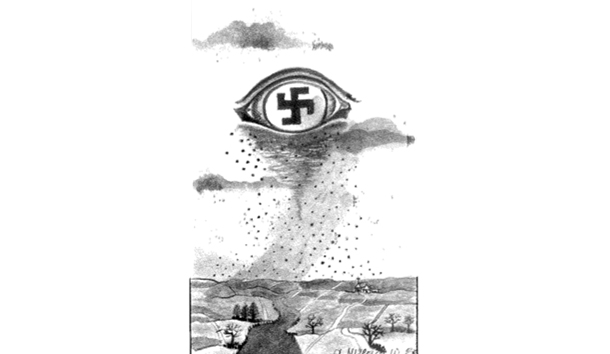
“Guns will make us powerful; butter will only make us fat.” —Hermann Goering It is 40 years now since the Allies claimed victory over Germany and survivors on both sides made the first groping attempts to uncover the meaning of Nazism. Yet despite the availability of almost inexhaustible sources and the persistence of armies-of scholars, the effort to locate the...
The Ever-Receding Worker’s Paradise
This month the Communist Party of the Soviet Union will adopt another Party program. Released as a draft in October 1985, this program constitutes a definitive statement of where the party is and where it is-headed on its path to the worker’s paradise. The Soviet Communist Party has had only three previous programs—in 1961, 1919, and 1905—so a new Party...
The Modesty of a New Yorker
I may be the only person in America—I am certainly the only one in New England—who did not mourn the recent passing of E.B. White. Of course, I don’t mean to say I celebrated his death. On the contrary, I was horrified by the New York Times‘ obituary, which began with the brutal, if unassailable, fact that the sage of...
William Morris in Tokyo
Mingei: Japanese Folk Art, an exhibition consisting of 115 paintings, sculptures, ceramics, furniture, lacquers, toys, and other artifacts, opened at the Brooklyn Museum on July 12 and remained on display through September 30, 1985. Most of the art of Japan is imbued with simplicity, directness, and a tremendous sense of design. Japanese work in the visual arts of Japan, sustained...
Revolution and Its Discontents
Winner of France’s Renaudot Prize, this autobiographical Bildungsroman is a first-person narrative of a young man from a Belgian village who begins as a seminarian and ends as a disillusioned anarchist. Under the direction of his widowed mother and the village priest, he enters the seminary in Louvain, where his study of the changing values revealed in ecclesiastic history makes...
Between the Lines
“He whom nature has made weak and idleness keeps ignorant may yet support his vanity by the name of a critic.” —Samuel Johnson Not too long ago we devoted an issue to the death of serious art. While there may be many objections to the thesis that popular culture has replaced painting, the symphony, and the drama, there is no...
Aloha, Captain Cook
The relationship between culture and history, structure and event is one of those questions to which every school of social science has an answer. Marshall Sahlins belongs to that vanishing species: the historically minded anthropologist. Like his mentor, Leslie White, and his colleague, Elman Service, Sahlins has dedicated much of his career to discovering the significance of cultural change. While...
Simple Goethe
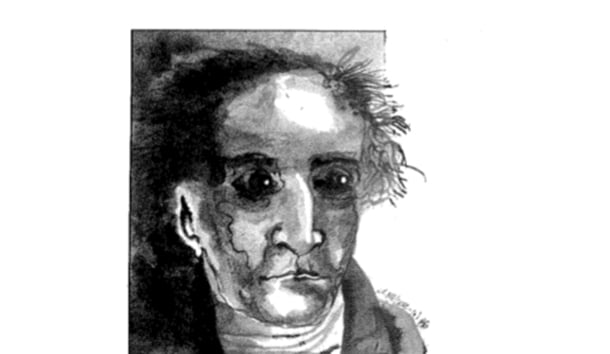
Last summer, I read simultaneously Goethe’s Dichtung und Wahrheit, his autobiography up to the time of writing Werther, his collected travel diaries, and his life by Emil Ludwig. Of the three biographical works, my unhesitating judgment is that Ludwig’s book is the disappointment: it compares to Goethe’s own narrative of his youth as the description of a garden compares with...

The Bear and His Claws
“The wisdom of all these latter times, in princes’ affairs, is rather fine deliveries, and shiftings of dangers and mischiefs when they are near, than solid and grounded courses to keep them aloof.” —Sir Francis Bacon No matter where the finger roams on the map, the question inevitably arises: What are the Russians trying to do here? Richard F. Staar,...
On Passage Back From India
Betsy Clarke’s informative and readable review of In Search of Love and Beauty by Ruth Prawer Jhabvala (Chronicles, Nov. 1985) raised the question of how we ought to regard homosexuality. Talking of the homosexuals on parade in Jhabvala’s novel, Clarke writes, “By stressing the fact that fathers were absent from the early homes of these deviants, the author even suggests...
Muffled Voices
“The Noise of the City Cannot Be Heard” was the title of a very popular song in the Soviet Union just after World War II. According to Aleksandr Solzhenitsyn, the song was so much in demand that “no singer, even the most mediocre, could perform it without receiving enthusiastic applause.” The Soviet Chief Administration of Thoughts and Feelings was puzzled...
Defending the High Frontier
For some time now, many have accepted the logic of nuclear defense. The strategic and moral superiority of a system that relies on killing weapons instead of people seems—on the face of it—undeniable. By suggesting we build such a defense. President Reagan altered the nuclear calculus in which our civilian population is currently held hostage to the whims of our...
Reconstructing the Bostonians
Reconstructing the Bostonians A popular film that is more than chewing gum for the mind is a rare treat, and a novel of power and poignancy, translated into a well-created film, is sheer bliss. The Bostonians is a love story about an archaic Southern man who falls in love with a beautiful feminist preacher who is simultaneously adored by her...
Money and Mammon
Christian moral thinking has always had to harmonize with New Testament texts such as “the love of money is the root of all evils,” and “blessed are the poor.” At the same time. Christian morality is incompatible with the kind of spirituality that decries the material world and all that pertains to it as either not quite real (Platonism) or...
Letter From the Heartland
You can tell Midwesterners from other folks by the way they poke public fun at the Midwest. Iowa recently held a contest to find a state license-plate slogan, and the entry generating the most attention was “Iowa: Gateway to Nebraska.” North Dakota has erected a series of billboards along its highways, among them “Stay in North Dakota: Minnesota’s Closed” and...
Science and Religion
I gather that the Texas Board of Education has done something commendable, but I don’t know exactly what because the Washington Post (my source) was too busy deploring it to describe it. I assume it was something great because it reduced the Post to stammering incoherence. “Unbelievable” was only the beginning; “worse than silly . . . dishonest, futile, and...
Faith and Freud in the Bayou
A comic religious novel, North Gladiola treats the same region of southeast Louisiana and some of the same characters that James Wilcox introduced to his readers in his first novel, Modern Baptists (Doubleday, 1983). The protagonist of the first novel, bumbling Mr. Pickens, plays a minor role in the second, as do meddling Donna Lee Keely and the fiery redhead,...
The Promise of Life
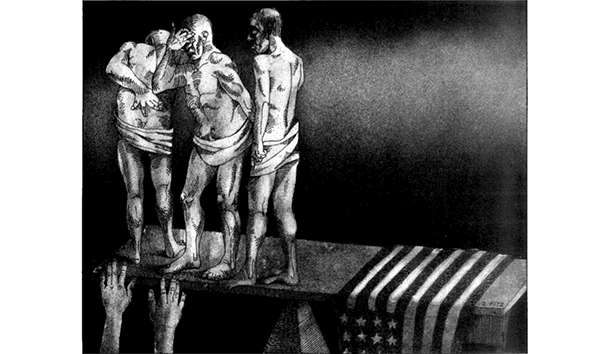
“Give them hope, so they may fear.” —The Apocrypha There is no more Atlantis. “Where,” I was asked in prison, by a Yugoslav State Security agent, “is this Atlantis you would like to live in, Selic?” I didn’t tell him that I wanted to live in America, it being alive and well, and still above the waters. “How many foreign...
Letter From the Southwest
Giving, helping, caring—these are words frequently mentioned in the writings and orations of most religious and social philosophers. Giving and helping and caring are concepts that touch something deep in the breast of civilized mankind and call forth the kind of responses that distinguish him from the baser animals: compassion, kindness, generosity, concern for the welfare of others. This is...
The Flawed Tragedian
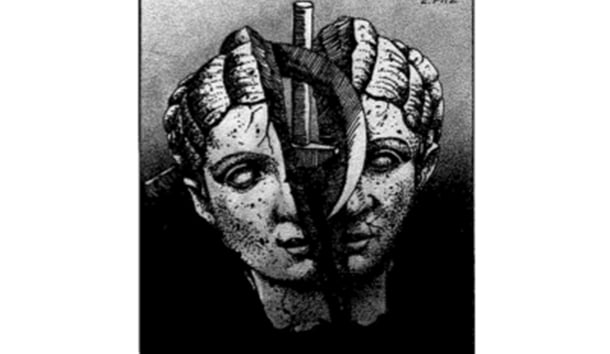
“He has learned speech and windy thought and the political temperament.” —Sophocles’ Antigone Among literary intellectuals, George Steiner holds a place of unmistakable influence. His essays on philosophy and literature can be found in the New York Review of Books, London Times Literary Supplement, and in other publications associated with making it in the world of letters. Since the 1950’s...
The Truest Polyartist
It need hardly be said again that Laszlo Moholy-Nagy was one of Modernism’s primary figures, whose art, writing, and life remain for many a continuing inspiration. He was a polyartist, a true polyartist, who made consequential contributions to the traditions of several nonadjacent arts—painting, book design, artistic machinery, and photography—amidst lesser achievements in film, theater design, commercial design, and sculpture....
Worldly Wise & Heavenly Foolish
The most widely known of these three novelists is Romain Gary, who committed suicide in 1980 at the age of 66, perhaps as a result of his disastrous marriage to the American actress and radical, Jean Seaberg, who had taken her own life a year earlier. A Lithuanian emigrant to France, where he played a heroic role in the French...
A Voice From Down South
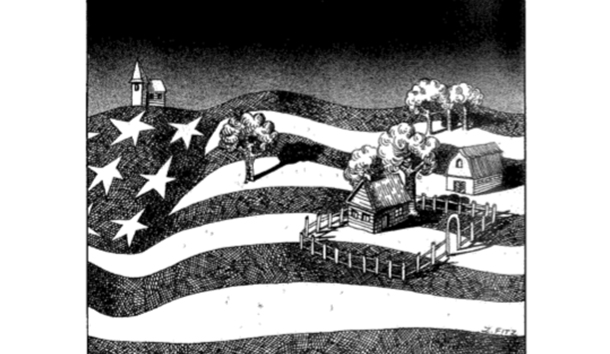
“Had he been even a Yankee, this genius would have been rendered immediately manifest to his countrymen.” —Edgar Allan Poe “All a rhetorician’s rules,” we learn from Hudibras, “teach him but to name his tools.” Professor Bradford, who knows much about the art of rhetoric, is a massive exception to this observation. This is a collection of his speeches; but...
The Grandeur of the Getty
In its setting, landscaping, architecture, and art collection, the J. Paul Getty Museum is unique in America. Outside and inside, the museum is designed to delight and stimulate visitors, especially those devoted to art, aesthetics, archaeology, and history. Nowhere at the Getty is there a trace of eccentricity. Of course, the Getty epitomizes the power of wealth, but everything is...
Red-White-and-Blue Yiddishkeit
“It is much the point of Judaism that efforts to waken the consciences of others should not prevent Jews from reexamining their own.” So writes Stephen Whitfield, a professor of American studies at Brandeis, in this new study of 20th-century American Jewry. The means Jews have frequently used to arouse and examine the conscience have often been literary. Whitfield considers...
Babbitt and More in the Eighties
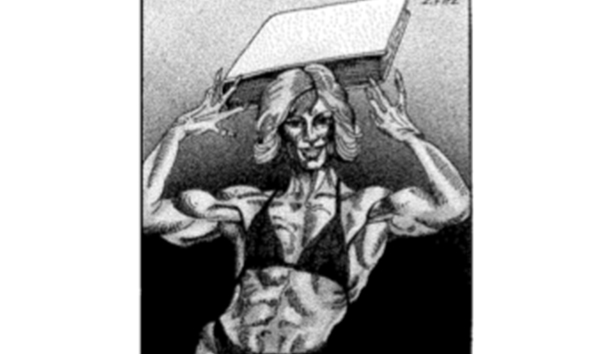
“Every artist is a moralist, though he need not preach.” —George Santayana Accepting the Nobel Prize for Literature on December 12, 1930, Sinclair Lewis used the occasion to attack academic traditionalists, who, he said, “like their literature clear and cold and pure and very dead.” And among that group he singled out the New Humanists, charging that they taught “a...
Shelter From the Storm
The trial of 12 sanctuary workers in Tucson has heated up an issue which is being hailed in many quarters as the great moral issue of the 1980’s. The movement, whose members provide protection to illegal immigrants from Central America, is protesting the U.S. Immigration and Naturalization Service’s refusal to recognize Salvadoran and Guatemalan emigrants as political refugees. Taking matters...
Zeus, Whoever He Is
Walter Burkert may be the world’s leading authority on the religion of the ancient Greeks. Like several predecessors in the field—notably Friedrich Nietzsche and Walter Otto—Burkert writes almost as an enthusiast. In a series of important works, he has paid the Greeks the very high courtesy of taking them seriously. Burkert is a sort of high church sacramentalist on the...
War, Peace, and the Church’s Teaching
The amazing thing about the nuclear debate and the Catholic bishops’ participation in it is that the accumulated wisdom and experience of mankind, as well as the Church’s pronouncements on peace and war, are so completely ignored. This is quite a natural phenomenon on the part of so many lay debaters: it belongs also to mankind’s experience that in every...
The Atonement of Poetry
“Aye, those fair living forms swam heavenly / To tunes forgotten. . . . “ —John Keats One of life’s great joys is to come across a new work of literature that is likely to last far beyond any early assessment of its value. In the case of poetry, which chiefly concerns us here, it is to have known at...
On “Marxism & Motorcycle Maintenance”
Rather than answer Thomas Ashton point-by-point, I prefer to wear his critique (Chronicles, November 1985) as a badge of honor. I am struck, in the history of people and ideas, by the frequency of the distinction between personalities and their thoughts. The Rousseau of The Confessions and the Rousseau of The Discourse on Inequality being perhaps the classic case. Civility...