John Ellis, a well-known British military historian, has made a major contribution to our understanding of the nature of World War II with an unflattering reappraisal of the effectiveness and leadership of the Allied forces. His views are not always just, but he raises issues that, while not totally ignored, have usually been confronted only...
Category: Reviews
Passion in Private
Over the last ten years, A.N. Wilson has been compared to the great 20th-century English satirists: Waugh, Amis, and Barbara Pym. Now that he is in the process of writing a trilogy, it was inevitable that some critic would add to these the name of Anthony Powell. Of course, publishers like to compare the work...
The Isolationist Enigma
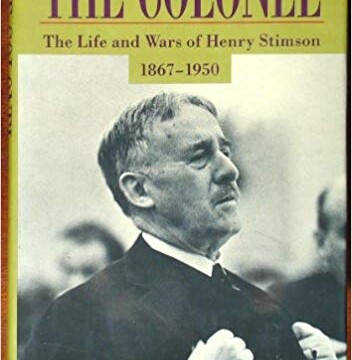
“We assert that no nation can long endure half republic and half empire.” —Democratic National Platform, 1900 According to Godfrey Hodgson, Henry L. Stimson—secretary of war for William Howard Taft, secretary of state for Herbert Hoover, and, again, secretary of war, this time under Franklin D. Roosevelt—”was identified with the dangerous idea that it is...
Ancient Texts and Modern Readers
“Begin at the beginning,” was the King’s suggestion to Alice. “Go on to the end. Then stop.” Kurt and Barbara Aland of the Institute for New Testament Textual Research in Münster, Westphalia, Germany, begin their book on the New Testament with Erasmus’ editio princeps of 1516, the first printed edition. They then survey the printed...
A Distant Encounter
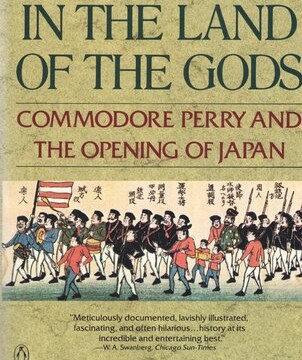
In the spring of 1847, Ranald McDonald, half Chinook Indian and half Scots, jumped ship from the Yankee whaler Plymouth and steered his stolen dory toward Rishiri, a small island in the Japanese archipelago. Having heard tales of Nippon for years—a land of cannibals, American sailors whispered; no place to be shipwrecked—the curious McDonald, who...
De Gustibus Semper Disputandum Est
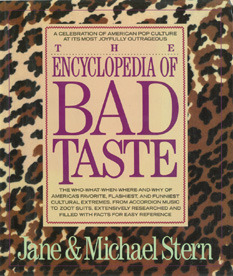
I suppose this book might be called a coffee-table book. It has the shape and the lavish illustration of that kind of thing. And I suppose that of its kind, this book isn’t so bad, which is not to say that it’s good. The Sterns’ alphabetical survey of bad taste has the merit of some...
Beyond Victimology
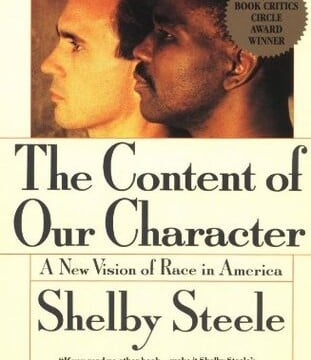
Shelby Steele’s The Content of Our Character, a collection of essays, is mainly an attack on affirmative action, black separatism, and other such programs, policies, and trends that flourish in American universities and that Steele opposes, first of all, because he regards them as racist. By virtue solely of race, these programs reward blacks and...
Visible Saints
There is no other American man of letters quite like Marion Montgomery. With the addition of each new book to the canon of works published by the Sage of Crawford, his achievement becomes the more astonishing; the range and depth of his thought, its variety and scope the more impressive. For Professor Montgomery has written...
The Democratic Crusade
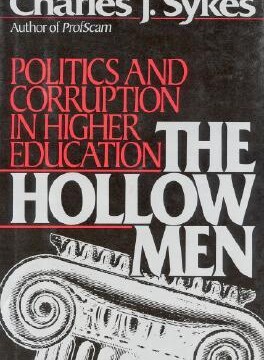
In The Hollow Men Charles J. Sykes resumes the brief against American higher education that he began in his widely publicized Profscam, published in 1988. Sykes argues in both books that our best universities, most conspicuously in their humanities faculties, have betrayed their true educational mission: instead of challenging students to think, professors parrot prescribed...
Reinventing the Wheel
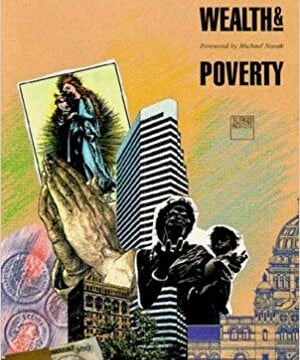
Two Jesuits have recently written books on social ethics, the humane economy, and on liberating the poor. I know what you’re thinking: two more liberation theologians using Marxist criteria for their analysis, and ruthlessly criticizing the free market. Think again. Prevalent opinion traditionally associates the Society of Jesus with all forms of cabals, while a...
A Private Sensibility
A generous spread of four poems that appeared in the New Yorker early in 1990 introduced many American readers to the work of the renowned Romanian poet Nina Cassian (Renee Annie Stefanescu). Even though her poetry has been appearing in English versions for the better part of a decade, the New Yorker set, translated by...
Progressive Pilgrims
“It is risky to write about an ongoing series of events, in this case the Catholic church’s history in the second half of the twentieth century,” writes Thomas Molnar in the introduction to The Church, Pilgrim of Centuries. After finishing Professor Molnar’s iconoclastic and often penetrating analysis of the Church’s position in the modern world...
Piety and Meaning
Walter Sullivan is professor of English at Vanderbilt University, the author of two novels, and, most recently, of Allen Tate: A Recollection. He is also a frequent and long-standing contributor to the Sewanee Review, in which four of the ten essays in this volume (dedicated to, among others, George Core, Sewanee‘s editor) first appeared. Although...
Our Constitution: Alive or Dead?
“Your Constitution is all sail and no anchor.” —T.B. Macaulay Consensus on the benign motives of our Founding Fathers and the nature of the Constitution that had persisted through the 19th century began to crack at the beginning of the 20th under assaults from the Progressives. It has disintegrated at an accelerating rate since, so...
The Lure of Black Gold
January 14, 1991. As I write, more than half a million American and Allied soldiers are massed on the northeastern frontier of Saudi Arabia, arrayed against the million soldiers of Saddam Hussein. At issue is the sovereignty of Kuwait, a feudal monarchy that happens to enjoy the highest per-capita income on the planet. But, more...
Love’s Old Sweet Song
I once had the privilege of hearing Professor Polhemus deliver some of these pages as a lecture—the passage on the terrible end of Miss Havisham in Great Expectations, which I have found as superb to read in 1990 as it was to hear in 1986. I also once heard—and watched—him do a number on The...
Our European Cousins
“All great peoples are conservative . . . “ —Thomas Carlyle What does it mean to be “rightwing”? Since the term and its companion “left-wing” first appeared in the wake of the French Revolution to describe, respectively, those who opposed and those who supported the revolutionary agenda and legacy, one plausible meaning of “right-wing” is...
The End of History
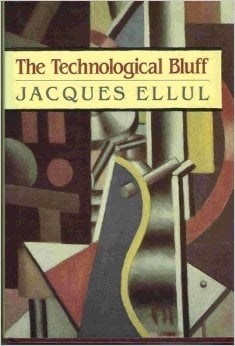
It seems to me that the staff and all the contributing editors to Chronicles, working together for a year in paradisiacal California on a lavish grant from the MacArthur Foundation, could not possibly produce as pessimistic a work as The Technological Bluff by the French cultural critic and author of more than forty books, Jacques...
Wild Thing
A new kind of animal stalks the land these days. If you listen closely, you can hear its strange call: chest-thumping roars alternating with keening wails and abundant sniffles. And if you look carefully, you’ll doubtless soon spot one, for they clone faster than jackrabbits. This new critter is now all around us, and the...
Wills’ Way
Garry Wills is, of course, the talented apostate conservative whose interpretative political reporting avoids the usual journalistic cliches. No one will disagree that Wills penetrates events more deeply than do, say, the editorial writers for the New York Times, any more than he will deny that Wills’ insight and wit are broadly in service to...
The Pathetic Individual
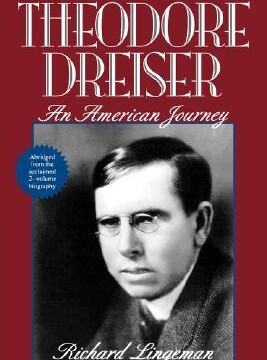
Perfection of the life or perfection of the art? The imperatives of art being what they are, Yeats thought that the writer could not have both. With the completion of Richard R. Lingeman’s two-volume biography of Theodore Dreiser, it seems evident that Dreiser was fated to attain neither. Born in 1871 in Indiana, Dreiser managed...
Much in Little
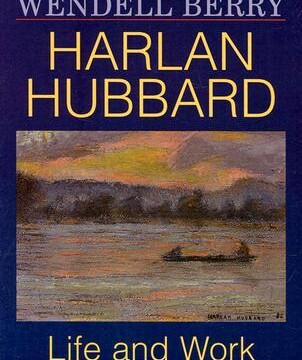
When Harlan Hubbard and his wife, Anna, set themselves adrift on the Ohio in late 1946 in a homemade shantyboat, they began not only a five-year river adventure but a way of life together that was as distinctive as it was unmodern. In his memoir of that trip, Shantyboat: A River Way of Life, first...
Redefining America
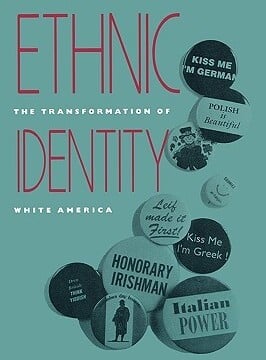
“I began by feeling that I was a Norwegian, then changed into a Scandinavian, and have now arrived at being a generalized Germanic.” —Henrik Ibsen “Over the generations,” wrote Milton M. Gordon in his 1964 study of the assimilation of white ethnics, “the triumph of acculturation in America has been, if not complete, at least...
Peaceable Kingdoms
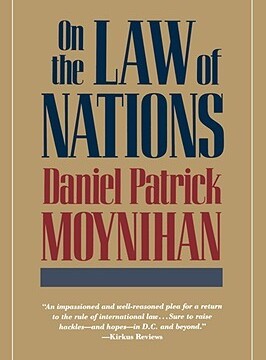
“The consent of all nations is the law of nature.” —Cicero On the Law of Nations is a powerful brief in favor of what the United States Supreme Court in 1900 declared to be “the customs and usages of the civilized world.” (In Paquete Habana, the highest court declared international law to be “part of...
Bring Me the Head of John D.
“Studying” philanthropy is a new academic enterprise, and one riven by various interests. Though a growing camp of scholars is following grant money, their studies, even when critical, generally confirm the conventional wisdom of foundation leaders. As a permanent supplicant, the academy approaches organized philanthropy with either a tugged forelock or an upraised list. Ellen...
Mysterious Island
Missaukee County, in the heart of the lower peninsula of Michigan, is perfectly flat and perfectly rural, its farms possessed by Dutch Calvinists. When first I, aged 17, traveled across the county, every farmhouse and every barn was ornamented by conspicuous lightning rods, the rustics having been duped by some ingenious salesman. When I inquired...
La Florida
In an expedition that began in 1538 and endured until 1543, Hernando de Soto and six hundred men failed to discover in what is today Florida and the Lower American South that which they craved most to find—gold. Four centuries later, a young writer, poet, and novelist native to the region trained his genius on...
‘Something Like a Final Ordering’
In the seventy-seventh of The Dream Songs, John Berryman writes, “these fierce & airy occupations, and love, / raved away so many of Henry’s years.” The pervasive tone of Berryman’s life and writing, spanning the tired, mad, and lonely years from 1914 to 1972, is that of religious despair; somber and violent, the emphasis is...
The Vessels of His Meaning
“There is nothing so likely to hand down your name as a poem: all other monuments are frail and fading.” —Pliny the Younger To say that O.B. Hardison, Jr., who died last August at the age of 61, was a poet is in some respects to diminish his memory. “Poet” has become a hollow accolade,...
Poems and McPoems
“Even one verse alone sometimes makes a perfect poem.” —Ben Jonson It was Donald Hall who gave us that useful and precise critical term “McPoem” to describe the garden variety contemporary poem in flabby free verse whose dismal ambitions are set to a spavined music. Hall is a savvy and perspicacious critic, and the bloke...
An American Elegy
When a writer lives with and writes about a character in four books and for more than thirty years, as John Updike has done with Harry (“Rabbit”) Angstrom—central character of Rabbit at Rest and of the quartet that began with Rabbit, Run in 1960—author and character get to know each other, strengths and weaknesses, good...
The Man Who Would Be King
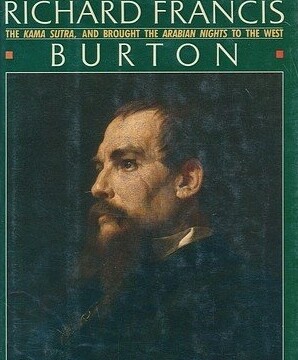
He called himself an “amateur barbarian,” but his comrades in arms called him “that devil Burton” or, more often, “the white nigger.” None of the epithets mattered much to their subject, for Richard Francis Burton (1821-1890), junior officer in the Indian Army, had no time for petty indignations. He was too busy playing out the...
Bring Back the Iron Duke
The United States was founded by white Anglo-Saxon Protestants and became the political, economic, and military leader of the free world under their guidance. The conscience, industry, practicality, antisensualism, and sense of civic responsibility that characterizes the classic WASP became definably American characteristics. When immigrants entered the melting pot, they were to come out looking...
Poets and the Art of Interior Design
“I too dislike it” —Marianne Moore The sculptress Malvina Hoffman found the poetry of her friend Marianne Moore hard to understand and would sometimes ask her to read a poem aloud. “Then I would say, ‘I really don’t know what that’s all about, because of my own ignorance, I’m sure, but just possibly you might...
O Canada
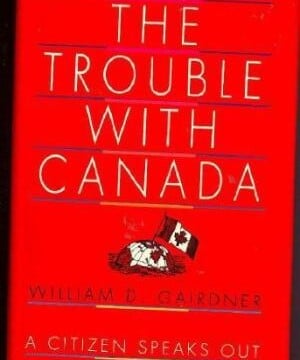
If the fuss over Canada’s Meech Lake Accords has you confused, William Gairdner’s The Trouble With Canada is a fine place to turn to. The book is a solid personal jeremiad against the egalitarian evils taking root in Canada, and the spineless politicians who make it possible. Gairdner fits the conflict over Quebec into this...
Great Exaggerations
“Whatsoever things were written aforetime were written for our learning.” —Romans 15:4 By the early 1960’s, conditions in America and in Europe had proceeded far enough that pundits and intellectuals on both sides of the Atlantic felt free to confirm what they referred to as “the death of God.” At about the same time, a...
The Trail of the Bear
Like many of his generation, Theodore Roosevelt had a fondness for trekking into wild places and, while taking in the sights, shooting the large game he found. He was especially fond of hunting bears. Doing so, he recounted in Ranch Life and the Hunting-Trail, heightened his appreciation for his own mortality, and it made him...
Phonic Booms
In Forked Tongue, her important new public policy study-cum-expose whose proposals seem as likely to create new problems as to solve some old ones, Rosalie Pedalino Porter doesn’t get down to root causes. That is, she nowhere notes that when activist judges create new opportunities for turf-hungry bureaucrats the result is similar to what it...
A Province of the Republic
“Literature is an avenue to glory ever open for those ingenious men who are deprived of honors or of wealth.” —Isaac D’Israeli These volumes—one of letters, the other heavily dependent on correspondence—document and analyze, respectively, episodes of American literary history that feature three brilliant personalities. These volumes will surely attract readers on that basis, for...
The Thought of the Constitution
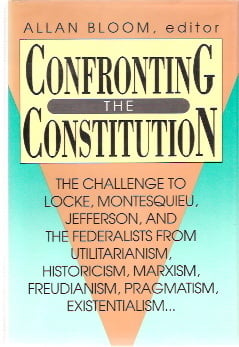
In their program “A Decade of Study of the Constitution,” Robert A. Goldwin and his collaborators at the American Enterprise Institute have consistently published the most readable and stimulating discussions of contemporary constitutional issues to have appeared in America. The virtues of previous AEI books such as How Democratic is the Constitution? are embodied, on...
Power and Ideology
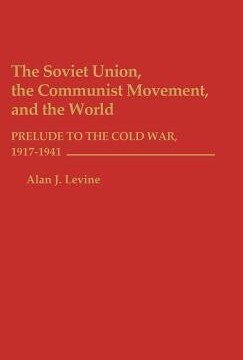
Alan J. Levine explores the relations of the Soviet Union with both Asia and the West, from the Bolshevik Revolution through the Nazi-Soviet Pact. From the title and from the author’s biographical notes, it is apparent that this volume is intended as an attempt at understanding the Cold War. In fact, Levine has already concluded...
Battling the Gorgon
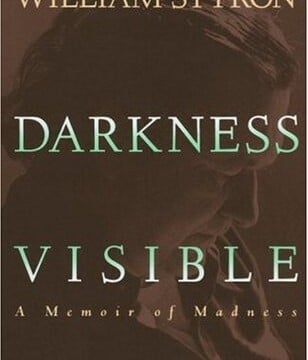
In this little “Memoir of Madness,” first delivered in abbreviated form at a symposium on affective disorders sponsored by the Department of Psychiatry of The Johns Hopkins University School of Medicine, and then greatly expanded for publication in Vanity Fair, William Styron recounts, and attempts to account for, his descent into a mental depression that...
Montana on the Move
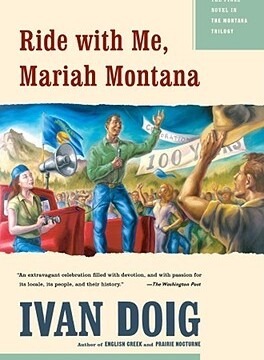
With this latest novel, Ivan Doig completes his McCaskill trilogy, begun in 1984 with English Creek and followed in 1987 with Dancing at the Rascal Fair. Ride With Me, Mariah Montana is good Doig, and that means readers can expect crisp dialogue, rapid pace, vital language, and many satisfied- hours with this handsome volume from...
A Durable Fire
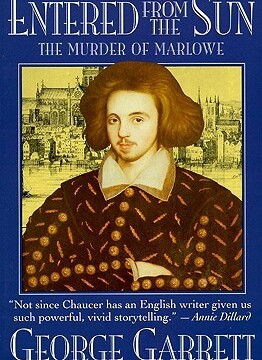
“Literature is news that stays news.” —Ezra Pound George Garrett is a man of letters—a member of a diminishing breed that may soon vanish. For well over three decades he has regularly published poetry, criticism, and fiction long and short; he has also written screenplays and memoirs, and explored still other modes. This very facility...
Exit Stage Left
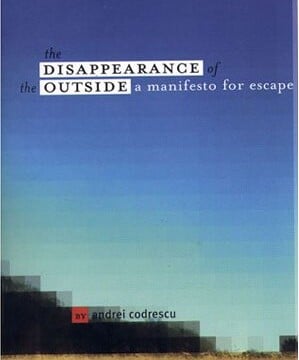
The Outside: beyond wall and watchtower, on the far lee of the border, the place of the Other, the place of exile. Now that the walls are crumbling around the world, helped along by the crowbars of angry patriots; now that the faces of the other look pretty much like our own, the Outside seems...
The Old Reliable
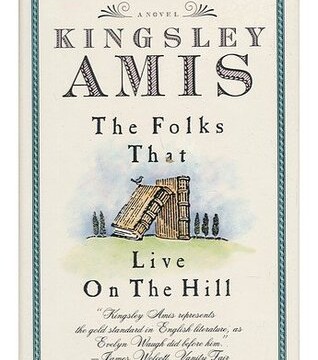
Here is a sentence that begins with the deep predication of Henry James, though not with his tone, and proceeds to a cadenza in the unmistakable Amis mode: “On current form he would never be in danger of imagining that her merely being his sister somehow made Clare less effectively a woman than the rest...
Only the Boring
Generally speaking, fans of early rock and roll fall into two categories: those who want to hear Roy Orbison’s “Only the Lonely” more than once a year, and those who don’t—and I belong to the latter group. One of the strengths of vintage rock was that it meant nothing more and nothing less than what...
Glasnost I
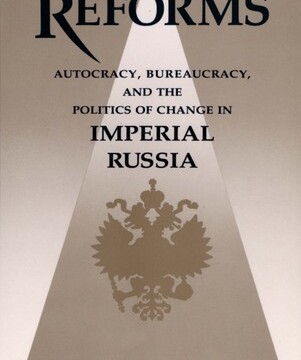
A decade ago, when Leonid Brezhnev was still the leader of the Soviet Union, W. Bruce Lincoln wrote of glasnost and its role in Russian politics. His book, In the Vanguard of Reform, might today be making seers and soothsayers envious but for the fact that the dynamics of change he described were those of...
Affirmative Scholarship
“An excellent scholar! One that hath a head filled with calves’ brains without any sage in it.” —John Webster Thomas Sowell has become a virtual one-man publishing industry, and Preferential Policies is his latest contribution to the Sowell book-of-the-year club. It is not surprising to find that this scattered and woefully disorganized potboiler is part...
Unfortunate Majorities
Twenty-two years ago Paul Ehrlich published The Population Bomb. In an effort to dramatize his thesis, he included a number of scenarios about the future. These tended to obscure the thrust of his work, for many viewed them as predictions. When they failed to come to pass, it was easy—especially for conservatives—to conclude that Ehrlich’s...