Andrew Lytle, in his family memoir A Wake for the Living, compares the past to a foreign country. “If we dismiss the past as dead,” he writes, “and not as a country of the living which our eyes are unable to see, as we cannot see a foreign country but know it is there, then...

Category: Reviews
Go Figure
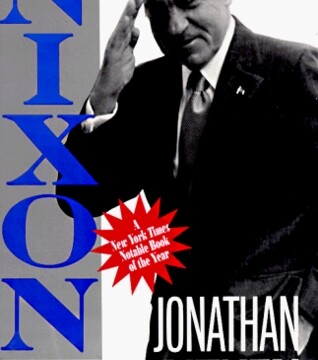
“A politician . . . one that would circumvent God.” —William Shakespeare In preparing my review of this riveting biography, I gathered samples of what has recently been written about Richard M. Nixon, and I must say they make a bewildering collection. Here are a few: “A monster of a million disguises.” Andrew Kopkind, the...
The People at War
“The wars of peoples will be more X terrible than the wars of kings!” So predicted the young Winston Churchill as the new century dawned in 1901. The world wars (two hot, one cold) that have marked the decades since have validated Churchill while contradicting the glib predictions that “global democracy” would bring a new...
New Right, New Wrong
John Gray’s latest book, an anthology of essays, confronts unflinchingly the state of conservatism in the Anglo-American world. Resistant to the happy talk about a conservative renaissance in the 80’s, Gray, a Whiggish Oxford don and a scholar of classical liberalism, stresses the ineffectiveness of the respectable right in both the United States and his...
Still Storied
As traditional as a Chinese restaurant, as homegrown as a Subaru, as agrarian as a fax machine, as Celtic as a computer, as handcrafted as cable television, as hospitable as an eight-lane expressway, as Baptist as a drug deal, as Presbyterian as neo-pagan worship, as Episcopalian as a lesbian sermonette, and as pious as an...
Free Speech or True Speech?
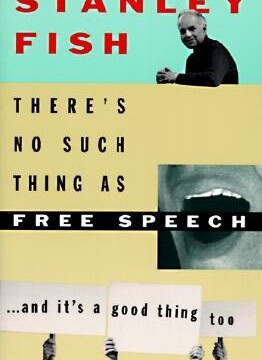
“Prejudice renders a man’s virtue his habit: and not a series of disconnected acts. Through just prejudice, his duty becomes a part of his nature.” —Edmund Burke Few names are more notorious in the contemporary academic and culture wars than that of Stanley Fish. Among conservatives, he is mockingly dismissed as the representative of all...
Talk of the Town
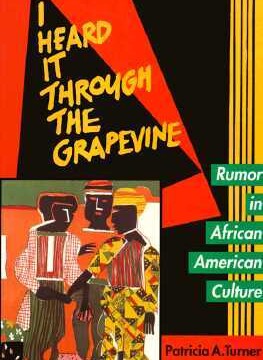
Many black Americans are convinced that they are the targets of a vast array of white-authored schemes designed to spike their food with contraceptives; force them to engage in self-destructive behavior, especially drug addiction; and kill them, to use their bodies for medical experiments or out of simple malice. In her new book I Heard...
Wiring to the Future
The current debate over the so-called cyberstream, the data highway that futurists promise will lead us to a technoutopia, has many people bewildered, so dense is it with rhetoric and empty assertion. This is not surprising: most of the debate is filled by boosters of gadgetry on the one hand, by neo-Luddites on the other....
Brief Mentions: Never Stop Running
“What is one to make of such a life?” asks William Chafe near the end of his intimate investigation into the peripatetic life of Allard Lowenstein. Chafe’s Lowenstein was a man in perpetual anguish. From his days as a student leader through his single term in Congress in the late 1960’s to his assassination in...
The Rise of the Red-Browns
“Blood and revenge are hammering in my head.” —William Shakespeare, Titus Andronicus In his 1990 pamphlet “How to Revitalize Russia,” Aleksandr Solzhenitsyn wrote, “When our fathers and grandfathers threw down their weapons during a deadly war [World War I], deserting the front in order to plunder their neighbor at home, they in effect made a...
Brief Mentions: The Sixties
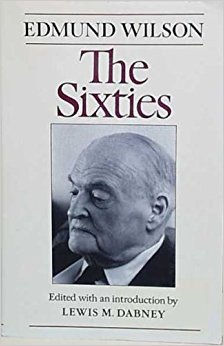
The disappointing qualities of this final volume of Edmund Wilson’s diaries, due partially to surfeit (over 2,000 pages of The Twenties, The Thirties, The Forties, and The Fifties precede these almost 1,000), have finally to do with the limitations of the modern secular intellectual mind as it wrestles with the perceived insufficiency, tawdriness, and dishonesty...
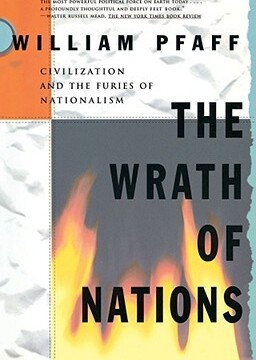
Politics and Civilization
William Pfaff, syndicated political columnist for the International Herald Tribune (Paris), is probably the most perceptive writer in the world today on European affairs, particularly as they affect and are affected by American policy. He is not as much of a political philosopher as some others, like Jacques Ellul and the late Bertrand de Jouvenel,...
Real Plain Speaking
In a healthy society people live with a wide time frame. They know and make use of the experience of their forebears. They build houses and plant trees that will be enjoyed by their descendants. Among the many things which our Founding Fathers took for granted but which we have lost was a social fabric...
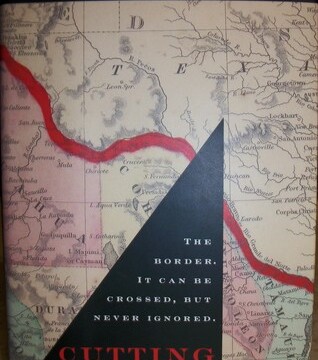
Border Crossings
It is by now a truism to say that the border between the United States and Mexico encompasses a third nation, one that shares in both societies but that forms its own culture. That may well be, but the border represents different things to different people. For some Anglos, it is a glimpse of Third...
A Documented Life
Muriel Spark (1992 winner of the Ingersoll Foundation’s T.S. Eliot Award) is a prolific writer with some 19 novels to her credit as well as volumes of poetry, short stories, criticism, and biography. Yet she was a surprisingly late starter. She was nearly 40 when her first novel, The Comforters, appeared, its theme provided by...
Five Votes
“Much law, but little justice.” —Thomas Fuller With five votes around here you can do anything,” Justice William Brennan told his law clerks, thus summarizing the quintessence of Brennanism. That constitutional law is not something derived from the text, structure, and history of the various provisions of the Constitution but rather a creation of the...
Dead White Male Beyond the Pale
This book is a powerful example of Faulkner’s wisdom that the past isn’t dead—it isn’t even past. Mortar shells falling on Heathrow’s runways, even when they fail to detonate, effectively remind us of the Troubles they are designed to remind us of by causing so much trouble. And they recall for us Joyce’s Stephen, who...
Discovering Japan
Away on the western brink of the Pacific Rim lies a land so mysterious to most Americans that it might as well be mythical. There, according to popular understanding, thrives a breed of 122 million fantastically rich people who through black magic have siphoned off the wealth of the Western world. They need no sleep....
Mountain Musings
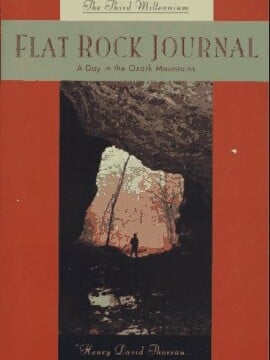
The Ozark Mountains make up an area that American literature has largely passed by, leaving it the province of folklore and song, of homespun stories that seldom make their way to the lowlands. Ken Carey’s fine new book about the region, Flat Rock Journal, fills a great void, and not simply because with a literature...
Catholic Moments
Patrick Allitt’s study of Catholic intellectuals and their relationship to postwar conservatism is clearly presented and full of stimulating perceptions. Basic to this book is the contrast between two generations of American Catholic thinkers with some connection to the right: the generation of the 50’s as typified by the Catholic anticommunists grouped around National Review...
National Enormities
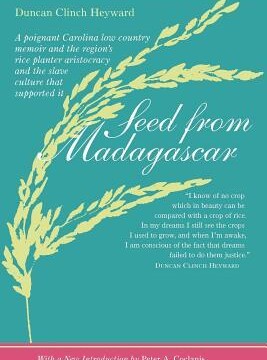
Seed From Madagascar, first published in 1937 and now printed for the third time, is an agrarian memoir. Its author was one of the last rice planters of coastal Carolina, from a family who had been in the business for two centuries. Duncan Heyward details the methodology of rice planting as only one well acquainted...
Suspect Company
The editors of The Oxford Companion to the Bible describe their work as “an authoritative reference for key persons, places, events, concepts, institutions, and realities of biblical times” and as a guide to the current “interpretation of these topics by modern scholars.” They present the Bible (the Old and New Testaments and the Apocrypha) in...
Southern Supplements
“We have sung of the soldiers and sailors, but who shall hymn the politicians?” —Herman Melville The great classicist and poet A.E. Housman once wrote that the work of a scholar in the humanities is not like that of a scientist examining specimens under a microscope—it is more like the work of a dog searching...
Gathering the Desert
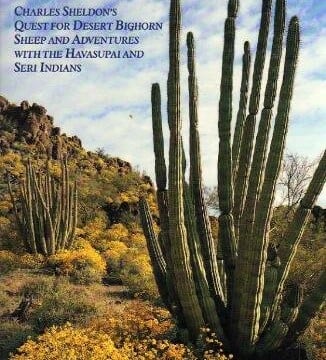
It is ironic that the modern environmentalist movement was founded bv men with whom most modern environmentalists would have nothing to do today: game hunters, many so avid for the chase that they would spend fortunes to collect antlers and skins and skulls from far-off places. Theodore Roosevelt, to name one distinguished early conservationist, was...
Brief Mentions
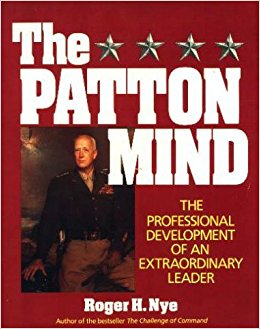
[The Fatten Mind: The Professional Development of an Extraordinary Leader, by Roger H. Nye (Wayne, NJ: Avery Publishing Group) 224 pp., $12.95] The perfect gift for the armchair warrior. The Patton Mind traces the intellectual development of a “profane man of action” who, Roger Nye notes, “left behind the most complete record of exhaustive professional...
Getting Solzhenitsyn Right
Years after his arrest by the Soviet authorities, Aleksandr Solzhenitsyn, while recuperating in a prison hospital after a cancerous tumor had been cut from his body, cast out the last remnant of a spiritual tumor from his soul. A prison doctor, soon to die by the hand of another zek, “fervently” recounted to Solzhenitsyn his...
The Claims of Community
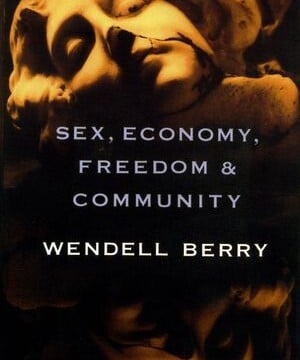
This slim book packs quite a punch. Its author requires that, in order to read him, we cast off the distorted language and prepackaged thought we absorb from the hum of the media. Indeed, he wants us to awaken from the slumber which that drone is designed to deepen. You might say that Mr. Berry...
Degrade and Fall
Among a people generally corrupt liberty cannot long exist. —Edmund Burke I was reading Arthur Goldhammer’s translation of Maurice Lever’s Sade as the Senator Packwood scandal raged on, and although I wouldn’t want to draw any unwarranted comparisons between the two bonhommes, the parallels between Ancien Régime France and contemporary America are unmistakable. Debauchery reigns...
Uprooting Liberty
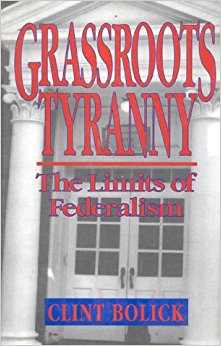
You may have thought this country’s problems stemmed from runaway central government, but Clint Bolick is here to tell you that the real threat is down the street. “Local government in its various forms is today probably more destructive of individual liberty than even the national government,” says Bolick, chief lawyer of the Institute for...
The Gospel of Pluralism
“I esteem . . . Toleration to be the chief Characteristical Mark of the True Church.” —John Locke It is fitting that the most confused and confusing legal tradition in America today is First Amendment case law regarding religious liberty. It is confusing because at the Founding a young nation composed principally of strongly religious...
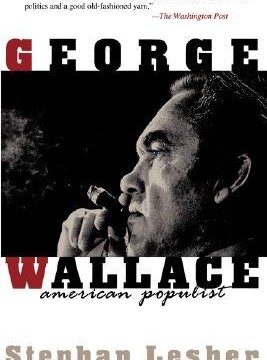
Leaving the Losing Side
The main fact of American politics in the 1990’s is that the elites of both major parties have moved so far from the values and interests of the middle class that a third party has begun to rise almost spontaneously to fill the void. In Colorado, this third-party-to-be-named-later passed an amendment denying special rights to...
Carpe Diem
Years ago, in his essay “Football Red and Baseball Green,” Murray Ross contrasted the battlefield dynamics of the former with the latter’s ostensibly more pastoral qualities. By virtue of its subtle but intense mannerisms, its lack of time limit and essentially cyclic action—a “summer game” that in fact encompasses spring’s renewal and autumn’s decline—baseball has...
The Pit—And the Pendulum
Our Founding Fathers understood that they had inaugurated a republican federal union unique in its balance and distribution of powers. Unlike their descendants, who self-indulgently congratulate themselves on their democracy, the Fathers also understood that the preservation of such a regime was a daunting and demanding task, requiring virtue (in the masculine Roman sense) on...
Pluggers
There is a cartoon that I see from time to time called “Pluggers,” a one-panel affair offering variations on a single theme: “You’re a plugger if. . . . ” One can qualify as a plugger by virtue of having stacked a woodpile taller than his house; loaded a freezer full of individual servings of...
Blaming the Sixties
“In dirt and darkness hundreds stink content.” —Alexander Pope Despite the hype that welcomed this book—gushing praise in the Wall Street Journal and National Review and a bash hosted by the Kristols for the Bradley Foundation—Myron Magnet’s study of American political culture is surprisingly sound. The reasons the neoconservatives showcased this work are obvious: namely,...
He Loved New York
Long regarded by critics, fans, and various of his colleagues at the New Yorker as America’s finest literary journalist, 85-year-old Joseph Mitchell had not, until recently, published a word since 1965, and people wondered what he was doing in his small cubicle at the New Yorker‘s offices, where he has regularly appeared for over half...
From There to Here—And Back Again
“All great peoples are conservative; slow to believe in novelties; patient of much error in actualities; deeply and forever certain of the greatness that is in law, in custom once solemnly established, and now no longer recognized as just and final.” —Thomas Carlyle As the Clintons’ socialist steamroller grinds out new programs, new entitlements, higher...
Short Constructions
You don’t have to read far into the story collection Thief of Lives before John Cheever’s name comes to mind, but after so many years of writing, Kit Reed must be used to that comparison. By now she should be replying: “Yes, but I write as well as that man did and occasionally even better....
Moments in the Sun
One can no better describe the subject of this book than by quoting the publisher’s press release: Once there was a group of liberals and Leftists. They were Democrats, they were radicals, they were freedom riders. But they became disillusioned by the Left. They moved toward the Right, they opposed the anti-war movement, they made...
Artist of the Wild
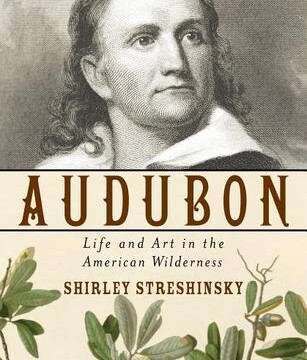
The frontiers of the world breed many men of John Audubon’s ilk: footloose, intemperate, experimental, in questionable standing with the law. He is better known today for the conservation society that bears his name—a group that began as a birdwatching organization and evolved into a powerful lobbying force—than for his singular contributions to American science,...
Recomposing Sociology
The Decomposition of Sociology, an anthology of essays, testifies to the breadth of its author’s interests and reading. While the book has a central theme—which is the problems, some self-inflicted, that modern sociologists face in making their discipline rigorous and nonideological—within the confines of that theme, Horowitz ranges freely and confidently among many topics, some...
A Walk on the Dark Side
“Man’s extremity is God’s opportunity.” —Thomas Adams Conspiracy theories have found a ready audience in many countries in many different times. When cataclysmic events shock a country to its foundations, when people feel impotent before history’s tidal wave, when war or economic collapse or political disintegration mark the end of a historical era and, having...
A Well-Spent Youth
Early last October, there was an item in the national news that stirred some pity and some memories. “Minnesota Fats” (Rudolph Wanderone) had been taken into custody in Nashville after being found wandering the streets in a state of disorientation. A legend in his own mind, “Minnesota Fats” took his sobriquet from the fictional character...
Machine Politics
“Modern liberty begins in revolt.” —H.M. Kallen In 1943, in the midst of the dark years of World War II when collectivism seemed to be sweeping all before it at home and abroad, three fiercely independent and feisty women, all of them friends and libertarians devoted to what was then called “individualism,” hurled mighty manifestos...
Lonesome No More
All literary genres have their loyalists, but few have more devoted—and querulous—readers than the Western. So when in the mid-1980’s rumors began to circulate that Larry McMurtry, hitherto known for his angst-ridden tales of modern Texas, was at work on an epic oater, shoot-’em-up fans began looking for a noose, sure that the bespectacled belletrist...
A World Suffused by Money
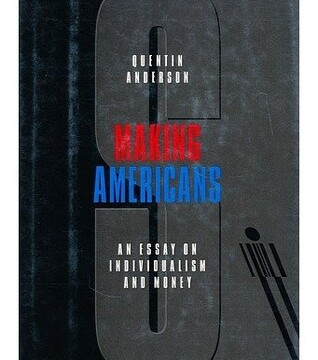
John Dewey, Neil Coughlan thought, I was “the philosopher par excellence of American liberalism” because “he shared with it the root conviction that we can have both self-defined self-fulfillment and social justice for all.” This sunny picture of human nature can hardly be squared with modern or contemporary history. Nevertheless, as Quentin Anderson argues, the...
The Survival of the Fattest
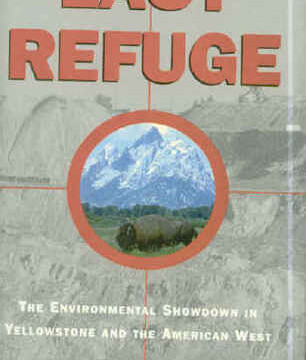
“Pity the man who loves what death can touch.” —Eugene O’Neill Late one summer afternoon, tired and dirty after four days’ camping and a 21-mile ride out of the Wind River Mountains over rough granite trails, 1 swung off the horse and opened the registry book that the National Forest Service places at the boundary...
In the Fullness of Time
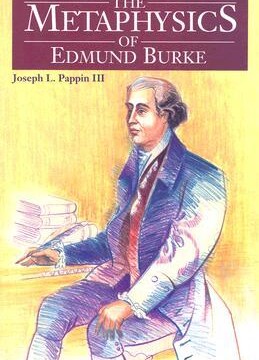
Perhaps the best way to understand and appreciate Joseph Pappin’s unique achievement is to consider this fine book in the light of previous scholarship that attempts to ascertain the religious and moral sources and foundations of Edmund Burke’s political philosophy. John Morley, the chief Victorian authority on Burke and the source of all subsequent empiricist,...
Love and Work in the Modern Age
My mother would call Allan Carlson a man gifted with “common sense.” In her eyes this was high praise. She was right in this as in so many things. Carlson’s most recent entry into the seemingly interminable debate about “whither the family?” or even “whether the family?” is marked by a refreshingly clear writing style:...
The Self-Same Beast
The collapse of communist systems has not eliminated the need for a better understanding of the impact they had and how and why they persisted. Only in the aftermath of their unraveling has it become possible to gain insight into these matters as books earlier suppressed are published and as the people of the former...