When the Extraordinary Synod of the Roman Catholic Church ended (December 1985), thousands of words were written about the event by religious journalists of every variety. More interesting, however, from a rhetorical point of view, was the pre-Synod journalism; it provides an excellent illustration of the not-uncommon attempt of the press to formulate the agenda of public events, not merely...
Rendezvous With Billy
The established church in Washington didn’t know what to make of Billy Graham. By “established church,” I don’t mean the main-line Protestant churches: They were too busy trying to convert their churches into instruments of Democratic foreign policy to care very much about religion. The only established church that counts in Washington, as everyone knows, is the Washington Post. When...
Castro’s Heart of Darkness
Communist governments arrest and imprison citizens who express opinions at variance with official orthodoxies. There is hardly an educated American or European who doesn’t know that much. They are also aware that these citizens suffer torture and abuse for many years in those prisons. But it takes more than knowledge to appreciate what goes on in the prisons of the...
Sons of Jacob
“I pray you think you question with the Jew.” —William Shakespeare, The Merchant of Venice The Jews Under Roman and Byzantine Rule has already appeared in German and Hebrew editions by the same polyglot author who has now produced the English translation. Avi-Yonah has mined Greek, Hebrew, and Latin sources and puts into his footnotes whatever space does not permit...
Dialogue of Self and Soul
Years ago, I was a different person. I looked different, thought differently, acted differently. And yet I am also the same person; there is no doubt in my mind that the “I” of, say, 10 years ago is fundamentally the same person as the one now writing this review. Evidently “I” cannot be identified neatly as this set of muscles...
Star Dreck
Cobra directed by George P. Cosmatos screenplay by Sylvester Stallone; Warner Bros. Sweet Liberty written and directed by Alan Alda. How did America’s movies ever get so bad? That seems to be the $99,000 question for American film critics lately, from Siskel and Ebert to American Film to New York Times critic Vincent Canby, right on down to your local...

Olaf Stapledon: Philosopher and Fabulist
The most widely known of Merseyside philosophers was never a full-time academic. But he gave classes for the Workers Educational Association from 1912, extra-mural lectures on philosophy from the 20’s, gained his Ph.D. in Liverpool in 1925 (in philosophical psychology), and was an active and famous philosopher till he died, in 1950. Olaf Stapledon was born a hundred years ago...

Speak the Word Only
Modern man often seems ill at ease. It is as if the world has been broken and the human community shattered into millions of charged particles, attracting or repelling each other in their chance meetings. Some such notion has threatened many of the best (and second best) minds of the past two centuries. For Hegelians, Marxians, and Freudians (among others),...
The Search For the Sacred
Religion is inseparable from the sacred, the channel through which the divine transcendent communicates with man, according to man’s sensate nature. Any object, natural or man-made—a Gothic cathedral or the lapis negra excavated on the Roman forum—may assume the character of sacredness. Through it, the divine communication becomes incarnated, and, in the intellectual-rational order, verities of the faith are better...
David Jones: The Last Liturgical Poet
The Welsh poet David Jones (1895-1974) wrote two of this century’s outstanding literary works, and yet neither a single line of his writing nor any mention of his name is included in so recent a collection as The Harper Anthology of Poetry (1981), an otherwise excellent volume of English and American verse edited by the poet-translator John Frederick Nims. Anthologies...
The Future of Private Language
John Ashbery is a familiar name to readers of contemporary American poetry and art criticism. He is, one might say, the poetry establishment and the art establishment woven into one. He has won all the honors, including a lucrative MacArthur Fellowship (which came to him, predictably, after it might have been needed). With this background, Ashbery will find Viking’s new...
Ski Poles and Baby Doctors
As essayists go, John McPhee has be come something of a celebrity. He has been praised in places as diverse as National Review and National Public Radio; he has written 18 books and no telling how many articles; moreover, he is said to be the best thing The New Yorker, in its decrepitude, has going for it. From the interview...
Unconstitutional
“Can the liberties of a nation be thought secure, when we have removed their only firm basis, a conviction in the minds of the people that these liberties are the gift of God?” —Thomas Jefferson Not long ago Time magazine celebrated America with a special issue. Among the ornaments of this production was an essay by an ersatz “Tocqueville,” purporting...
Voice From the Brier Patch
“One night,” said Uncle Remus—taking Miss Sally’s little boy on his knee, and stroking the child’s hair thoughtfully and caressingly—”one night Brer Possum call by fer Brer Coon, cordin ter greement, an atter gobblin up a dish er fried greens en smokin’ a seegyar, dey rambled fort fer ter see how de balance er de settlement wuz gittin’ long.” So begins...
Misprints and Misprision
“The sin against the spirit of a work always begins with a sin against the letter.” —Igor Stravinsky “When I hear the word ‘theory,’ I loosen the safety latch on my revolver,” remarked one disgruntled language teacher recently. He had an excuse, after all. He had just listened to an hour-long exposition of a Lacanian interpretation of a debate between...
Memories and Modernity in Kasbah Country
I first visited Morocco in January 1943 as a young officer affected, with others, to the Casablanca Conference; it was considered sack time, after sterner service in the Western Desert, so called, or Libya. Originally it was to have been between Roosevelt, Churchill, and Stalin, but Uncle Joe, as both called the Russian dictator, sulked off at the last moment,...
More Than Funny Pictures
Collections of previously published cartoons are usually greeted among “serious” readers by a dignified silence signifying anything from contempt to indifference. These may be the same cartoons which those same cognoscenti pore over and roar over in The New Yorker. “The Men Will Fear You, and the Women Will Adore You” by cartoonist William Hamilton is such a collection. Not...
Young Yuppies In Love
North Dakota—the last place most people ever think of-makes the national news from time to time, usually as part of a survey or study. Sometimes the results surprise those of us who live here, but mostly they don’t. For instance, studies publicized in the past year indicate that we’re the state lowest in stress, that we’re near the bottom of...
Words, Words, Words
An article I read lately informs me that the Southern accent is endangered: the “post-vocalic r,” the absence of which has heretofore characterized most Southerners’ speech, is creeping in, especially in middle-class circles, and especially among women. Ordinarily I stand up for schoolmarms—a genuinely endangered species, there-but if they’re behind this revolting development, I say to hell with them. I...
Wild Parlor Games
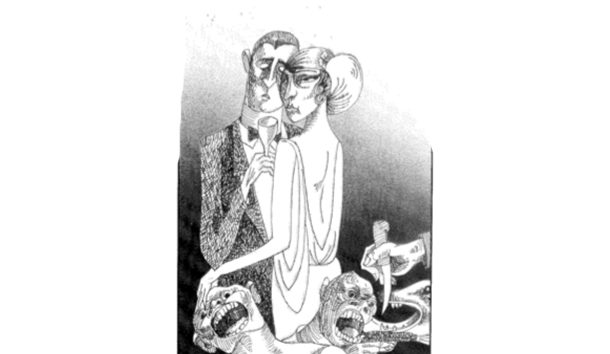
“There are bad people who would be less dangerous if they had no good in them.” —La Rochefoucauld From the beginning of his literary career, Robert Coover has been driven by the quite commendable ambition to make radical innovations in the forms and styles of contemporary fiction. Like John Barth, who once famously proclaimed the conventional novel obsolete, Coover has...
Cherry Bomb
Under the Cherry Moon directed by and starring Prince; Warner Bros. “Once upon a time in France,” Under the Cherry Moon begins. Indeed: Once upon a time in France, a kid from Minnesota who’d made good came out to try to do better. Nice would be nice, he decided, with all its tacky money, and tons of terrifically incomprehensible French....
Communists Hit the Bottle
A new anti-alcohol campaign has been launched in the USSR on two fronts—one of administrative imposition of measures, sometimes very severe, and one of ideological justification for those measures. This twofold approach is fully understandable because the Soviet system is based on ideological dogmaticism, and any political or social campaign, as well as any important event, must be explained in...
Modernism’s Stage Debut
For the critic, the sad inevitabilities are death and taxonomy. He cannot avoid genres, isms, and zeitgeists, unless he wants the past to be unintelligible and the present to seem as random and strung out as an evening of “performance art.” “Victorian art” did pass away, and its heirs were “modernists.” While reports of modernism’s demise remain premature, there are...
Pleasures of Paestum
One way to learn patience is to travel by train from Naples to Palermo. The train is excruciatingly slow, and the traveler seldom has a soul to complain to, but the journey is ideal for basking in the picturesque countryside. It was here that Caravaggio, fleeing the Roman carabinieri after assaulting a man, sought refuge, and here he created some...
Postrevolution Blues
The situation is familiar to any student of socialist revolutions: The revolution is over, and the political apparatus has become authoritarian and alienated from its popular base. The lives of real people become less important than the economic programs and ideological causes of a growing bureaucracy. Then come suspicion, repression, overzealous police vigilance, persecution of independent opinion and intellectual inquiry,...
The Truth in Stereotypes
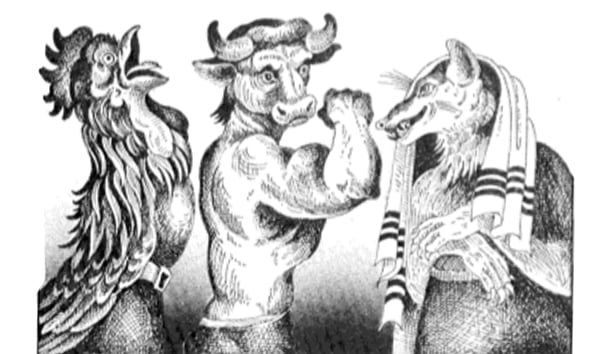
The stereotype is in disrepute. The word is often defined in purely negative terms. Some definitions construe the stereotype as necessarily possessing the negative charge that does, indeed, energize many stereotypes. Other definitions see as inseparable from the stereotype the inappropriate application of the stereotype to those members of the stereotyped group who do not exhibit the stereotyped behavior. The...
Plain People
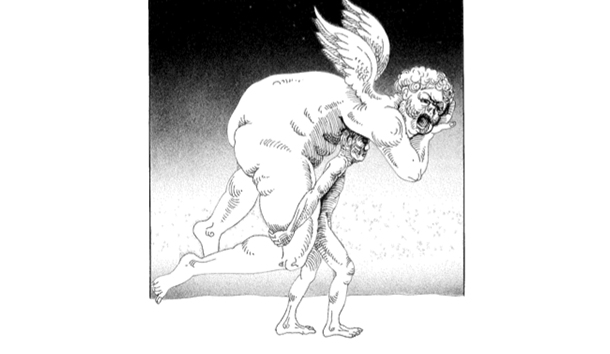
The Century of the Common Man. That was the phrase Henry Wallace used to describe the world emerging out of the Second World War. Wars do have a way of leveling society into the great democracy of the dead and dying, and it is certainly the case that, in the two great wars of the 20th century, the light of...
The Anatomy of Clichés
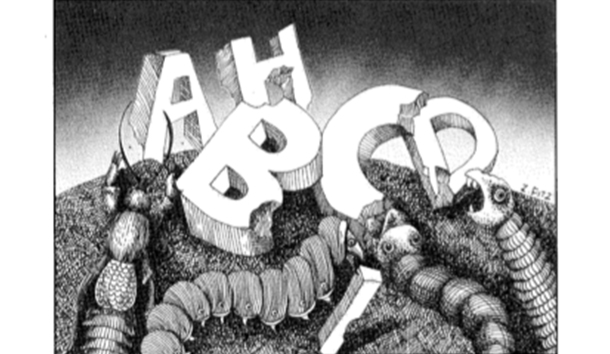
Let me begin by paying tribute to the Unimaginative Man without whose clichés words would have only one-the correct-meaning. (This is at least what my professor of linguistics in Brussels taught us: There are no synonyms; every word has a distinct meaning.) Picture yourself in a world without the Unimaginative Man: History would come to a halt because nobody would...
Bad, Bad Boy
“Big Jim” Folsom (1908- ), governor of Alabama (1946-1950, 1954-1958), was said to have entered office on a collision course with the state’s two major economic estates, big business and big agriculture. The 20-county Black Belt (a name derived from its soil, but equally descriptive of population composition) traverses the state just south of center. The Black Belt depends upon...
Pulling the Plugs
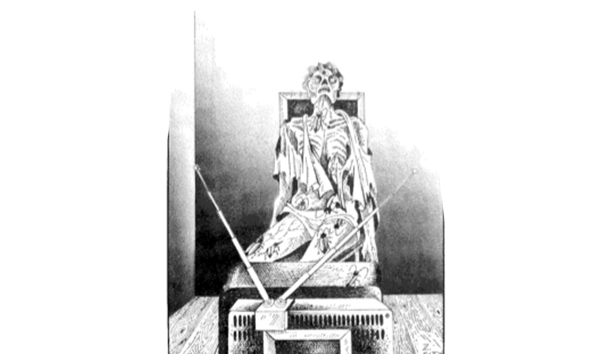
“Culture looks beyond machinery.” —Matthew Arnold A generation ago, the strongest voice raised against materialism, scientism, and the depredations of technology and mass communication was that of rhetorician and second generation agrarian Richard Weaver. In books like Ideas Have Consequences and Visions of Order, Weaver combines a disdain for technological culture in general with grave concern about the growing triviality,...
On ‘The Re-Possessed’
In response to Lee Congdon’s review of The Pied Piper: Allard K. Lowenstein and the Liberal Dream (Chronicles, July 1986), I would like to make the following points. Allard Lowenstein’s affiliation with the CIA is well-documented in the book. My sources in military intelligence and the CIA, while wishing to remain anonymous, are well-in formed. The vast documentation I employ...
Russia by Numbers
USSR Facts & Figures Annual is an excellent source of current statistical and factual information on the Soviet Union. Since 1977, Academic International Press has published an annual volume for anyone who needs to keep up to date on developments in the Soviet Union. The updated as well as new information covers such topics as Soviet Communist Party leadership changes,...
Amazing Grace
In the New College at Edinburgh in 1934, young divinity students stimulated themselves by turning over old and new ideas: Calvinism, Barthianism, the role of the body of Christ in the world, the form of the liturgy, the purpose of missions—in other words, the same issues that, mutatis mutandis, have sparked theological discussions since the Church became Resh. At the...
Remembering Roswitha
Do you remember Hrotsvit (Roswitha) of Gandersheim, mentioned in the survey of world literature that you took as an undergraduate? “The first female German poet, the first dramatist of Germany, the first person in Germany to employ the Faust theme, etc.”—but who cared? Because Hrotsvit, the canoness of the Imperial Abbey of Gandersheim, wrote her legends, plays, and epics in...
The House That John Built
In the 1980 film Atlantic City, Burt Lancaster, portraying a has-been racketeer, turns to a young companion while they’re walking along the Board walk and exclaims, “You should have seen the Atlantic Ocean in the old days.” According to Louis Malle, the film’s director, the producers wanted to cut that line: “They said it didn’t make any sense, the ocean...
Still, Sad Music
“A poet in our times is a semi- barbarian in a civilized community.” —Thomas Love Peacock Something happened. The juice went out of it, the largest joy. There may arise figures analogous to Emily Dickinson, or even to John Clare, but no experienced lover of poetry expects a new Keats or a new Shelley or Hardy to appear in our...
Barroom Psychiatry
Psychotherapy is big business. America employs perhaps a half million professionals and paraprofessionals (psycho therapists, psychiatric technicians, drug/alcohol counselors, clinical social workers, clinical psychologists, psychiatrists and psychiatric nurses, family therapists) in the field, and the talk therapy industry as a whole is worth about $17 billion. Yet many scholars and laymen are uneasy at the sight of the tower of...
Off Center On Target
“I should have availed myself of waggery, had not malice been multitudinous.” —Christopher Smart The English are known for their love of the eccentric. Batty dons, hapless clerics, Colonel Blimps, imperious aunts, and addled aristocrats are scattered over the landscape of the English popular imagination. In a society where a high value is placed on social conformity, the eccentric affords...
When He Was Good
“A man who writes a book, thinks himself wiser or wittier than the rest of mankind; he supposes that he can instruct or amuse them, and the public to whom he appeals must, after all, be the fudges of his pretensions.” —Samuel Johnson Philip Roth’s first book, a collection of stories called Goodbye Columbus, was a critical smash. Reviewers hailed...
What Ever Happened to Basket Weaving?
I try to be a calm and charitable person. But just when I have some of my smaller base urges under control—my flippancy, my latent cynicism—I trip in some new droppings of those sincere, well-meaning U.S. citizens whose rhetoric can’t be distinguished from the Kremlin’s, and am freshly undone. This time the Boy Scouts and Camp Fire, Inc., have sabotaged...
Fad Fatherhood
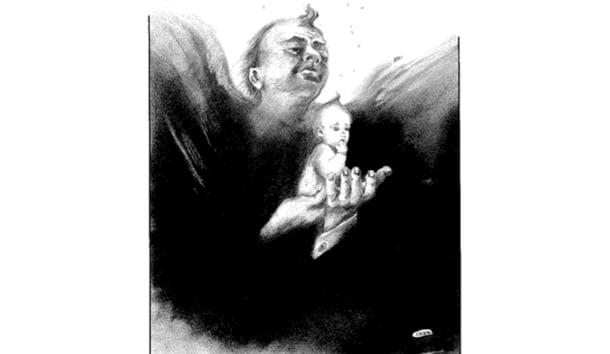
Participatory fatherhood. Shared parenting. The new American dad. By whatever name, the phenomenon has been two decades in the making, and we should have seen it coming. The self-centeredness of the 60’s ran headlong into the feminist harassment of the 70’s to create the Father of the 80’s: sensitive-and sensitive to his sensitivity; aware—and aware of his awareness; above all,...
The Doors of Deception
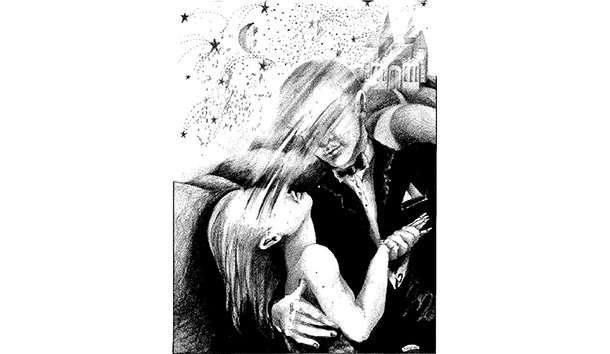
One of the many sociological uses of Hollywood is its dramatic availability when things go wrong in America. Michael Satchell, for instance, has raised the question in Parade of whether the movies by too often glamorizing drugs and alcohol encourage their use among young people. He cites Goldie Hawn, Jane Fonda, Dolly Parton, Lily Tomlin, and JoBeth Williams as actresses...
Why Don’t We Do It in the Road?
A pathologist who recently moved from Vermont to North Carolina has written an article in the American Journal of Forensic Sciences about the old Southern custom of lying in the road. The good doctor was apparently unacquainted with this practice, and he was upset to discover that every couple of weeks, on the average, one of my fellow Tar Heels...
The Novel and the Imperial Self
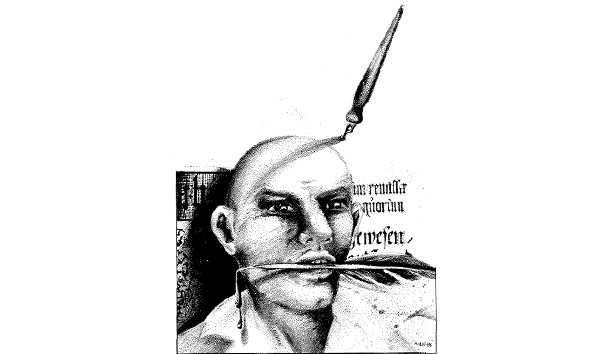
Preoccupation with the state of the novel was until about 10 years ago one of the major bores of American criticism. From the early 1950’s well into the 60’s, it was scarcely possible to get through a month without reading as a rule in the Sunday book review supplements or the editorial page of Life—that the novel in this country...
Sorcery in the Kremlin
Some novels tell a story that causes us to see reality in a new way. Other novels are manufactured around a message. The Set-Up is of this second type. Volkoff wants to teach us that the Soviets plan long term, that they are clever at masking their intentions, and that they have committed their re sources to disrupting and misleading...

Faces of Clio
“The obscurest epoch is today.” —Robert Louis Stevenson Taken together, these three books serve nicely as a kind of group portrait of Clio and her several faces. In reverse order we have the historian as diarist and memoirist, as documentarian, and as reflective sage. As one of the learned species, historians, it has always seemed to me, lead all the...
Critic’s Choice
Like any civilized society, America reveres its artists. Unfortunately, in this as in most other things, we tend to go overboard. Consequently, we are all too often subjected to the spectacle of a ludicrous buffoon like Gore Vidal on national television pontificating on public policy questions, or a Norman Mailer—a man who once stabbed one of his six wives—being taken...
Decent Folk From Georgia
“Livin’ is like pourin’ water out of a tumbler into a dang Coca-Cola bottle. If’n you skeered you cain’t do it, you cain’t. If’n you say to yoreself, ‘By dang, I can do it!’ then, by dang, you won’t slosh a drop.” This sample of dialogue conveys something of the tone, language, and philosophy of Cold Sassy Tree (the title...
The Uses of Diversity: Recovering the Recent Past
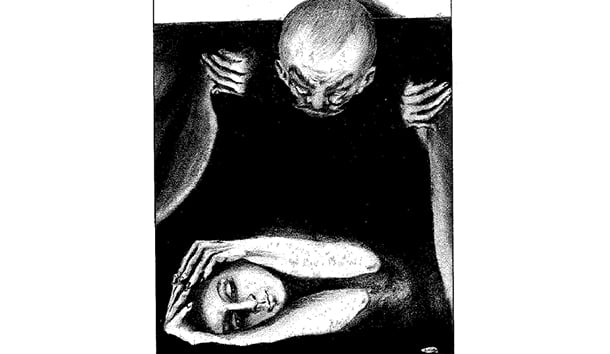
One of the more interesting recent books of popular history, Paul Johnson’s Modern Times, stakes out the period between the outbreak of World War I to almost the present. In Johnson’s intellectual framework, the boundaries of modernity are marked by two great revolutionaries: Albert Einstein, who threw the thinking world into a turmoil of doubt over man’s place in the...
A Devil’s Dictionary From Nicaragua
Revolutions attempt to give new meaning to life. Sometimes changing the definition of words is part of the attempt to change reality. At other times, reality changes first. Nowhere does the traveler have more old words with new meanings than in revolutionary Nicaragua. To help those whose first days in the country are as confused as mine, here is an...